(I would like to highlight that the following information is drawn from a football perspective within England)
“If a player did come out, I think everyone would be supportive, but I’m 100% sure that people in the changing room would be joking, and that some would be ripping it out of him. If there’s a gay player in our changing room, I’d understand why he wouldn’t come out.”
(Anonymous, professional League One player)
BBC Sport reported yesterday that Premier League executive Richard Scudamore supports the idea that openly gay footballers would be treated with respect in the Premier League.
This was a bold assumption from Scudamore, who has held his position as Chief Executive at the top flight of English Association Football for 16 years. Scudamore believed openly gay footballers would be treated with “tolerance” and “that the time would be right” to come out.
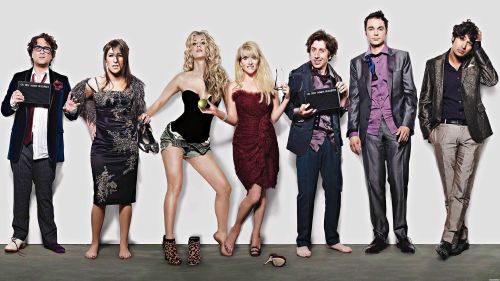
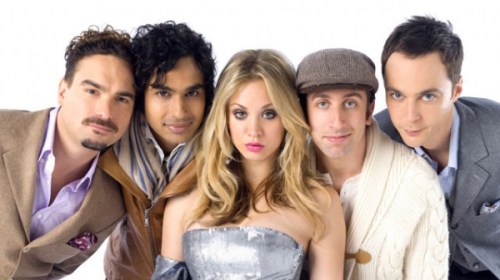
So, last year (HOW IS IT 2016 ALREADY JESUS), I wrote an article talking about the treatment of women in the sitcom The Big Bang Theory. And, for some reason, that’s the article that people talk to me about most- I guess because the show’s so popular, and people are keen to defend their weekly dose of warm, fuzzy sitcom goodness. And one of the things I hear quite a bit is that the show laughs at the guys on the basis of their gender as much as it laughs at the women, ergo it can’t be as bad as all that. Well, since you mention it…
The Big Bang Theory, as you probably know, revolves around a group of four scientists who spend most of their free time engaging in geeky pursuits- attending comic-cons, playing board games, reading comics. They’re not especially successful with the ladies, they’re not particularly physically fit, they’re often emotional and needy. Basically, they don’t fit the dictionary definition of masculinity- and the show openly mocks them for it.
I remember when The Big Bang Theory first became really popular- when the stars were on the front covers of magazines that declared smart the new sexy. And it always took me by surprise, because the show seems to show open disdain for the geeks at it’s core, specifically for their geekiness; their inability to fulfil traditionally masculine traits is often the source of much of the humour on the show. Take the episode The Fish Guts Displacement (which this article explores in greater depth) , where Howard has to be taught how to fish in order to spend time with his father-in-law; Howard (and the rest of the group by extension) is shown to be incapable, squeamish, and a little bit pathetic, contrasting with the depiction of his father-in-law- the strong, stoic, silent type who apparently represents the epitome of masculinity, at least in contrast to Howard and his friends. The show openly draws a line between the “real” men of the show and the leading foursome, and takes much of it’s humour from their inability to live up to those standards of masculinity.
And speaking of standards of masculinity, there’s a lot to be said for how much the show hinges the normality of these characters on their sex lives. Up until very recently, breakout character Sheldon Cooper showed no interest in any kind of sexual activity with his girlfriend Amy, leading her to trick him into a variety of intimate situations with her (which, ugh). His lack of sexual desire is framed as something hilariously freakish, because what kind of guy doesn’t want to fuck his girlfriend at any given opportunity, right? By extension, the rest of the male characters are similarly portrayed as less than masculine by the show due to their lack of success with women- Raj’s chronic anxiety, Howard’s horrendous creeping, and Leonard’s bumbling insecurity have all been played for laughs, especially when contrasted with the apparently more masculine traits of their eventual partners (like having had more sex partners, more confidence with the opposite sex, etc). The show regularly casts aspersions on their sexuality, a gag so apparently brilliant that it became a running joke because HAHA GAYS, I guess.
It’s interesting to note that Stuart, a side character who owns a comic book shop frequented by the leading men, was originally introduced as intelligent, charming, and successful, despite-or, indeed, because of- his involvement with geeky culture. Within a few appearances, he had been reduced down to a caricature of a lonely guy whose staggering incompetence with women is a big part of his comic value.
The Big Bang Theory, basically, is a show which draws it’s humour from the subversion of traditional gender roles. Which could be a great idea, if they didn’t frame the men who subvert these roles as often creepy, socially incompetent, and childlike (remember, Howard still lives with his mother for most of the series’ run, and all four characters are shown to have often dependent relationships on their mothers). The show is taking steps in the right direction by revolving around men who don’t live up to the traditional standards of masculinity, but it could be doing even more by not laughing at them for it.
I’ve never really written about Sherlock on this blog before, which is kind of odd when you consider the fact that it’s a) a proper pop-cultural pantheon that has earned it’s place amongst the most critically revered and passionately fandomed shows of the decade and b) co-created by the man behind one of my favourite shows of all time, Steven Moffat. Truth be told, Sherlock has never really interested me on the same rabid level that other shows have-I appreciate it as a bit of clever fun (and the Hound of the Baskervilles adaptation is something extremely special) but it generally leaves me a little bit cold for reasons I can’t quite put my finger on. Maybe it’s the ostentatious style, maybe it’s the general air of smugness that wafts off it in waves, maybe it’s the fact that it has made Benedict Cumberbatch an inescapable presence even to those who are pretty ambivalent towards him (guilty as charged). But I get it; it’s slick, clever, and mind-bending, with a few great performances sprinkled in there to boot. If you love it, more power to you, even if I can’t quite get on board with that bandwagon myself.
Nonetheless, I finally caught up on the 2013 series a few weeks ago, and it made sense to tune in to the period-piece festive special The Abominable Bride because-well, because it seemed like a rollicking bunch of historical festive fun, which is something I can never in good conscience turn down. And hey, Steven Moffat pulled off one decent Christmas special– why not another?
And hey, the show did entertain me- quite a bit, in fact- for the first hour or so. Dumping us back in Victorian England as a period-appropriate Sherlock and Watson try to figure out how a woman who apparently shot herself in the head has returned to commit a series of bloody murders, the show had a lot of fun recalibrating it’s modern-day cast to the 19th-century setting. The story had a good ghostly edge that fit well with the Christmas broadcast (look, ghost stories and Christmas just make sense to me, alright?), and it even manage to cart out Blackadder stalwart Tim McInnery for a guest spot. This was good! I liked this! Thumbs up and a round on me for everyone involved.
But then the story took a…turn. We jumped back to the present day, and the show quickly revealed that everything in the preceding hour had been happening inside Sherlock’s head as he tried to figure out how Moriarty had returned. And, in the final half-hour of the show, Sherlock disappeared firmly up it’s own mind palace.
Look, I get that a lot of the appeal of this show is that it’s fiendishly clever, dancing between reality and the inside of Sherlock’s head even in the straightest of episodes. But here, every scene seemed to run into the next one like so much wet paint; we were in the modern day, where Sherlock was certain that if he could solve the case of the ghostly killer he could figure out what happened to Moriarty, but no! That was him tripping on drugs! And now we’re acting out the last scene of the Reichenbach Falls- not the show’s adaptation of it, you see, but the original Conan Doyle story! And now we’re back in Victorian London solving the original mystery! Andrew Scott’s in a dress! Back to modern day! DO YOU SEE HOW CLEVER THEY’RE BEING? DO YOU SEE IT? DO YOU?! The episode seemed so desperate to please hardcore fans that I swore at some points I could hear it trying to claw it’s way out from behind the screen to fellate the audience.
And, before I carry on, let’s take a small moment to consider the resolution to the Victorian plot. I’ve touched on women and feminism in Sherlock before, but the events of the Abominable Bride really take the cake. The episode peppered in a few references to the women’s suffrage movement- which wasn’t exactly around then under those terms, but alright- one of which included a character announcing “VOTES FOR WOMEN” with literally no further context or apparent relevancy to the plot. And it was with this level of sledgehammer subtlety that they dealt with the rest of that story. Sherlock tracks the perpetrators of the murders down to a church, where they are revealed to be feminists fighting for women to be treated with more grace by their male counterparts. And how are they doing this, you might ask? Maybe through the letter-writing campaigns and the peaceful marches that the Suffragists employed (much later in the timeline, but hey, historical accuracy clearly isn’t an issue here)? Or through the ink-bombing of letterboxes and hunger strikes of the Suffragettes? Of COURSE not- they’ve created a murder cult that slaughters men who mistreat their partners. Also, they kick around churches wearing purple KKK hoods.
No, really.
And then Sherlock does a speech about how one half of the population is at war with the other (even though many men supported women’s suffrage and fought alongside their female counterparts) and that this is a war that men must lose (which both puts the onus for gender equality on men instead of the women who are apparently fighting it, and frames women’s suffrage as something that removes power from men as opposed to giving it to women). Forgive me if I’m a little annoyed, but as someone who’s studied gender history for a long time now, framing the early Suffrage movement as a bunch of spurned women who commit murder every time a man displeases them fucking infuriates me. Depicting the vital early stages of Britain’s feminist movement as a man-murdering cult, while not even bothering to name-check any of the brilliant historical figures who helped define it (Mary Wollstonecraft, Mary Astell, et al) is some bullshit. I’ll admit that this did colour my attitude towards the episode in a big way, but even without it, the third act of The Abominable Bride was a fanservicey, confused mess.
Basically, for me, a casual fan with no deep emotional investment in the series, this episode pretty much severed ties to the last vestiges of goodwill I had towards it. From an overly clever-clever third act that seemed to rely much more of fanservice that actually moving the plot along or telling us things we didn’t know, to a resolution to a plot that popped early feminists in KKK hoods, the whole thing felt like it was striving for something bigger and better than anything it could really achieve. Tuning back in to the series, I was hoping for either a jump forward in the Morairty plot of the previous season or simply an entertaining romp through Victorian London. What I got was an ugly mish-mash of both, an episode that seemed to give a half-hearted hand-wave to both plots without properly throwing itself into either. What resulted was a flabby, self-indulgent mess whose plot could have been summed up in a webisode,
Ah, well, at least I get another year off before I have to deal with it again.
Well, what a year it’s been over here at the Guignol. I finally finished my Fifty Shades of Grey recraps (thanks to the love and support of my family and friends, I think I’m finally putting that hellish ordeal behind me), I despaired over Doctor Who (or celebrated it, depending which set of reviews you were reading), I wrote about sexuality, gender, feminism, and John Barrowman’s lovely face. And, with less than twelve hours in the year remaining, I think I’ve just got time to squeeze in one more post- my best of 2015.
I published my worst list earlier this month, but I’ve spent a lot more time trying to figure out the best stuff I saw this year. It’s been a whirlwind if TV over the last twelve months, not all of it good (ahem Arrow), but there have been a few obvious standouts that require a little more attention.
Best Drama- Transparent
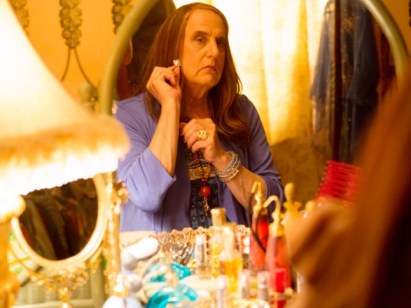
Everyone in the industry seems to have agreed to just post Jefferey Tambor all the awards for this performance, and he deserves it.
A close tie between this and the brilliant/trashy/brilliantly trashy How to Get Away with Murder, I don’t think I’ve written much about Transparent before, but please, allow me to sit down in your living room and pontificate on it’s wondrousness. A flawlessly written, powerfully moving, and often unexpected show, it’s packed with amazing performances and fabulous direction that render every episode a masterpiece worthy of hours of dissection in and of itself. Revolving around a family trying to deal with the news that their former husband and father is transitioning, it’s packed with nuanced family drama and a sharp eye for comedy that stops it becoming too pious. An Amazon original, the second season aired earlier this month, and if you’ve been looking for a heart-breaking, life-affirming bit of TV to restore your faith in time for the New Year, I found it for you.
Best Comedy-Bojack Horseman
Netflix has had a run of great original comedies this year-from Unbreakable Kimmy Schmidt to Frankie & Grace to the more recent Master of None. And, while all of those are great in their own way, none came close to the superb Bojack Horseman. Starring comedy heavyweights like Will Arnett (Arrested Development), Alison Brie (Community), Amy Sedaris (Strangers with Candy), and, um, Aaron Paul, searching for his post-Breaking Bad home, it follows the story of ex-sitcom star Bojack Horseman (Arnett) as he searches for meaning in his life post-fame. I’m still not completely sure that a show which features so many anthropomorphic animals has any right to be as incisively hilarious or downright moving as it was, but take a look at the second season and tell me there isn’t anything to get choked up over there. Getting the balance of comedy and pathos right is a difficult task (and one of the reasons I enjoy the underrated Suburgatory so much), but Bojack Horseman nails it. Just watch those opening credits and TELL me you don’t want to see what comes next.
It’s pains me not to put Doctor Who here, it really does, but I can’t ignore just how ruddy excellent the last season of TV’s most gothic porno was. Packed with sizzling performances, campy horror, and some of the finest writing this side of Hannibal (RIP), it’s built one of the best worlds on TV over the course of just a couple of seasons, and that deserves some notice. I hate that I genuinely considered putting American Horror Story here instead, as my God have they pulled a turnaround on this season, but they’ll have to do quite a lot to make me forget spike-rape.
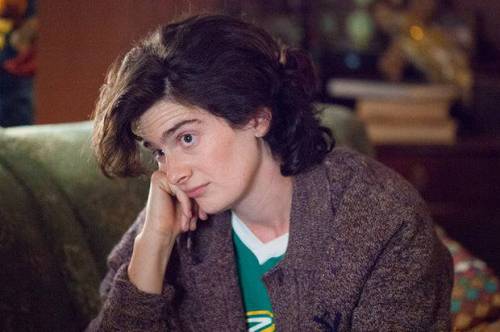
Best Performance (Lady)-Gaby Hoffmann, Transparent
Look, I’m going to be going on about Transparent a LOT, so get used to it now. I think any single person from the cast could have taken this spot, but it’s Gaby Hoffman who always sticks at the back of my mind, as the thirty-something drifter looking for some kind of meaning in her life and thinking she’s found it in various snippets of family history, lesbian professors, and all-female gatherings. Hoffman, as well as having one of the downright coolest wardrobes on TV right now, can convey everything you need to know-and everything her character won’t admit to herself-in a single look, and that’s pretty amazing.
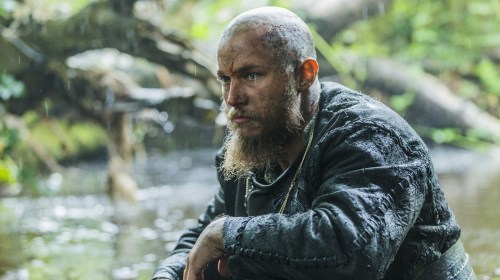
Best Performance (Gent)- Travis Fimmel, Vikings
This scene in particular should have earned him a thousand Emmy nominations.
Fuck, I almost forgot that the third season of Vikings existed! I’ll admit that it was patchier than it’s predecessors, but Travis Fimmel shone in every episode. From the loss of one of his closest friends to his assault on Paris (the city, not the socialite), to his utterly compelling descent into corruption and paranoia, it boggles me that no-one has snapped him up for bigger roles yet. #GetFimmelWorkThatIsn’tWarcraft2k16
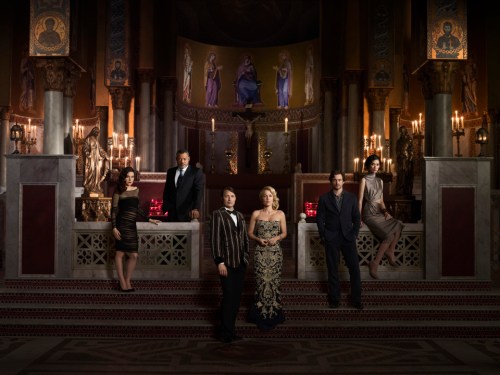
Best Cast-Hannibal
Fuck, even the PRESS PHOTOS are sumptously shot.
Farewell, sweet Hannibal- your name shall be spoken in hallowed whispers across generations of pretentious TV lovers, ne’er to be forgotten. And the thing that’s going to stand out most? That amazing cast- packed wall-to-wall with award-worthy performances, every scene is a chance for a bunch of great actors (Hugh Dancy, Mads Mikklesen, Gillian Anderson, Caroline Dhavernas) to get their teeth into an always-strong script and just emote at each other. While this season didn’t hold up quite so well for me, every single scene is a treat just in terms of the fabulous ensemble
Best Movie- Star Wars: The Force Awakens
I’d be lying to myself and to you if I put anything else here. It’s bloody brilliant; read my review if you don’t believe me.
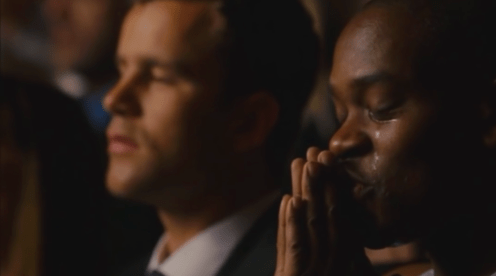
Moment of the Year
This one’s a toughie, what with astoundingly brilliant scenes, like Richard Armitage’s transformation into the Great Red Dragon in Hannibal, or indeed bit TV spectacles like the return to Gallifrey on Doctor Who, but nothing beat out Sense8 and the sheer perfection of the scene that closed out their sixth episode- all the characters recalling the moments they were born, scored by gorgeous orchestral music. In a show full of giant, sweeping emotion, this was the biggest they went, and it worked.
So, that’s my best of the year, and my last post of the year too. I’ll be back soon, and I hope to see a bunch of you back again for 2016 for more shamelessly geeky shenanigans. Happy New Year!
So, I hope you all had a wonderful Christmas/holiday season. I certainly did; I’m currently basking in the warm, hungover afterglow of a day well spent, eyeing my Christmas bottles of wine and wondering how long it’s going to be before I can stomach putting them anywhere near my face.
Speaking of Christmas, I’m finally getting round to reviewing a Doctor Who Christmas special, something I’ve never found the time for before. Well, the time, or the inclination, thanks to a couple of Christmas specials that left me pretty cold (appropriately, I suppose, given the season). But this year’s episode, The Husbands of River Song, certainly left me with plenty to think about.
DID I EVER TELL YOU that I saw Matt Lucas one time? That’s all I have to say about his performance in this episode.
I should say right off the bat that I am almost obliged to like this episode thanks to the pervading air of B-movie nonsense it displayed. If you’re not a fan of goofy, wacky Doctor Who, then I can’t imagine this episode would work for you. There was some thin plot in there- about River trying to acquire the head of her evil cyborg husband-but you’d have to go in there with a magnifying glass to identify anything significant, at least in the first half of the episode. It’s packed with stupidly overwrought one-liners, Greg Davies’ pulling faces like someone just dropped their trousers and shat on his breakfast, and a paper-thin plot that lifts heavily from other, probably better episodes (Trap Street in Face the Raven, the opulent-ship-in-space thing from whatever the Titanic monstrosity was called). Murray Gold’s score pranced around the episode tinkling impishly (and irritatingly) over the top of every supposedly-funny line. But sometimes, Doctor Who works better when it’s not bending over backwards to be explosively clever or nuanced, and I though this episode was an example of that. Remember also that Christmas specials are meant to be watched through a warm haze of alcohol and food, so anything too melodramatic falls flat (see also: Matt Smith’s final episode).
Greg Davies: the man of a thousand faces, if those faces are all trying to convey some level of distaste.
This episode also brought together Alex Kingston and Peter Capaldi, a pair of prestige fucking performers who looked like they were having the greatest time bouncing around various wobbly sci-fi sets and jauntily declaring every other line. Their chemistry was impeccable, and seeing Capaldi have someone who really matches his energy was a proper treat after Saint Clara’s last season and a half.
In all honesty, it took me a good few seasons to warm up to River Song, despite the fact the many of her older episodes are, in retrospect, fucking brilliant. For maybe the first time since her first appearance, I was genuinely looking forward to seeing her on the show, and I wasn’t disappointed. Well, I was, a bit, thanks to Moffat once again making reference to a gay relationship that happened off-screen (seriously now) and having River drop a couple of anti-man comments that make me wonder if people really believe that a strong female character is one who openly holds men in contempt. But still, Alex Kingston is undoubtedly one of Moffat’s finest additions to the show, and damn, can that woman act. She made me laugh at lines that would usually have had me writing in angry letters, and she nailed the emotional stuff, too. In this episode, River takes a while to realize that the Doctor is, you know, that Doctor, and the moment she realizes is simply a gorgeous bit of acting between the two. Capaldi’s whispered “hello, sweetie” was honestly a highlight of the last year of the show for me (which isn’t saying a lot, but still).
It’s all I kind do to not start pawing at the screen whenever she’s on it.
Because-so it would seem- this is River’s last episode, as she goes to travel to the library where she met Tennant’s Doctor all those years ago so she can sacrifice herself for him. While the episode did take a pretty huge tonal left-turn in it’s last quarter, as the Doctor and River said their goodbyes and leave most of the goofy stuff behind, it really worked, mainly because the episode’s stakes had been so low that this mellow, dignified ending actually fit pretty well. Shot gorgeously, scored well, and with Alex Kingston draped in black feathers (as she presumably…faced the raven? Oh, go on, give me this one), I found this parting-or not, as the case may be- one of the most affecting parts of the show in the last few years. They hadn’t had a whole season to overblow it, so giving it a whole fifteen minutes didn’t feel over the top.
It was very clear that the budget was blown on this vaguely Christmassy set. Which was the only time the show had a jot to do with Christmas, now I think of it.
So yeah, as Christmas episodes go, I would say this one is by far and away one of the better ones of the last few years. It’s got obvious laughs, sexy innuendo, and a little bit of heartache right at the end- essentially, it bore the essence of Christmas, and I can get behind that.
That’s far too soppy a note to leave things on, so consider this: Doctor Who recaps for series one onwards will start back (actually, really this time) in the new year, so you’ll have something to tide you through 2016. See you then!
What are you doing for Christmas tomorrow? I’ll be drinking heroically, eating delicious homemade sweets and watching Fifty Shades of Grey with my best friends, so if you don’t hear from me for the next week or so it’s because I’m fighting off the usual festive roundabout of drunk/hungover/drunk/hungover. While I am generally a cynical old cow, if there’s one thing I do like the festive season for, it’s the excuse to watch copious amounts of horror- after all, what better way to cut through the warm, fatty, cuddly layer of familial happiness than the knowledge that you WILL die and it might well be at the hands of a psychopath with a machete?
So, with that in mind, let’s take a look at the best pieces of horror television for you to spice up your festive season with. Preferably watch when you’ve eaten too much to bother getting up and hiding behind the sofa.
Whistle and I’ll Come to You
This screenshot still freaks me out. Left corner.
The 2010 version of this fucking brilliant MR James story is a must-watch for fans of old-fashioned horror given a modern twist. The connection to the original story-which you can read online, for free, and should immediately do -is just clear enough to satiate fans of James’ inimitable work, but Neil Cross (who adapted this version) gives leading man John Hurt plenty to play with in the modern setting, with a properly chilling (and affecting) final act. Following Hurt’s character as he visits a seaside resort only to find himself stalked by a mysterious and unrelenting figure in white, it’s a fascinating exercise in the unseen and the power of anticipation. For pure, unadulterated horror with a heart and soul, hunt down this slow-building tale of terror.
2. The X-Files- How the Ghosts Stole Christmas
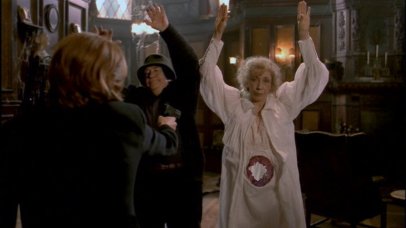
Lily Tomlin and Gillian Anderson onscreen together is…certainly something that’s crossed my mind before.
DID YOU KNOW that The X-Files is coming back in less than a month? I do, because I accidentally surrounded myself with die-hard fans of the series who will not let me just care about the goofy freak of the week episodes as I’d like. Even still, I’m glad they inflicted this episode on me, because it’s a bunch of Christmassy fun. Mulder and Scully go to investigate an apparently haunted house, and find a couple of spirits- played by Lily Tomlin and Edward Asner-ready to entertain themselves torturing the twosome. It’s grim, gruesome, with a dark sense of humour to boot- perfect for the post-dinner lull when you’ve decided to murder your entire family (because it’s Christmas and you’ve got to make this time SPECIAL even though you see these sods every bloody week of the year and the pressure’s just broken you).
3. Tales From the Darkside-Seasons of Belief
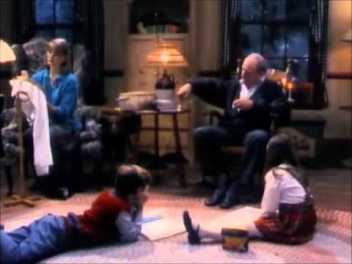
“Gather round, kids, I’m going to scare the fucking bejeesus out of you.”
I don’t think anyone’s head will be exploding with surprise when I tell you that I love campy eighties horror, but I don’t think I’ve ever caught the craic regarding how much I love Tales from the Darkside. Like any anthology series it’s patchy as hell, but when they get it right, boy howdy, they usually come up with something memorable. And this Christmas episode- revolving around a horrible creature conjured up by the parents of some Santa-skeptic kids- is gleefully unpleasant, revelling in torturing it’s kiddy co-stars with the properly unsettling monster and subverted festive feel.
4. Supernatural- Roadkill
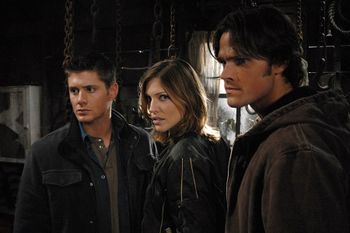
I enjoy everything about this picture. Also, is Tricia Helfer looking directly into the camera or is that just me?
Yes, I know Supernatural has a Christmas episode and yes, I know this is not it, but the excellent Roadkill has always felt like a darkly festive outing to me. Maybe it’s the snow, maybe it’s the moral of the story, or maybe it’s the fact that I get to admire Tricia Helfer AND Jensen Ackles at the same time (truly, a merry Christmas for Lou), but this is my Christmas pick from the long-running (and long-suffering) horror show. Sam and Dean stumble across Molly after she’s involved in a mysterious car accident that causes her husband to vanish, and the three of them help put a stop to the yearly hauntings that possess that particular strip of road. It’s good and creepy, with a clever little arc that fills me full of festive goodwill/desire to acquire my own deadly knife-finger.
5. The Twilight Zone- Five Characters in Search of an Exit
There are a number of great Twilight Zone Christmas episodes, but this one- inspired by Sartre’s No Exit, for all you beginning to feel the cold grip of festive ennui-is my favourite. Following the story of five people who wake up in a cylinder with no knowledge of where they are or why they’re there (why yes, this DID serve as inspiration for Vincenzo Natali’s excellent movie Cube), it’s a simple, straightforward story with the usual Twilight Zone twist in the tail to keep you sleepless all the way through to new year.
Outside of my incrasinagly suicidal Doctor Who reviews, I feel like I don’t review enough bad television nowadays. Christ, it was only a couple of years ago that I spent the winter holed up eating crisps and shouting at the Food Network; sometimes heaping praise on TV (or the new Star Wars movie) gets tiring, and I want to tear into something with all my bottled-up vitriol. So here’s a run-down of the worst pieces of pop culture I’ve seen this year, old and new. Merry Christmas one and all!
Worst Pilot-The 100
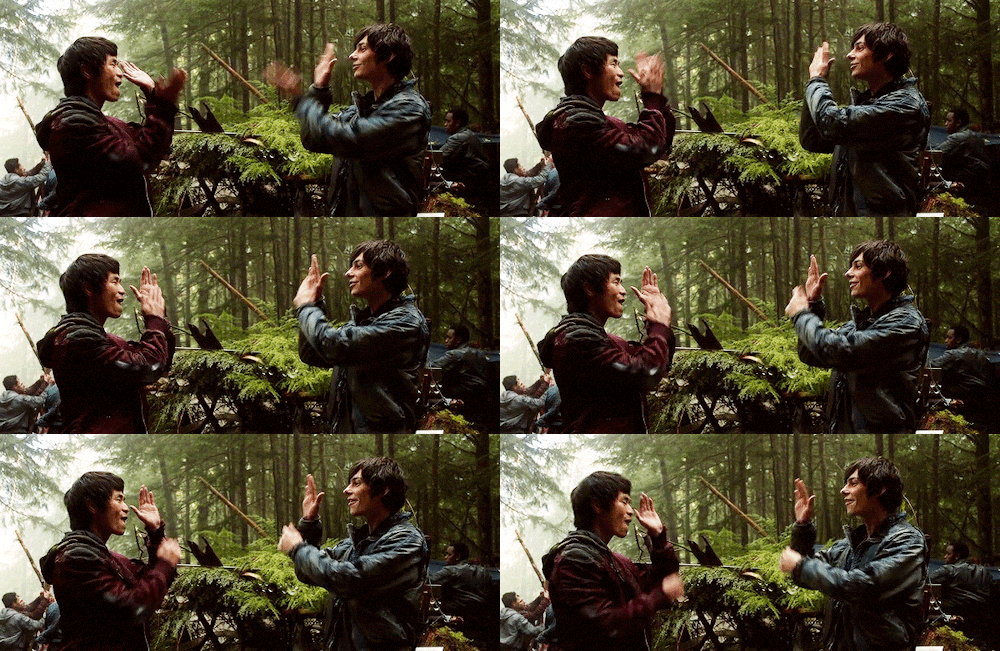
It’s not like any other young adult sci-fi franchise about at the moment and frankly they’re insulted you even asked.
Look, I know that everyone loves this show now, and even I can admit that it got better (not enough to convince me to watch an entire season, but still), but my God was this a staggeringly bad opening. The premise- in which one hundred children are dropped back down to Earth after a global evacuation for reasons that failed to imprint themselves on my memory- stank of cashing in on a recent young adult sci-fi boom, and wasn’t helped by the gawky nature of the premiere. The symbolism was as subtle as a marble bust to the back of the head, the dialogue ferociously awful, and the “characters” drifting off into the distance like the scent of a retreating bin lorry. It took me two goes to get through the whole thing.
Most Inexplicable Failure-Breakout Kings
I’ve never been super into procedural shows, but following my love affair with the brilliant How to Get Away with Murder, I decided to give this one a go. It had one of the Macpoyles from It’s Always Sunny in the main cast, for Christ’s sake! But then I actually watched it, and decided to assume for my own sanity that it’s some sort of derangedly po-faced satire on the genre. Following a bunch of inmates matched with police officers to try and capture escapee prisoners, it’s got every dumb renegade-cop-show cliché you could probably imagine, but doesn’t even have the good manners to make them any fun. I refuse to understand how or why this was considered a good idea.
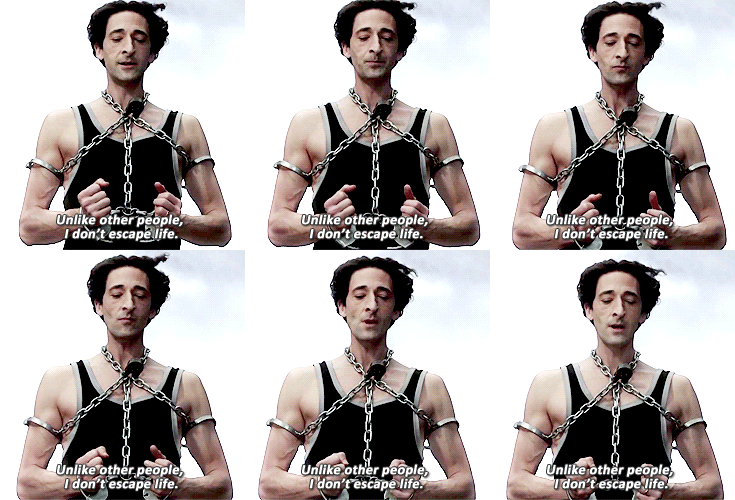
Biggest Disappointment-Houdini
I ESCAPE THE FATAL LURE OF GOOD TELEVISION
I wrote about this miniseries before, mainly to rant on the historical accuracy (or complete lack thereof), but I think it’s also worth pointing out that this show-which should have been a fascinating biography of one of the most interesting figures of the last century, played by the always-brilliant Adrien Brody, rarely allowed itself to get beyond (somewhat appropriately, I guess) shallow spectacle. And was paced dramatically badly.
Worst Movie-Avengers: Age of Ultron
Of all the films I saw in the cinema this year, this was the one that just straight-up sucked the hardest. I think I tried to be reasonably diplomatic in my review, but as the film has faded in my memory all I can really remember is a jumbled bunch of samey action sequences and allowing my brain to get soothed into a coma by the sound of James Spader’s lovely, lovely voice. In a year with a few cracking blockbusters, AoU was one of the worst examples of the genre I can remember in recent memory. Except my nemesis Man of Steel, of course.
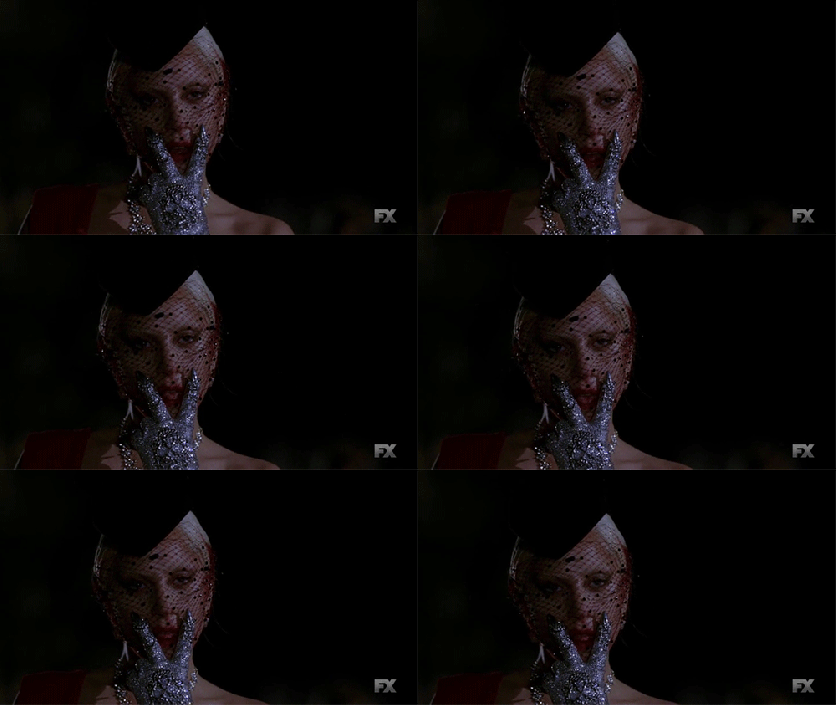
After I watched the first couple of episodes, I kind of dismissed this with a shrug that it didn’t do it’s horror was particularly well handled and forgot about it. But I eventually caught up, and the whole thing had just become a manifestation of Ryan Murphy’s raging id; violent candy hues, intricately horrible violence, and uncomfortable doses of ironic racism at every turn. I mean, this got bad, and not even entertainingly bad- embarrassingly, avert-your-eyes awful. #GetLeaMicheleBacktoBroadway2K15
Worst Performance of the Year
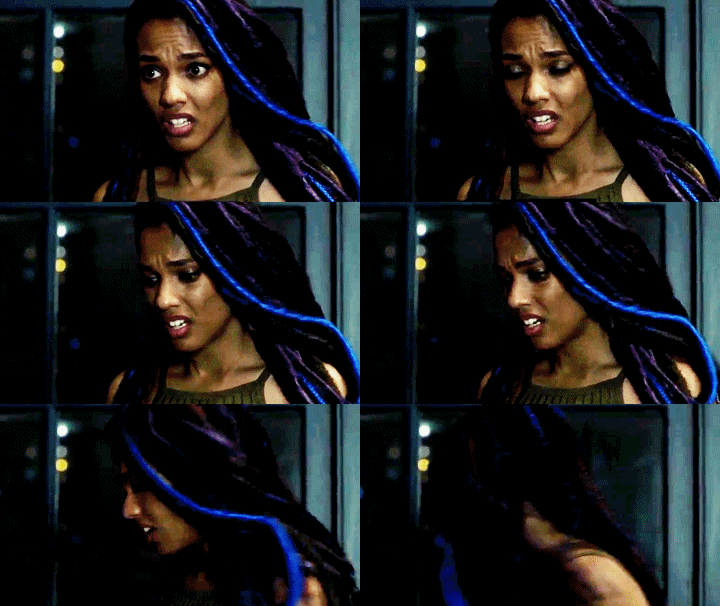
I’M ACTING AS HARD AS I CAN
I seem to have gotten all snobby about performances this year, and lots of my reviews have taken time specifically out to rip on certain actors. The two most egregious failures that come to mind are Frank Dillane in Fear the Walking Cashcow, playing a pirate except without all the characteristics that make a pirate fun or cool, and Freema Aygeman in the otherwise superb Sense8 (a small nod has to go to Jenna Coleman’s texted-from-the-inside-of-a-tunnel turn in this year’s Doctor Who, too). John Barrowman in Arrow should probably take the biscuit, but he looks like he’s having too much fun to care.
That might not sound like a particularly earth-shattering statement, but for me, it kind of is. I’ve spoken before about my passionate, probably dangerous love, of the entire Star Wars franchise (yes, even including the prequels) on this blog, but I don’t think anything I could type here would accurately sum up the bone-shivering levels of excitement I felt when I sat down in the cinema yesterday afternoon. I’ve watched all the trailers for The Force Awakens multiple (MULTIPLE) times, analysing every frame and tearing up every time I saw the Millenium Falcon, and, for me, The Force Awakens was always going to be the best film of the year, whether or not it was actually any good. It’s a new Star Wars movie, for Christ’s sake- a new STAR WARS movie. Nothing at all could dim my levels of blind excitement for this film, not bad reviews, not fandom cynicism, not people gracelessly reminding me of the prequel trilogy, nothing. My expectations were so staggeringly high, all The Force Awakens could do was match them.
And it did.
I think it’s easy to forget, when you’re a Star Wars fan the way I and many other people insist on being, that the Star Wars movies-even the original trilogy-are intensely flawed. The dialogue is wobbly at best, the performances (aside from Harrison Ford’s Han Solo, which is basically down to flawlessly perfect casting) are decent but rarely ground-breaking, occasionally dipping into outright terrible, and the stories are often peppered with inexplicable plot points (Leia and Luke’s steamy incestual make-out session springs to mind). But the success of the original trilogy, and what little good there is in the prequels, comes from being able to capture a certain bombastic tone. A New Hope, for example, is a flawless adventure movie, two hours of obscenely entertaining nonsense that captures you from the first enormous chord of John Williams’ career-best suite through a gloriously simple story set in world thick with dashing rogues, mysterious powers, and political intrigue. As far as I’m concerned, it’s the ultimate blockbuster, and that was the best thing that The Force Awakens could evoke.
And evoke it it did. In fact, the plot had strong echoes of a New Hope that will make themselves evident to anyone who’s familiar with the original movie, but The Force Awakens had more than that. Where the prequels had gone wrong- focusing on dull characters and drudging political stroylines- the seventh part of the Star Wars franchise crisply sets up a galaxy struggling to right itself after the emergence of the Empire 2.0, throwing us straight into the action with a handful of strong, interesting new characters who demand your attention and endless speculation. With an almost aggressive focus on real effects (SEE THESE THINGS RIGHT AT THE FRONT OF SHOT SEE HOW THEY’RE REAL YOU SEE DO YOU SEE?!), we’re instantly guided back into the always-welcome Star Wars universe.
Of these new characters, Kylo Ren, played by Adam Driver, is my favourite, maybe because I was already coming to this movie with a very high opinion of him as an actor but probably because Ren is one of the best villains the whole franchise has ever seen (especially after the hilarious mishandling of Anakin’s prequel character arc). And there aren’t really enough good things to say about newcomer Daisy Ridley as Rey, whose sharp, witty, compassionate performance continues in a long line of fantastic leading women in the franchise. John Boyega as Finn, with his compelling backstory, was about as charming a leading man as you could hope for in a franchise in which both Harrison Ford and Ewan Mcgregor have starred, and Oscar Isaac as the best pilot in the galaxy didn’t seem able to wipe the excited grin from his face for the whole two hours. I only have a shrug to offer on the subject of Domnhall Gleeson and Andy Serkis, both of whom I assume will get plenty of time to expand on their villainly in later movies.
Of course, the stars of the original series made a comeback too, with Harrison Ford, Carrie Fisher and Mark Hamill all returning for various amounts of screentime. Among them, Harrison Ford is still my favourite, just as morally ambiguous as ever, but Carrie Fisher proves once again why she’s the feminist icon of my movie-watching career. I saw some reviews snivelling about how The Force Awakens pandered too much to fans of the original trilogy, but frankly, they couldn’t be more wrong- there’s just enough to connect the seventh instalment to the one before it without letting it get bogged down in nostalgia, and besides, this is a continuation of that story. It would feel like cheating if they dropped everything that the original trilogy worked so hard to achieve, and tapping into that mythology gives the film an instantly deep backstory. Which is not to say there isn’t a little fanservice here and there- the introduction of the Falcon caused a ripple of excitement across the whole cinema-but after ten years of waiting, I’m not going to begrudge that.
Above all else, though, The Force Awakens is one of the finest blockbusters in recent memory, and believe me, I’ve seen ‘em all. Careful pacing, a sharp vein of humour, and good balance of brilliant action and actual storytelling mark this out as a worthy successor to it’s predecessors, and for that alone, The Force Awakens deserves your custom. Well, we’ve got two more movies to come yet, so you may as well get on board now.
So, since it’s nearly Christmas, I’ve been watching some horror movies (and yes, those things go together perfectly logically) and other assorted spooky paraphernalia. And I’ve started noticing a few patterns emerging with the way horror treats it’s female characters.
I don’t think it’ll come as news to anyone that horror, as a genre, doesn’t necessarily treat it’s women super well. Not to say there aren’t some exceptions-plenty of movies do well in providing female characters who are just as nuanced as their male counterparts (Cabin in the Woods, Grave Encounters, Lords of Salem, just off the top of my head). But beyond the usual final-girl tropes, I can’t shake the feeling that horror movies just have a problem with female bodies in general.
Sheri-Moon Zombie in Lords of Salem
And, yeah, I can hear it now- it’s not as if men get off without being stabbed, shot, eaten, or stabbed with a spear mid-way through sex. But women are much more often victimised for their femaleness than men are for their masculinity.
I mean, periods alone have a long and deeply unpleasant tradition in horror history as it is. Menstruation in horror is often used as a way to signify sexual maturity, and generally that comes with the nasty side-effect of turning the woman in question into a raging serial murderess when all she needs is some tampons and a lie-down- from the seminal Carrie (1976), which opens with our protagonist getting her period for the first time and ends with her destroying an entire town, to Excision (2012), where AnnaLynne McCord’s character deliberately loses her virginity while on her period to try and satiate her erotic obsession with blood.. The titular character in Ginger Snaps (2000) is attacked by a werewolf specifically because the smell of blood from her first period attracted it, and Dog Soldiers (2002) has a female werewolf referring to her metamorphosis as her “time of the month”. Basically, if a women in a horror movie gets her period, get out of there, because chances are she’s about to go on a violent killing spree. These movies, along with many others, directly connect menstruation with an often uncontrollable urge to wreak havoc, which is, at best, only 30% true.
AnnaLynne McCord in Excision, which is spectacularly good and deserves to be far more known that it currently is. GIVE ME AN EXCUSE TO TALK ABOUT THIS MOVIE PLEASE.
I don’t think I need to underline how many times teenagers, and women in particular, are punished for having sex in horror movies- films like Jennifer’s Body (2010), which features a teenager forced to lure her classmates with sex in order to feast on their innards due to the fact that she lied about still having her virginity, specifically pinpoint women’s sexuality as something demonic. It Follows (2014) lands in the same ballpark, with a teenager girl being stalked by a murderous vision because she slept with the wrong guy. I couldn’t really write this article without acknowledging this exists, so jump over to here if you’d like to read more about it.
Megan Fox in Jennifer’s Body. This movie is somewhat better than you think.
And, what comes after sex? Babies. The demon pregnancy trope and it’s implications have been discussed at great length elsewhere, so I’m going to focus in on a couple of specific movies that take it one step further- firstly, Grace (2009), which revolves around a woman who’s foetus is killed in the womb. She insists on carrying it to term, only to birth it and find out that it’s actually alive- but with a terrible appetite for blood. The film very specifically focuses in on the practical biological impulses of motherhood- labour, pregnancy, breastfeeding, and so on- and subverts them into something unthinkably horrible. In French New Wave horror Inside (2007), a woman loses her husband in a car accident while pregnant, and, just before she is due to give birth, is terrorised by another woman who is intent on acquiring her unborn foetus through scissor caesarean (seriously, you should watch it, it’s fantastic).
Alysson Paradis in Inside. You have no idea how long it took me to find a screenshot with less than full gore in it.
In both movies, whether literally or metaphorically, the woman in question is being victimised for her ability and willingness to carry and birth children, punished with insane levels of violence or tortured by impossible moral questions for her decision. This can be applied to a bunch of other movies that use demon-pregnancy trope- there are so many films that employ the idea I don’t think I could list them all here- A Nightmare on Elm Street 5 (1989), Devil’s Due (2014), Dawn of the Dead (2004), Ju-On 2 (2004), It’s Alive (1974), and, of course, the one that started them all, Rosemary’s Baby (1969), to name a handful. That’s not to say that the men who feature in these movies get off scott-free- usually the opposite, in fact- but their deaths have less to do with their biology than their female counterparts.
I’m not necessarily criticising every horror film that utilises one or more of these tropes- in fact, I think there are more than a few movies that explore femininity, motherhood and pregnancy in the horror with really interesting results (Most notably 2014’s The Babadook, which you absolutely should have seen by now). But it does get a little bit tiring, in a genre that I love so much, to see women’s biological processes so often depicted as something twisted, demonic, or uncontrollably evil.
I was never sure if I had a cut-off for Doctor Who. In quality, I mean- I sat through Kill the Moon with my eyes rolling so hard that I thought they might get permanently wedged towards the back of my head, and I dragged myself through what felt like the physical assault of The Girl Who Died, and I kept watching. I truly believed that nothing could shake my faith in Doctor Who so badly that I would basically have come to terms with the fact that I would never want to watch it again. But, as it turns out, I have my limits. And that limit was pranced over in this week’s season finale, Hell Bent.
As soon as I saw the guitar I knew we were in trouble
I honestly don’t know where to begin with this nonsensical garbage, so I’ll start by harkening back to a quote from Jenna Coleman, explaining the show to Conan O’Brien a few months back: “Don’t apply logic, ever.” This, to me, is one of the biggest problems about this season, and about Capaldi’s run in general: many of the plots don’t make logical sense. And yes, I know that this is a show about an alien flying through time and space in a phone box, but every science fiction world should have it’s own internal logic, through which the stories do actually make sense. This season of Doctor Who failed dismally at so many turns to do that, and Hell Bent was the worst offender of the lot. This episode failed in providing logical character motivation, logical development, or a fucking coherent plot on top of all of that.
As you can probably tell, the script for Hell Bent-written by Moffat himself- was a staggering disaster. The direction, the acting, the look of everything, it was fine- but the script was a pointless, flabby waste of time that offered no real answers but swanned off all smug with itself at the end up anyway. The plot was so bitty and broken that I have no interest in trying to string it together here, keen as I am to crush this episode into a tiny cube in my brain to make way for more important things like how to peel an orange, but suffice to say it was fuckery of the highest order.
Where to begin with the logic-fails? You might think rule one is “The Doctor Lies”, but it’s actually “Moffat Retcons”. First, how can Rassilon be the mightiest force in all of Gallifrey, only to be usurped and mutinied-on within minutes of his arrival on screen? Why did the Doctor shoot someone, when he’s always been passionately against using violence as a method of resolution? How come Clara’s continued existence hasn’t broken time and space, considering that she was meant to die at a fixed point in time? If the Doctor has his memories of Clara wiped, how can he remember enough to tell her about their adventure together? Why was Clara so insistent on her death and the Doctor letting go of her, only to jaunt off to fly through time and space with Ashildr at the end of the episode? On top of that, ARE WE EVER GOING TO GET A RESOLUTION TO THE ORSON PINK PLOT?
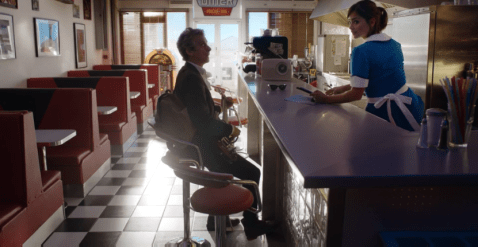
I dug the costumes a lot, all that said- one of the few even acceptable parts of this episode.
Then there was the pointless time-wasting- I’m sad to say that most of the stuff on Gallifrey felt utterly without reason, especially the endless time they spent wandering around the dimly-lit rogues’ gallery while the Doctor warbled on about…well, that’s a good question actually, because it had nothing to do with the plot or themes of the episode. To bring the Doctor back to Gallifrey for the first real time in the whole of New-Who’s run, and that have it serve as barely-relevant background for a plot that had to do with the Doctor bringing Clara back to life felt like a slap in the face after having it as a distant shadow over the show for so long. All of that plot revolved around the Doctor finding a way to travel back in time to save Clara between her final heartbeats, and surely there was a better way to do it than by invoking Gallifrey’s name in vain?
Oh, and let us not forget the “resolution” to the Hybrid arc. It staggers me that someone, somewhere, sat in the DW writer’s room and went “what if we make up a creature, a creature so powerful that it will apparently stand in Gallifrey’s ashes, one that we build to all season and purposely invite endless speculation around with a parade of would-be candidates, and then, and here’s the twist, it turns out that it’s nothing? Wouldn’t that be revolutionary storytelling?” And, in all fairness, I didn’t see the end of the Hybrid plot boiling down to “Maybe it was the Doctor and Clara, maybe it was Ashildr, but who cares when we’ve got a Tardis shaped like a goofy 50s-themed diner!”. I wrote earlier in the season that I was firmly sick and tired of Moffat’s habit of ending potentially interesting stories with a smug “gotcha!” and this was the worst of the lot, because the story didn’t even really get a resolution. It sort of wetly disappeared into nothing, like a fart in a bath. I threw a bottle against the wall when Missy was revealed last season (where was she, by the way?), and I almost punched a hole in it with this jaw-droppingly lazy “tell”.
But Hell Bent hinged on, above anything else, me buying Clara as the Doctor’s soulmate. And I don’t. Nor have I ever. Clara is another in a parade of Moffat’s wise-cracking, know-it-all women without much to differentiate her from Amy or River, and I never really, really brought the relationship between her and Capaldi’s Doctor. If this episode had come during Matt Smith’s run, it might have been a touch less infuriating, but here it was violently awful. The Doctor breaks his codes-codes that are integral to his character, like not committing murder or messing with time- just to serve the episode, and when you’e writing an episode where the characters do whatever you need them to in order to push the plot along, you’re penning an anthology, not a series.
Clara asks him to let her die; his not respecting that is some condescending bullshit. And the “devastating” ending I was promised- where the Doctor wiped his memories of Clara, except didn’t really, because he could remember her- made me long for the days when Martha took a stand and left the Doctor for her own good. Essentially Hell Bent reversed the polarity of the Donna plot, and someone made it even worse than that already was. I used to think that some of RTD’S writing was unforgivably schmaltzy, but I take back every bad word I’ve ever said about him after this almost offensively awful drivel. When the Doctor can just save anyone he chooses, when death doesn’t actually stick, all the stakes for the show are gone. And it makes the Doctor look particularly evil in retrospect, when you think about all the people he could have saved had he really wanted to. When Clara has died so many times before, forgive me if I’m not exactly chewing my nails wondering how this one will turn out.
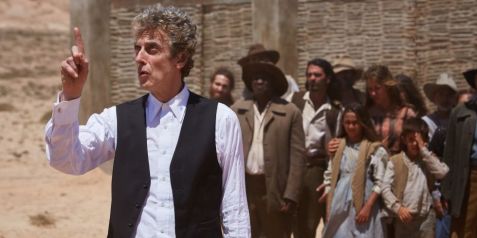
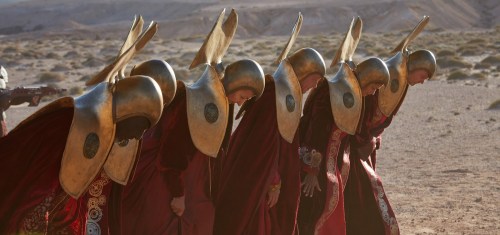
“If we bow, we can keep our faces off-camera and pretend we were never involved with this mess.”
All in all, Hell Bent was a catastrophe- overwrought, underwritten, poorly plotted and embarrassingly cheesy, a series-worst episode that rendered season nine even worse than it’s dull predecessor. It’s only saving grace was the return of the sonic screwdriver, and even that felt like finding a penny coin at the bottom of a barrel of steaming horseshite. I don’t know if I’ll be bothering with the Christmas special, or indeed season ten, but time heals all wounds- maybe Capaldi can take me back to before I watched this episode, considering that all logic has been thrown to the four winds at this stage. I’m thoroughly looking forward to getting back to my New Who recaps (which will start back next week, with the superb Father’s Day from season one), and leaving this mess firmly behind me, so if you’re looking to continue your Who coverage in between seasons, please do join us. I’ll have you yet, Moffat, if the rest of the anti-fans don’t get there first.









 The Cutprice Guignol