The Cutprice Guignol

The Ninth Year: The Haunting of Swill House

A Wanker’s Literary Reaction: How to Get Away with Murder

So, I’ve been interested in How to Get Away with Murder ever since Viola Davis scooped an Emmy for her performance in it earlier this year. I’m not particularly into police/crime procedural shows, so I wasn’t exactly coming to the show from a place of wild enthusiasm or any beyond “huh, this is on Netflix and I need something to watch while I clean the house”. So, you know, it didn’t have a high level of expectation to live up to. Especially with that knowing, on-the-nose title; how would they, um, get away with that? And then I watched it, and it’s pretty much the best thing I’ve seen all year.

howtogetawaywithmurder_pilot_violadavis_justice_1200_article_story_large

Seriously, trying to write a coherent review of HTGAWM has been nigh-on impossible because I just want to word-vomit every single thing I adore about this show. There’s the fiendishly compelling season-long arcs, the brilliant characterisation, the insane performances, the big issues it tackles, the smart way it takes them on. So, bear with me here while I try and put into words exactly why you should be Clockwork-Oranging yourself down in front of this show right now.

So, How to Get Away with Murder revolves around criminal defence attorney and law professor Annalise Keating (Davis), who chooses five students from her course every year to work on her cases. These five students- Wes, an ambitious nice guy with a secretive past, Connor, a callous, sharp-tongued narcissistic, Asher, a privileged upper-class douchebro, Laurel, an insecure idealist, and Michaela, who aspires to be like Annalise- end up embroiled in a murder case whose impact on their lives in further-reaching than any of them could have imagined. Yeah, I know it sounds like you’ve seen it all before, but trust me, you haven’t.

CHARLIE WEBER, LIZA WEIL, KARLA SOUZA, MATT MCGORRY, ALFRED ENOCH, JACK FALAHEE, AJA NAOMI KING

ATTENTION GILMORE GIRLS FANS: The woman second from left is Paris, and now she’s all grown up and insanely excellent!

First off, I’d say that the main strength of this show lies in it’s characterisation. All the characters in this show have fully-formed arcs of their own, developing them beyond the tropey nature of their origin, and considering that the main cast numbers eight in total (all of the above, plus two employees at Annalise’s law office, plus a recurring character in the form of Annalise’s boyfriend whose body is very possibly literally hewn from oak), that’s pretty impressive. Half of what makes the show so damn compelling is the way they break these characters down into something fresh and different, exploiting their pasts and the occasionally ruthless nature of their work in order to create fully-formed people to populate the show.

how_to_get_away_with_murder

And of course, I can’t ignore the performances. There’s not one dud in this show, and everyone steps up to the plate when they’re given something chunky to get their teeth into. This, in part, has to be down to the fact that you have to bring your a-game when you’re acting opposite Viola Davis, who, within forty seconds of walking on-screen in the first episode, turns into the most compelling woman on TV at the moment (save for maybe Jessica Jones, but that’s another review for another time). The question isn’t how she got the Emmy after only one season, but rather how anyone else can expect to win it as long as she’s inhabiting this character. The show throws a lot of potentially tricky or controversial subjects at Davis-such as race, gender, class and abuse- and she knocks them all out of the park without seeming like she’s even trying. She’s a flawed, sometimes outrightly cruel, character, and I would watch a thousand seasons of her swaggering about a court shouting at people before I got bored of it (and even then, I’d still be admiring her wardrobe).

102

While the show doesn’t necessarily push the boat out in terms of plotting-a season-long arc, with flashforwards to a murder committed at the half-way point of the season, dotted with case-of-the-week dramas- I can’t fault the writing, either. It’s sharp, witty, and on the ball, taking on a bunch of hotly-debated topics (like rape culture, terrorism, and sexual abuse) and asking sometimes uncomfortable questions about how they fit into the world of the show. The whole thing has a kind of trashy feel to it, while making sure that the plot is never anything less than compelling, smart and decadently entertaining.

Basically, what I’m saying is watch it. Even if, like me, this show doesn’t look like it’s your thing, give it a go, because it’s fucking excellent. Smart, boundary-pushing television doesn’t exactly come around all that often, and if you love TV as much as I do, it’s almost intoxicatingly exciting when it does. I’ll hear no excuses: the first season is on Netflix, and we’re currently half-way through the (nigh-on perfect) second, so you’ve got plenty of time to catch up before it comes back in February. Which is, ironically, a murderous amount of time to make us wait.

Doctor Who: Terrific or Awful? Really, Doctor is Sensational

So, I’ve been browsing the forums (Gallifrey Base is basically my second home) and I’ve been seeing a lot of…mixed opinions about night’s episode, Heaven Sent. To say the least. Some people seem to think it’s a pointless wreck of an episode, one that basically could have been skipped out and replaced with taking us straight to Gallifrey (because, yeah, after more than two years we’re finally addressing that plot point), and some think it’s a staggering work of genius unparalleled in Capaldi’s run to date. And for once- for once– I’ve found myself on the side of defending a controversial episode.

gallery-1448361809-doctor-who-heaven-sent-05

Look, I loved this. I loved this passionately and almost without restraint. A fifty-four minute special, directed by my hero Rachel Talalay and written by Steven Moffat, I know that this wasn’t perfect, but it was audacious and smart and featured a frankly staggering performance from Peter Capaldi whose endless talent (did you know that he’s got an Oscar?) was finally matched by the strength of the script. After a season that’s mostly ended up on the wrong side of patchy, Heaven Sent finally pulled up it’s bootstraps and produced something compelling, clever, and emotionally impactful. At least to me.

It’s nice, for a change, to have a lot to say about an episode that I actually liked, as the other episodes I’ve rated this season (Under the Lake, Sleep No More, and The Zygon Invasion, in that order) have been good in such a way that doesn’t require me to say much about them (even if my thousand-word reviews would suggest the contrary). They’ve just got a decent story, some good performances, and a finale that doesn’t feature a violently annoying plot twist instead of an actual resolution. But Heaven Sent had more than that.

gallery-1448361658-doctor-who-heaven-sent-02

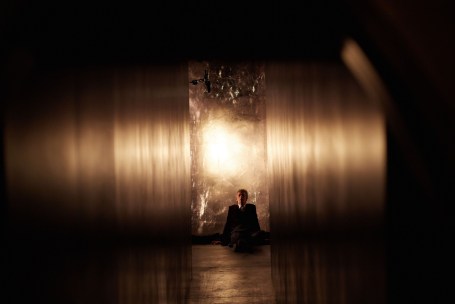
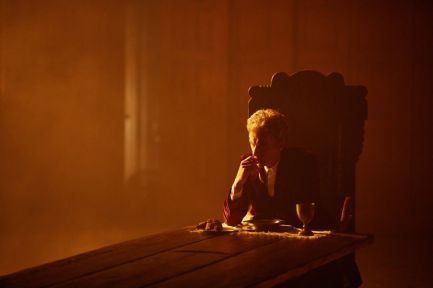
The episode revolved around the Doctor, trapped in a time loop, as he’s dumped in the middle of a mysterious castle in the middle of the sea and forced to fight for his life (anyone else getting Fort Boyard vibes?) against a creature that moves slowly but simply never stops coming. It’s a cool, horror-centric premise to set an episode around, and one that was genuinely frightening at points: a couple of good jump-scares and a general air of doom marked this out as one of the few actually scary episodes of the last few years, and that’s something I can firmly get behind. The direction was gorgeous, too, and made the most of the circular premise of the plot, turning the long corridors and shifting rooms into an endlessly repetitive nightmare that sums up how I feel about a lot of Moffat’s run to date.

And yeah, I can give this one to Moffat, much as I still have my problems with a lot of his writing this season. It was a smart script that stopped just short of getting too hammy or cheesy, even if I could have done without him ripping off Sherlock with the mind palace nonsense. It also, somewhat tragically, featured Clara’s best performance this season, in which she basically stood with her back to the camera and wrote things on a board the whole time. It also gave Capaldi a chance to run the full gamut of emotions, from fear to exasperation to grief and back again, and man, did he deliver- it’s occasionally easy to forget that Capaldi really is a tremendous actor, and it’s a real treat to see him get the chance to thesp his velvet coat off. Seeing the Doctor suffer in a visceral, violent way is something we don’t see in every episode, and the images of him, bloodied and scarred, dragging himself up the stairs so he could sacrifice himself once again hung around uneasily in the back of my head for a while after the end credits.

HEAVEN SENT (By Steven Moffat)

And yes, I accept that there are flaws in this episode. If he had his confession dial the whole time, did that mean he had a portal to Gallifrey that he didn’t bother to use? Why didn’t they just take him straight to Gallifrey as opposed to having him dick around in a castle for a whole episode? And seriously, have we just forgotten about the events of Listen completely? Are they ever going to be resolved? But the audaciousness and strength of this episode made it worthwhile, at least for me, and I’m glad to see Moffat trying something a little bit different. After the curiously low stakes of this season- Clara’s death last week, which felt particularly pointless, stands as the biggest example- things are finally going somewhere. The Doctor is back on Gallifrey, and, according to him, “The Hybrid is me” (I swear to God, me and the Consort spent about an hour talking about how this didn’t make any sense until I woke up in the middle of the night going “CHRIST, LADY ME, OF COURSE”). Things feel big and important, and I can get behind that.

heaven-sent-promo-pics-15-570x380

Alas poor Davies, I knew him well…

You don’t need to remind me, if you’ve been following these reviews for any length of time, that I felt precisely this way about last season’s Dark Water, only to have my hopes shattered by the basically shite Death in Heaven, so I am fully expecting the series to balls up it’s finale. But for now, I’m happy- after a series of lazily contrived stories, Heaven Sent finally felt like it was going somewhere, and I can get behind that.

Don’t think I didn’t notice that thunderously out-of-place incidental music, though. I’ll have you yet, Moffat.

Feminism in Time and Space, Part Three: Doctor Who and Repetitive Women

So, this is the last part in my blog series about Doctor Who and all things feminism-related. I hope you’ve enjoyed it, and thanks for reading along! This week, I’ll be looking at the fallacy of the strong female character in Doctor Who.

7254669-low_res-e1414414299527

For starters, I find the phrase “strong female character” a bit…ugh in itself. Because it suggests that a strong female character is something notable and different, which isn’t wrong, but still kind of depressing to think about. I can’t remember the last time someone referred to a “strong male character”, because it’s just a given that a show will have solid roles for it’s men more often than not. And, more and more often, that phrase has come to mean a very specific thing- a woman who seems superfically powerful but actually has very little else going on underneath. But still, in all the diatribes I’ve read and heard about Moffat’s era of Doctor Who and how it isn’t, in any way, at all sexist, many people make reference to this concept, arguing that Steven Moffat has filled his series with powerful and significant women characters.

And to some extent, that’s certainly true. Women have a constant presence on the show, whether as assistants (Clara, Amy) or as recurring characters (River Song, Madame Vastra). And that’s great. But lot of the women on Doctor Who seem to fall very squarely into the trap of creating female characters who basically echo each other.

ns6ep8b1

Let’s start with a look at the three most significant women in Moffat’s run- River Song, Clara Oswald, and Amy Pond. River Song encountered the Doctor as a child, fell in love with him, and pursued him through time and space until they got married. Clara Oswald encountered the Doctor as a child, took off with the Doctor as an adult, and jumped into his time stream to scatter herself all through his many lives. Amy Pond encountered the Doctor as a child, became obsessed with him after he vanished, then fell in love with him when he eventually returned for her. Not to mention the newly-introduced Ashildr, from this series, is brought back to life by the Doctor as a child and every time she encounters him begs him to take her on adventures with him. Are you seeing a theme here? Because I’m seeing a theme here.

Despite the fact that Amy, Clara and River seem outwardly different (let’s ignore the fact that they’re all saucy, quippy, flirty, etc), their personalities revolve around one man. For all these women, their entire lives have revolved around the Doctor, and their stories just don’t exist outside of him. Even in a couple of standalone episodes- notably the Girl in the Fireplace- the female characters meet the Doctor as a child then spend the rest of their lives pining for him. Compare this to the Davies years, where Martha actually left the Doctor and pursued her own life when she realized her feelings for him were hurting her, and it seems worryingly repetitive.

p02180gl

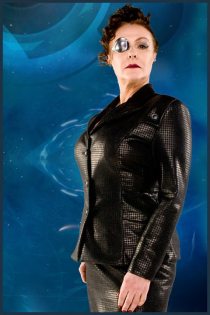
And speaking of worryingly repetitive, remember that episode with the tightly-attired, usually older, ruthless woman who turns out to be using her non-threatening exterior to mask inner evilness? Oh, sorry, I should be clear- I was talking about Ms Delphox in Time Heist. Or was it Miss Kizlet in Bells of Saint John? Maybe I meant Madame Kovarian.  Or Madam Gillyflower in The Crimson Horror. Sorry, no, Missy. I’m not saying that there haven’t been repetitive male character tropes either, but this one seems a particularly telling one to bash over the head, especially when you consider that it also turned up in some of Moffat’s other work (Jekyll and Sherlock.

What I’m trying to get across here is that, yes, while Doctor Who does feature women in lots of different roles doing different things, when you strip away the exterior, what’s going on underneath is extremely repetitive. I can appreciate, to an extent, what the show is doing with it’s women now, I think it’s fair to ask for a little bit more variety. And I’m not just talking about keeping the Daleks out of just one series.


Doctor Who: Thin Adventure Revels Despite Inconsistent Surroundings

So, since watching last night’s episode Face the Raven, I’ve found myself kind of stuck about what to say about it. Clearly, it’s an important episode-maybe the most important episode of the season so far-but at the same time it felt strangely unaffecting, and I couldn’t figure out if that was a good thing or a bad thing. And, oh, before I begin, SPOILERS. SERIOUSLY. DON’T READ THIS IF YOU HAVEN’T SEEN THE EPISODE. Don’t say I didn’t warn you.

dw9_e10-81-1200x800

As I suspected, this week saw the (ostensible) end of Clara Oswald, which makes it a tricky episode to review. I started reviewing Doctor Who on this blog when she arrived in the series as a regular-my very first recap was The Bells of Saint John– and I’d quite like to go back and look at Clara as a character and look at how her arc has and hasn’t worked, considering how much of an investment I’ve put into her story. But that would do a disservice to what was an interesting episode, so let’s first take a look at the meat of Face the Raven, written by Sarah Dollard.

The episode kicked off as Rigsy (the excellent Jovian Wade, back from last season’s shrug of an outing, Flatline) ended up with a tattoo on his neck that was counting down to zero. He calls up the Doctor and Clara, and the three of them head off to discover that the person behind the tattoo is none other than Ashildr. She’s running a kind of refugee camp for displaced aliens, one of whom Rigsy apparently killed, and she’s sentenced him to death by the Pigeon of Doom (or a raven that imbibes their soul, whatever). Clara offers to put herself in his place, believing the Doctor will be able to get her out of the whole inevitable-death scenario, but he can’t and she ends up buying it. Not before, of course, Ashildr reveals the whole thing was a trap to lure the Doctor and that she never had any intention of killing Rigsy in the first place.

p037z6f3

Much as I enjoyed this episode as I was watching it, I felt like it did….struggle somewhat, what with the giant, huge, episode-dominating plot point that lands in the middle of the story. Clara’s death goes off like an atom bomb and flattens almost everything around it, making it hard to look at the episode as an independent entity: I will say that I am liking Maisie Williams more and more with every passing episode and Dollard came up with a strong script that did well in filling out the background in the limited time it had to do so, but there’s only really one thing worth talking about in Face the Raven.

Okay, so let’s think a little bit about Clara. I think, if this is her exit (which I strongly doubt, but it’s certainly coming in the next two episodes, so let’s run with it for now), she’s been by far my least favourite assistant. I never quite felt like I had a grip on Clara as a character, even in the two and a half season she’s been around. I’ve been saying, ever since the start of season eight, that she’s spent most of Capaldi’s episodes doing whatever the plot requires her to do as opposed to having anything really consistent of her own to hang on to, and that’s been a huge problem with her character.

DW9_E10-21-1200x773.jpg

And I think it’s her nebulous nature that makes it difficult to genuinely feel affected by her death this week. Which is not to say it wasn’t handled well (aside from the four-angle smash-cut of the actual moment of her death, which was spectacularly badly judged)- in fact, I’d wager that it’s the best her and Capaldi have been together in his entire run, and she was given a quiet dignity and bravery by the script and Jenna Coleman’s solid performance. But it just felt as if once again she was doing what the Doctor’s story needed her to do, and that’s irritating. (Also irritating: another fucking pointless reference to Clara getting off with Jane Austen. I wrote an article on sexuality in Doctor Who a few weeks ago so it was fresh in my brain, so that line had my eyes spinning like fucking marbles, but I digress).

Yes, I get that the series had been trying to show that she was reckless and believed herself to be invincible, and was constantly putting herself in more and more danger after the death of Danny Pink (BY THE WAY: does Danny Pink still not have some kids to spawn, if we are to take what happened in Listen seriously?). But none of it felt…what’s the right word here? Earned? Consistent? Real? Yes, real-when Clara was revealed to be a series of splinters in the Doctor’s timeline back in series seven, that made a lot of sense to me, because she’s always seemed more like a fast burned-out sliver of a character than a real person. Her reckless and pointless death fits pretty well with how I’ve always interpreted her as a character, but only because it always felt as if she was a bumped-up episode companion who way overstayed her welcome.

hqdefault

And, let’s face it, she’s been around too long. There’s a tacit agreement amongst my band of Doctor Who fans that Clara probably should have headed off in the Christmas special, as she felt like a hangover from Matt Smith’s manic, excitable young Doctor and never really fit too well with Capaldi’s dour style. I’m thoroughly looking forward to a new companion who’s original to Capaldi’s Doctor, because, in all honesty, Clara has seemed out of place since Deep Breath. And I don’t intend that to be a criticism of Jenna Coleman, who’s usually been quite solid, but I’ve never wanted rid of a character more than Clara.

And that, ultimately, is why Face the Raven didn’t hit me with that much of an impact. I’ve been waiting for Clara to leave the series pretty much since the start of season eight, and it’s difficult to feel sad about losing a character I was glad to see go (which, to stress again, was nothing to do with the script or the acting, both of which were at season-highs in this episode). And the problems with Clara don’t fall on this episode, they fall on the two and a half seasons leading up to it.

2EADC20C00000578-3328701-image-a-22_1448142087598.jpg

What I am looking forward to, though, is how this affects the Doctor in the next few episodes. Though I know Jenna Coleman will be back in the season finale, we also know that she’ll be gone by this year’s Christmas special, and her utterly pointless death surely has to weigh heavy on the Doctor who basically led her by the hand into her fate. Capaldi has never been more impressive than when he was quietly explaining to Ashildr that she should steer clear of him, even though Clara had made him promise mercy on the person who killed her, and I want more of that. Plus, next week looks really interesting, and I’m thoroughly looking forward to seeing how the next couple of episodes unfold.

You best not be planning a fake-out with Clara, all that said. I’ll have you yet, Moffat.

A Wanker’s Literary Reaction: The Clone Wars

So, I don’t think I’ve ever written much about Star Wars on this blog, and that’s pretty shocking when you consider how much of my brainspace the sci-fi series usually takes up.

The very first movie I ever remember seeing was The Phantom Menace (which I still contend is a really good movie, and by far the best of the prequel trilogy), and my obsession blossomed from there on. And I’m serious about that obsession: I’ve read a bunch of the extended universe novels, I’ve played all the Star Wars games I can get my hands on, and I’ve marathoned the movies three times. Which doesn’t sound like a lot, but if you’ve actually tried to marathon them yourself, you’ll know how horrifyingly time stretches out in front of you when you’re half an hour into Attack of the Clones (A FILM IN WHICH CLONES NEVER ATTACK). I would not be exagerrating in the least if I said that I have found myself seriously tearing up over every new Star Wars trailer that’s been released in the last year. I fucking love Star Wars, and will happily take to task anyone who dares suggest otherwise.

khlxgic

And recently, I’ve started watching The Clone Wars. Well, I tried it a few years back when I first got Netflix, but soon drifted off it because my willpower is pathetic in the face of all the shitty b-movie horrors that Netflix is home to. But I’ve properly taken it on in anticipation of the release of The Force Awakens, and man, have I been missing out.

I was initially kind of put off by the fact that this was ostensibly a kids series, but seriously, don’t let that stop you from knuckling down and absorbing five seasons of this shit if you’re a real Star Wars fan. There’s no doubt in my mind that the series is better than Attack of the Clones and Revenge of the Sith combined, which isn’t really saying much-

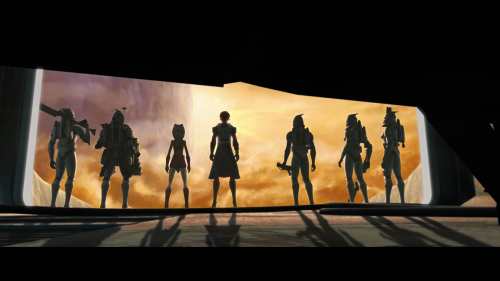
-but seriously, this is where all the action you wanted from those movies vanished to. The Clone Wars is basically an anthology show with all the disparate threads tying back into the story of the war between the Republic and the Imperial troops, and lavishes the viewer with new characters, plot arcs, and locations- basically, a chance to properly explore the Star Wars universe.

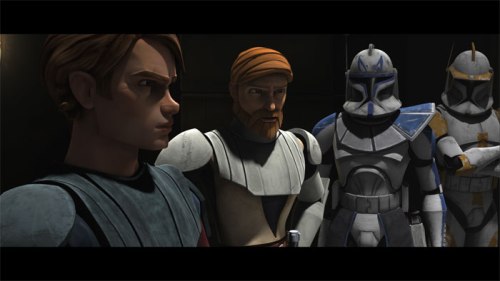
And there are so many things to love about this show. Firstly, the characters that made the jump from the movies- such as Yoda, Obi-Wan, Anakin and Padme- are all at the very least as good as their big screen counterparts, and often loads better. Anakin actually has all the charm and rogueishness that Hayden Christensen’s solid oak performance surgically removed from the character in the films, and his banter and companionship with Obi-Wan makes the end-up of their relationship even more poignant.And, of course, any character that you thought looked interesting wandering about in the background of a random scene in the films gets their own episode, a conceit that helps open up the universe and create a giant, sprawling ensemble that can fit around almost any story.

anakin-obi-wan-and-clone-troopers-clone-wars-obi-wan-kenobi-23780129-700-394

Ewan MacGregor as a cartoon is kind of goofy, to be fair.

The villains from the movies, most notably General Grievous and Count Dooku, get some back story that actually makes them, you know, threatening and interesting and ruthless. Anakin also gets a padawan, in the form of the wise-cracking Asohka, that stops him from descending into critically brooding territory.

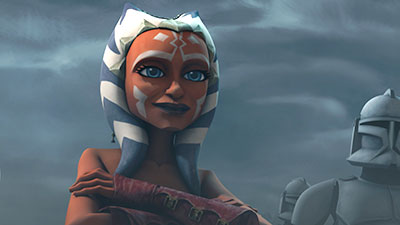
And that’s another thing about the series that I love. Much as I will contend that both Amidala and Leia are fantastic characters and badass heroines in their own ways, it still stands that there are only two really significant female characters out of the six Star Wars movies. In The Clone Wars, there are more than I can count- Asohka is excellent and far more charming than her description makes her sound, and then there’s temperamental Sith warrior Asajj Ventress, not to mention a bunch of cool female Jedi side characters who get just as many awesome action sequences as their male counterparts. There’s a particular episode in season one that revolves around a showdown between two female Jedi and a female Sith, and it feels wrong that it’s staggeringly new and different.

ahsoka3

Ashoka, hangin’ with some clones.

There really aren’t enough good things to say about this series- the animation is gorgeous, the voice acting is excellent (David Tennant won an Emmy was his work on the series), the action is thrilling, and the whole thing is basically an invitation that no Star Wars fan could turn down. What are you waiting for?

Doctor Who: Turpitudinous Arsehole Re-Defines Insomnia Symptons

(Yes, so I cheated a bit with the title this week. Look, those things are hard, alright?) Ever since I heard about this week’s episode of Doctor Who, I’ve been quietly pumped about it. Starring Reece Shearsmith (always in my heart for the screamingly funny and occasionally powerfully disturbing League of Gentlemen) and written by Mark Gatiss (writer of a bunch of DW episodes, the most recent being Robot of Sherwood which I will defend unto the grave, and also, you know, Mark Gatiss), the episode came with a found-footage horror twist and a big fat Macbeth reference in the title, Sleep No More (I don’t think it’s ever come up before, but I consider Macbeth pretty much the greatest thing ever written and have the scene from which this episode’s title is taken pinned up in my kitchen) looked like it was going to be, at the very least, a memorable episode.

I’m just the sort of dick who’d throw all that at you just to say that I thought Sleep No More was a load of pish, but I actually loved it to pieces. Following a crew on an abandoned spaceship, the Doctor and Clara soon turn up and figure out that the reason for the spaceship’s deserted status is the mysterious Morpheus pods that are gaining popularity across the universe, inventions that streamline the sleep process into five minutes. Sounds awesome! Until they realize that the pods hyper-sleep settings have created sentient monsters out of sleep dust-pretty much what happens to me when I don’t get enough shut-eye.

I mean, I suffer from insomnia pretty badly and can confirm this is exactly what I look like on five minutes sleep.

Which is, yes, a hilariously silly idea, but one that’s played straight to great effect. This morning, when I was planning this review and thinking about what I was going to talk about and what I would have to leave out, it was nearly impossible because so much of this episode’s strength lay in the little details- the fact that a drunken ship’s crew had reprogrammed a door for a joke, forcing a doomed soldier to sing a silly tune into it to make it open, the jolly, old-school and utterly sinister announcement lady who introduced the Morpheus pod to us, the bickering over whether or not the creation of a dumb grunt soldier was ethical or not. Gatiss has always been good at little additions that make the universe his stories are set in feel like a real place with real connections to wider world, and that really helped fill in a convincing backdrop for this episodes scares.

And boy howdy, I’m not kidding about those scares. I try to measure Doctor Who’s scariness off how long it would have kept me awake when I was ten, and I don’t think I’d have slept for a month after this outing (also known as the Empty Child effect). I don’t know how well this episode would have worked without the found footage conceit, but that’s irrelevant because it was. It subscribed gleefully to all the genre tropes it could get it’s sandy little hands on, from the dramatic cutaways to the wobbly cameras obscuring  the approaching villains, and the ending revealing a secret hidden in the choppy footage. As a horror fan till the end of my days, I liked this, and I liked it a lot, even if I can understand other viewers seeing it as a gimmick or a grasping flail for originality, as it totally was.

Ugh, just looking at this gives me the squicks. Partly because it’s obscuring Reece Shearsmith’s lovely face (entry number #67843987 on Lou’s Weird Crush list)

The episode squeezed in a few good jump-scares, as well as some legitimately gruesome effects that made me cringe a little bit even now. I said in the Under the Lake review that what made the monsters so frightening was their corporeal-ness, the fact that they didn’t just finish you with a zap of death or blast from their whisk or whatever. And the same went for this episode. The creatures were present and very, very real, and served as an actual threat to our leading cast- munching them up whole, smashing their way through doors, and generally being a lot more threatening than the usual Who villain. Speaking of villains, Reece Shearmsith deserves a nod for his role as Rassmussen, the man behind the Morpheus pods and instigator of a plan so fiendishly evil it’ll tie you to the railroad tracks while twirling it’s moustache before you’ve had a chance to say “Wait, weren’t you in League of Gentlemen?”.

I think what I liked most about Sleep No More (aside from trying to figure out the connections to Macbeth beyond the title and the line quoted in the middle of the episode- maybe the theme of ambition? Or looking like the innocent flower but being the serpent under it? Ooh, I’m going to have fun with this one for weeks, I can tell) was the fact that it was driven by story, first and foremost.

I always love a slightly decrepit-looking future, too, and Mark Gatiss always does them so well.

Think about it: this season we’ve had the Magician’s Apprentice two-parter, which was really a bunch of loosely connected character vignettes (for the Doctor, for Davros, for Missy), Under the Lake and Before the Flood, which were focused on exploring the fiendish time-bending the Doctor can get up to, the Girl who Died which, well, introduced us to Ashildr (who’s back next week) and a whole new low for the series, and then the Zygon two-parter which apparently revolved around that speech which I am now convinced lasted at least seven hours. Sleep No More- with no back end to tie it all together- had forty-five minutes to tell a tight, smart, scary story, and it succeeded. It was driven by plot first and foremost, and it’s breakneck pace-occasionally a little too breakneck, to the detriment of the tertiary characters-didn’t let up for a moment of navel-gazing or laboured character points. And for that, I give Sleep No More a firm pass, and strongly recommend it if you’ve been drifting away from this season a little bit.

But what’s this I hear about the Cybermen next week? I’ll have you yet, Moffat.

Feminism in Time and Space, Part Two: Sexuality and Representation

I swear to God I am rubbing my hands together right now, because this is a topic I’ve wanted to get to for a long, long time: Steven Moffat’s dealings with LGBTQ representation on Doctor Who. Now, I’ve written loads before about bisexual representation (or lack of it) on TV, and it’s something I always look out for in new shows, because bisexual characters-that is, characters who identify as bisexual and aren’t reduced down to their sluttiness, greediness, or, um, lying-ness-are pretty thin on the ground. But Steven Moffat has plenty of characters that don’t fit on either end of the binary, so let’s take a look, shall we?

While this is going to be about Doctor Who for the most part, I’d like to touch on a couple of his other shows that are relevant to this discussion. The first is Coupling, a so-so sitcom following a fictionalised version of Steven Moffat meeting a fictionalised version of his wife. They have a recurring group of friends, one of whom not-Steven is dating at the start of the series- when he tries to break up with her, she tells him she’s bisexual to titillate him into staying. Her “bisexuality” is played for laughs throughout the series, and then, in the final episode, someone shows her some naked ladies, she’s utterly horrified, and her ruse is shattered.

No relevant pictures for that paragraph, but just LOOK at how early-noughties this title card is.

And then, of course, there’s A Scandal in Belgravia, the Sherlock adaptation of the superb Conan Doyle story A Scandal in Bohemia. In the original tale, Irene Adler becomes the only person to outsmart Sherlock and gets away scott-free. In this version, she’s a dominatrix who spends a good chunk of her screentime naked, and she identifies as a lesbian. Despite that, however- despite the fact she says she’s only attracted to women- Steven Moffat’s self-insert  Sherlock is just so sexy and charming and clever that she falls in love with him and gives the whole game away. How they managed to write a story more regressive than one penned over a hundred years ago is beyond me, but there it is. Not to mention the hi-larious running joke of people assuming Sherlock and Watson are a couple, which Watson must quickly and vehemently deny lest those strangers think he likes men, rue the day.

So, you know, the problems I’m talking about here are not limited to Doctor Who. Far from it. But let’s get into the nitty-gritty of representation in the series.

Bring back Donna 2K15

Firstly, Steven Moffat has confirmed that both the Doctor and River Song are “happily bi”, which is cool, and I’m pleased to hear someone actually use the term for once (even if he did follow that up by saying that bisexuals didn’t need representation because they were having “FAR TOO MUCH FUN” and were to “BUSY!!” to watch TV, but let’s skim by that for now). But the fact is that, watching the show, the references he points to as proving their bisexuality- such as an offhand comment from River about fancying everyone in the crew except one, and her making reference to kissing Cleopatra- are always kind of…brushed over? Sure, the Doctor kisses men once or twice during the series, but it’s never as much more than a joke. Neither River nor the Doctor actually find themselves seriously attracted to a person of the same sex without it being breezed past with a barely-audible “No homo though” every time it comes up. Steven Moffat had to confirm their sexuality outside the show, which proves that what he’s doing inside the show is, at the very most, leaving people confused (but I’m sure they’ll make their mind up when they just meet the right episode and settle down, huh?).

And let’s talk about Clara, who has, on a couple of occasions made reference to being attracted to women. The first time, she’s Oswyn, and comments on her crush on a girl, only to quickly dismiss it as a phase; earlier this season, she spoke about Jane Austen being a “fantastic kisser” (right, sure, give Shakespeare his own episode but relegate Austen down to off-screen kissy-kissy faces). Some people have deduced from this that Clara bisexual, and they’re welcome to this interpretation, but to me it feels like a gross kind of pandering- sure, we’ll mention these things, but we’ll never talk about them again, see how the impacted Clara, let alone actually get an episode dedicated to them. Amy flirts with another version of herself, but it’s mostly shown to be a massive turn-on for her male partner Rory. Again, it’s there, but it feels more like a punchline that an actual attempt at representation.

To be fair, I’m bisexual and I’m SUPER into myself so maybe this is accurate.

I’d be doing a disservice if I didn’t make mention of Madame Vastra and Jenny, an openly lesbian couple who join the Doctor on some of his adventures. Broadly, this is obviously good news, as having a long-term loving gay relationship on a show like Doctor Who is excellent for representation. But then again, let’s not forget that the show paints them as generally bickering, with Vastra’s straying eye and Jenny’s still-servant status. And, of course, the fact that the show had Jenny forcibly kissed by the Doctor (who knew she was both gay and in a relationship) before she shared an on-screen smooch with her partner. So, sexual assault comes before lesbian kisses. Good to know where the hierarchy is.

Look, I tried to find a picture of their first kiss but the search just returned a lot of fanart porn and frankly I’m just not up to sifting through it today.

Look, in some ways, I really appreciate that the show is trying to depict non-binary sexuality, and I think they have succeeded before. Even though Captain Jack Harkness (who appeared for the first time in a Moffat episode, but was created by Russel T Davies) kind of fits the hyper-slutty mould for bisexual characters on TV, he’s probably one of my favourite non-binary characters ever because he’s funny and brave and a bit of a sleaze (I worship at his altar in this review of Torchwood, if anyone cares). But since then, the show has treated non-binary characters like a novelty, who’s straightness is the only aspect of their sexuality worth exploring or even seriously discussing. And, considering we’ve got the whole of time and space to explore, I’d happily chop in another Dalek episode for one that actually took a look at the wide range of sexualities Moffat promises us are on his show.

What We Want from the TV Star Trek Reboot

No, not THAT Star Trek reboot.

Doctor Who: Talky and Repetitive, Dour Instalment Struggles

I spent a long time trying to put my finger on the correct word to sum up this episode- over-written? Pointed? Conducted with all the subtlety of a beating with a rusty spade? But the word I’m going with is laboured, because that’s what this episode was. Not necessarily awful, but The Zygon Inversion (which DIDN’T involve ant Zygons getting turned inside out by killer gas, boo!) felt as if it had a whole lot of episode to fill with a scant amount of plot.

The Doctor attempts to maintain the ceasefire between the Zygons and the humans as a the leader of the revolutionary Zygons, who also happens to be in Clara’s body, does everything s/he can to start a war. In order to do this, s/he needs to get hold of Osgood’s box-whoops, no the Osgood box, which will determine the fate of the earthbound Zygons. And in between those plot points, there’s lots and lots of….talking.

Kate was there, and she was…pretty fine, I guess.

Don’t get me wrong, I love a good talky episode of Who as much of the next person (the sublime Boom Town springs immediately to mind). But, well, I think the Robot Devil can put it better than I ever could-

Over and over again, Peter Harness and Steven Moffat (co-credited as writing this script) seemed too busy jumping to the next forced joke or clunky moral plot point to have anyone express anything without having to have it underlined a thousand times by someone else. And, like The Woman Who Lived a few weeks back, everything seemed curiously repetitive, especially the climactic scene between Kate, Zygella and the Doctor. The Doctor’s giant, dramatic speech-which felt like it went on for at least 75% of the episode- wavered between Peter Capaldi managing to just pull it back into watchable, and repeating the same point over and over and over and over again to the point of brain-implosion. A point which barely even stands anymore, since the events of Day of the Doctor (I get why he was keen to stop the war from happening, but is it really fair to invoke the “I CARRY AROUND THE SCREAMS OF A MILLION PEOPLE I MURDERED” when you, um, didn’t actually murder them?).

THE THRILLING CLIMAX

Add to that a handful of annoying plotholes-if Kate could shoot the Zygon dead, why didn’t the armed U.N.I.T soldiers do that last episode? If there are only 20 million Zygons on Earth and they can be easily killed with firearms, the war really isn’t going to pose that much of a problem, is it? If the Doctor has had to diffuse situations like this one before, as implied by the “last fifteen times” line, why don’t they just remove the Zygons from Earth? And the biggest one of all: why the fucking Christ would U.N.I.T agree to settle Zygons on Earth after they TRIED TO TAKE IT OVER?- and this script was pretty awful, especially compared to last week’s tight, exciting thriller. It just didn’t have much to work with, with most of the plot being dealt with (and swiftly forgotten) last episode.

There were a couple of good scenes, that said- I’m coming round to Osgood(s) in a big way, as Ingrid Oliver managed to balance the charm and quirk with the sense of duty really nicely and was just generally really watchable. The other set of doubles in the episode- the two Claras- were not quite as good, despite a very cool scene where Evil!Clara tries to figure out the location of the Osgood box and the two of them have a bit of a mental joust. I really didn’t care for Jenna Coleman in this episode, who looked for a lot of the runtime as if she was phoning it in with one foot out the door, which is a shame but fits pretty well with the patchy nature of the writing for her character(s) since the start of this season.

One thing that did strike me about this episode, and this series by extension, is the problems they seem to have balancing fun with serious. The Zygon Inversion had a lot of stuff to say about the pointlessness of war (with a weirdly out-of-place reference to the Glorious Revolution, for what it’s worth), but the only way it could get it’s point across was through repetition ad finitum and Peter Capaldi doing that awful game show voice. The show has shown over and over again that it can balance rollicking fun with serious moral points (David Tennant’s first proper episode New Earth springs to mind), but the last couple of seasons have lurched awkwardly between stilted jokes and overly serious moralilty without taking the time to fit the two together. There hasn’t been a really outrightly fun episode this season- Under the Lake had it’s moments, as did The Woman Who Lived, but both revolved around heavy central ideas-and I feel like the show is starting to get a little bogged down in it’s seriousness. That all said, next week is a found footage episode with Reese Shearsmith in it, and therefore was created expressly for me!

AND the Zygons still look like demon Mr Blobbys. I’ll have you yet, Moffar.

Please Let Me Enjoy Football in Peace

I really, really, really like football. I have done as long as I can remember. So many memories from my teen years revolve around the sport-whether getting up at ungodly hours of the morning to watch Match of the Day (I had a mug that played the theme song and everything! It broke after about two weeks and I would occasionally wake up to the jaunty refrain echoing off the walls of the house as it malfunctioned), playing in my school’s team (I was defence, because it’s impossible to get anything past my ego), or heading down to the pub to watch the World Cup with my usually uninterested friends caught up in the excitement of the tournament, it’s always been part of my life. I’m sure there are a bunch of people rolling their eyes right now because, yes, football is pointless and stupid and everyone is overpaid and at the end of the day it essentially means nothing. But it entertains me, and I like pottering around on a Saturday afternoon listening to whatever matches BBC have deemed acceptable to broadcast this week.

But in the last couple of months or so, I’ve had the growing feeling that I’m not….welcome in the football world. I’m not the first to say this, and I won’t be the last, but sometimes I just want to enjoy my football in peace. And by that, I mean without having to justify or prove my interest in it.

I put off writing this article for ages and ages, because there are surely far more important things to concern myself with than whether or not some bloke at the pub thinks I’m only there because I’m trying to impress my boyfriend. But then, twice in two days at university this week, a couple of my tutors made offhand comments about women not being interested in sports. And that’s certainly not the most offensive assumption that I’ve heard about my gender, but it’s still sexism and is still worth talking about, especially when it’s so alright to crack wise about it even in apparently neutral positions of authority.

I could easily list a hundred instances where someone has challenged my interest in football, but you’ve heard them all before: chatting to a guy in the smoking area during half-time and having him ask what team my boyfriend supported, and being surprised when I replied “the same team as me”; having a bloke demand to know the scores of the last three matches my team played in to “prove” I followed the sport; being told, through jokes and quips and outright statements, that women who like sports are an anomaly who are either faking it to impress a guy or unable to possibly comprehend the passion that “real” fans (read: men) have for it. I  spoke to my boyfriend-who is just as big an anorak about football as I am- if he’d had similar responses when he’d mentioned his love of the sport, and the answer was a firm no.

And that is, of course, not to mention the actually game itself- fans making sexist jokes about the inclusion of women in the Fifa 16 game, Manchester United fans screaming abuse at a female doctor earlier this year, Andy Grey and Richard Keys joking about how a senior lineswoman would need to offside rule explained to her, etc, etc, ad finitum.  Women are not welcomed to the sport the way men are, and that’s just stupid.

I’m sure there are a few football fans reading this and thinking “I don’t care/am happy to see anyone get into football, regardless of gender!”. And you’re golden- this isn’t aimed at you. But, to all those people who hear that a woman likes or is involved with football and feel the need to interrogate her or get her to justify her interest, stop. Stop it. Stop it forever. We’re starting to sea the tide turn-very slowly- on women involved in football, whether that’s on the pitch or in the stands, and every time you demand a woman prove her love for the sport based on whatever arbitrary standards you’ve come up with, you’re pushing in the wrong direction. All I want is to be able to enjoy the sport I love in peace. And if one more person tries, unasked, to explain to offside rule to me, I won’t be responsible for my actions.