The Cutprice Guignol

The Ninth Year: The Haunting of Swill House

Category: Uncategorized

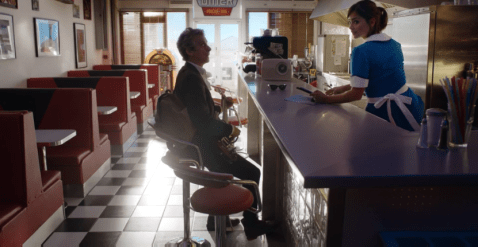
Doctor Who Recaps, Season One, Episode Three: The Unquiet Dead

When this episode first aired, I was straight-up banned from watching it. As a child with a dangerously vivid imagination, driven to weeks of sleepless horror by episodes of Grisly Tales for Gruesome Kids, I totally, in retrospect, understand why my mother didn’t let me watch it when it first came out. At the time, however, I was furious, and vividly remember acquiring the scariest, most lurid details of The Unquiet Dead from my classmates in the playground, piecing together the story and filling in the blanks in my head until it became an untinkably horrible bastion of nightmares far worse than anything the episode actually produces. It wasn’t until a couple of years later that I actually saw the third episode of season one, and even now it holds a special kind of midnight-movie horror to it-I still feel slightly nefarious, like I did reading Goosebumps under my covers by torchlight after I was meant to be in bed, watching this episode that I was so totally banned from seeing at the time.Well, that, and the fact that this is the first bonafide classic episode of New Who.

This episode is one of the best ghost stories Doctor Who ever pulled off, because they’re usually so intent on going “IT’S NOT GHOSTS, BUT A SPACE EXPLORER MOVING IN SLOW MOTION/ALIENS/INSERT MOFFAT-IAN PLOT TWIST HERE” in later episodes. But this episode, revolving around a mysterious series of re-animations taking place in a Welsh funeral home, is just a straight, Dickensian ghost story- which is appropriate, because Mr Dickens himself crops up to join Rose and the Doctor for the first of many a Victorian adventure (Look, they have to get as much wear as they can out of those costumes, alright? That’s why they shot a whole episode on the abandoned BBC Robin Hood set).

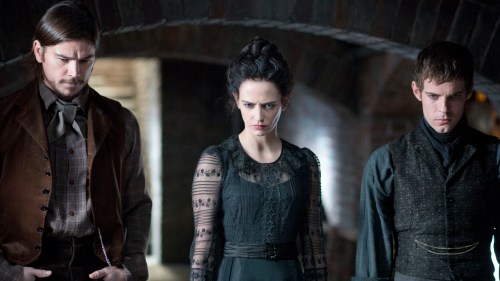
Ugh, I’m OBSESSED with Rose’s costume in this episode. Billie Piper is a goddess. Speaking of which, have you been watching her in Penny Dreadful? She’s cracking, and the show is a great high-camp rollick through sexual deviance, Eva Green, re-interpreted literary characters, and Timothy Dalton’s muscular ‘tache.

This episode, for those counting, is the first appearance of Gwen, who would later (well, an ancestor of Gwen’s, whatever, Russel T Davies don’t need no continuity and wanted to wring a bit more from Eva Myles’ contract) take on a lead role in Torchwood, television’s B-movie. And she’s a pleasure in this episode, playing a maid at the funeral home who’s psychic skills are exploited by her employers to find the corpses who’ve wandered off through the city, fulfilling the last engagements they had arranged in life. One of these corpses winds up turning up at a Charles Dickens’ (played by a genuinely brilliant Simon Callow) reading, and Rose gets snatched by the proprietors of the home after she sees too much, and the story launches into a rollicking, scary, good-humoured romp that revealed just how well New Who dealt with it’s history.

I had the serious hots for this version of Dickens back in the day. By which I mean, when I watched this episode two days ago.

As someone with a degree in history (an accidental one, but who’s counting), these episodes are usually my favourite Whoscapades (Stop trying to make Whoscapades happen, Lou). You can take these episodes on purely a surface level and enjoy the zombie-ghost action, but there’s plenty in there for those who happen know a bit more about the time period, with clever and affecting nods to things like Dickens’ tumultuous personal life and his disdain towards the occult. But either way, it’s great fun to see the Doctor turning into a swooning fanboy when he ends up in Dickens’ carriage, trying to remember the name of that scary short story he once read (side note: here’s a really good adaptation of that short story on Youtube, if you’re looking to scare yourself shitless later tonight, because it’s Sunday and that’s what you should be doing). There’s a fun earnestness to this episode, which is written by God-amongst-men Mark Gatiss, which is packed full of excellent puns (“I do love a happy medium”) and sassy Rose quips.

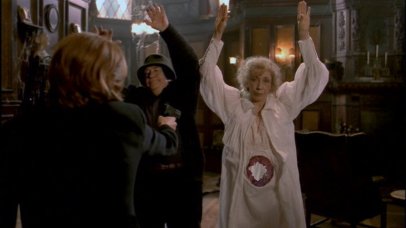
The zombie exhibit is one of the most popular at Cardiff’s Zoo.

This is also the first episode where we meet the truly fallible Doctor. Without giving too much away, he fucks it; despite Rose’s protests, explaining it away as a different morality, he encourages Gwen to sacrifice herself to allow the ghosts into our reality. And it turns out that their motivations were not as pure as he had thought. The Doctor here is desperately trying to fulfill the role of the hero he had been unable to during the Time War, but instead ends up killing an innocent woman in the process in an ending that makes someone other than the Doctor the hero. Things turn out as well as they could, but the Doctor wasn’t the one who made it happen, and that’s an interesting concept to throw into the mix at this early stage of the series. He admits he can’t save Rose, when the two of them are cornered by Welsh zombies (the WORST kind of zombies. Don’t ask me how I know) in a slightly shocking scene that underlines the lack of control the Doctor really has. The episode ends on a melancholy third act, as Dickens leaves the Doctor and Rose, suddenly full of new ideas for his writing and set on reconciling with his estranged family, only for the Doctor to reveal that he dies only weeks later. It’s a bittersweet ending to a lively, fun episode, and one that leaves a very different taste in the mouth that the bad-guys-get-their-due of the first two outings. If you haven’t seen New Who, or believe you have no reason to, this is the place to start to convince yourself- it’s far more than the kid-centric sci-fi ramblings than the show often gets characterised as, especially in it’s earlier seasons, and if you’ve got any fondness for horror, alt-history, or Christopher Eccleston getting compared to a navvie, then this is for you.

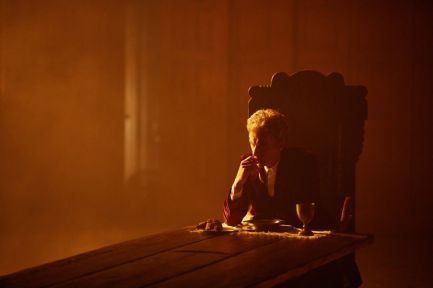
CHEEKY SEANCE BANTZ

Join us next week for the first Slitheen two-parter, and my desperate attempts to justify why I’m apparently the only person who doesn’t think it’s utter shite. As ever, enjoy a different take on this episode over at Red Whine.

Hannibal: A Love Letter

Hannibal is love, Hannibal is life. An obituary for one of the best shows on TV.

Best and Worst Trailers from Comic-Con 2015

Nerd-baiting with the Comic-Con 2015 trailers. Suicide Squad looks awful and I’ll hear no different!

Grace and Frankie: Heartfelt Comedy with Teeth

I will never not love Lily Tomlin

For the Love of Anime

Look, I know I’m late to the anime game. My only knowledge of the genre came, for a long time, entirely from the hilarious and incisive parody series Yu-Gi-Oh Abridged which I’m in the midst of rewatching and killing myself over. Then I stole all of the Death Note manga from my brother (Sorry Dan) and found myself pretty entranced by the ridiculous high-concept sci-fi/fantasy battle between good and righteous evil. I sought out the anime, and it was those fantastically well-executed episodes that brought me to see what the anime genre had to offer. As someone who’s been obsessed with TV for so long, and Western TV specifically, it’s kind of refreshing to come to a genre where you have to idea what the tropes are or what you’re expectations will be. I’m sure many hardcore anime fans will dismiss my mainstream picks, and if they do, please go write your own damn list. No, seriously, do, because I want to read it and find more awesome anime to watch. So, without further ado, let’s talk about the three best anime I’ve seen so far, and why you should watch them whether or not you’re an anime fan already.

  1. Neon Genesis Evangelion

Phew, where to begin with this one? I’ve touched on the topic of this show before, in a post about madness of TV, and I think that still pretty much sums up why I find this show so interesting: it’s just an all-out exploration of mental health disasters, told through the lens of giant robots fighting aliens. Set in a post-apocolyptic Tokyo where mysterious beings known as “Angels” launched periodic attacks on the city, the story revolves around fourteen-year-old Shinji, who’s brought in to defence organisation NERV to pilot one of their prototype weapons, a giant robot known as an Eva. What starts out as a beautifully animated if slightly off-beat sci-fi epic soon descends into outrageously perceptive journeys through each character’s psyche and how it’s been impacted by the horror of the situation they’re facing. I love it particularly for the excellent female characters, but also for it’s utter insistence to make the audience shift in their seat at least four times an episode, with rapid-fire changes of tone and suddenly stark animation.

Oh, you came for the giant fighting robots? BAD LUCK MOTHERFUCKER

The story behind the show’s creation-which included a massive cut in budget that forced the animators to use mostly still frames and prototype sketches in the last few episodes-gives a lot to it’s distinctive animation design, but be warned: you will need a cup of tea and a lie down after the opening credits alone.

What happened at 0:55? Did someone fall on a button or something?

2. Attack on Titan

I’ve watched this anime three times through in the last two months, as well as foisting it on my friends and assorted family. This could have been created for me: an alternate-history sci-fi (Yes!) surrounding the last dregs of humanity walled off from the world in a giant enclosure meant to protect them from attacks by the man-eating Titans. While things have been quiet for a while, when the Titans launch another attack on the city, the population must fight back, and the story follows three teenagers as they train up to take on the Titans and regain some of the autonomy they lost. The visual style, of the medieval-style city matched with super-futuristic weaponry, is genuinely mind-blowing, and marks out the action sequences as some of the most exhilarating and breathless moments I’ve ever seen in any medium. It’s dense with plot, intrigue, and layered characters, and also the only character from a cartoon I’ve ever had a crush on:

Look, he has a really deep voice in the sub, so ignore the fact that he looks like a fourteen-year-old.

And you know how much I love genuinely scary villains? Well, the Titans are some of the most utterly creepy, unstoppably scary bad guys I’ve seen anywhere. Sometimes, you can keep your nuanced ghost stories and intricrate psychological thrillers- all I need to scare me is a giant, unstoppable creature with an inexplicable lust for human flesh. Look, here comes one now!

I can’t be the only one who gets the heebie-jeebies watching this, right?

3. Psycho-Pass

Maybe I’ve not made it clear that I love sci-fi, but I LOVE sci-fi. My first introduction to it was a book of short stories by Philip K. Dick, and this anime is a love letter to his take on the genre- dark, gritty, thoughtful, and not afraid of being a little tongue-in-cheek. In a dystopian future, justice is not based on whether you’ve committed any crimes, but how high your propensity is to commit them. If you’re psychological state is deemed dangerous, you’re in trouble. Some of these people deemed psychologically unstable become Enforcers, recruited to police teams to help think like the unstable people they’re trying to catch. The story follows new recruit Inspector Akane, and her dealings with the suffocating system, as a mysterious villain starts influencing normal citizens to commit horrific acts of violence.

I can’t stress this enough: this guy is one of my favourite villains in recent history. So fiendish! So pretentious! So evil!

They say most good stories should be summed up a few words, but this one leisures in adding layers and layers to it’s universe. A neo-noir police procedural, it takes some cues from the superb Hannibal, with brooding Enforcer Kogami tussling mentally with arch-nemesis, the master criminal Nakashima. It’s one of those shows that delights in pushing boundaries, testing just how far they can go with their big themes- the price of safety, the meaning of justice, and the danger of an isolationist system- without letting their nuanced ensemble get lost in the mix. I love the sharp, slightly cynical sense of absurdity Psycho-Pass displays, because it reminds me of Terry Gilliam’s Brazil, with all it’s sugar-coated horribleness (if you haven’t seen that movie, by the way, stop reading this, and watch it now). It paints in broad strokes, but it manages to conjure up some impressive character arcs despite the fact that most of it’s brutalized women somehow end up with their boobs out (whoops).

Inspector Akane and her arc are an example of how the best thought-out character arcs can reflect the central themes of a story. AND they didn’t even have to make her someone’s love interest to justify her existence on the show!

So, that’s my list- what’s your’s? What anime should I watch next?

On Celebrity Culture and Abuse

I’m going to go ahead and stick a trigger warning here for discussion of domestic abuse.

You know Sean Penn, right? That guy who beat the ever-living shit out of his wife, was charged with domestic assualt, and then got an Oscar? Maybe Roman Polanski is more familiar to you, as the guy who took a plea bargain back in 1977 that laid out his unlawful sexual intercourse with a thirteen-year-old child? We gave him an Oscar, too, and a Palme D’or, even after he fled the USA to avoid be imprisoned for his crimes. Ozzy Osbourne was happy chatting to an interviewer about the time he was arrested for trying to murder his wife, Sharon, but he’s still just that wacky rocker guy to most. Charlie Sheen, sitcom star and internet meme, was charged with third-degree assault on his then-wife, Brooke Mueller, but we remember him for his Emmy-winning turn in Two and a Half Men. Chris Brown continues to see his songs chart, even as the harrowing pictures of his one-time girlfriend Rihanna crop up online, depicting her black and blue face after he assaulted her. This are my cut-offs. These are the things that I will not support someone after hearing. You might have different standards, but it’s always good to remind ourselves that the people the media idolizes for us aren’t always worth idolizing.

I’m talking about the misogyny and general nasty undercurrent in our media that allows us and encourages us to embrace these men to our screens. We, as a culture, have found a way to forget the violence many of our treasured cultural icons have committed against people, especially women. We hold our desire to be entertained above the right of the people they abused not to see their attackers idolized. And it’s not about justice, it’s about the fact that, time and time again, we’re happy to ignore the flagrant ways celebrities abuse their power, to hire them, to watch them, to promote them, even to go as far as holding them up as humanitarian icons. I don’t know about you, but that makes me feel a little gross. Either our cultural memory is that short, or we’re simply willing to hold the notion that Sean Penn once left Madonna tied to a chair after roughing her up for hours on end so that he could go out and buy more booze and that we still want to see his movies in our heads at the same time. I’m not sure which is worse: the fact that we might just have collectively forgotten, or that we remember and it just doesn’t register high enough on our “things that matter” list to stop us wanting to see his mannered, average performances.

And look, I’m not saying that it’s pleasant, having to think about what and who you’re supporting when you just want to watch half an hour of television or a couple of hours in the cinema. But that’s the problem- it’s easier for the media to stamp down on these issues, to try and blot them from our cultural memory, than it is to question why it’s okay to hand a self-confessed sex offender who never saw a day of prison one of the highest cinematic trophies in the world. We prefer to remember Sean Connery as James Bond, not as that guy who said that hitting a woman was fine if she was “being a bitch”, because it’s easier not to muddy the waters of our one-dimensional vision of him with the fact that he’s a piece of shit.

And I know it’s a shitty, awful, saddening, infuriating thing to think about, but we have to consider who we’re supporting when we choose what to see and who to spend our money on. I think it’s up to you to decide who you want to support, because we all have different cut-offs for what constitutes unforgivable behaviour, but also to try and wade through the media’s effort to negate the bad things that their highest-grossing celebrities have done. We’re taught to consume our media mindlessly, but only by questioning what and who we lend our time and money to will we weed out those who are abusing the power we’re giving them, and encouraging us to forget their unpleasant histories.

On Offensive Humour

You can’t work in the media these days without being tripped up by people making, protesting against, or apologising for offensive jokes. Whether it’s Frankie Boyle joking about how lucky the late Jade Goody’s husband was now that she had passed, to Jimmy Carr saying that he blamed Reeva Steenkamp for her own shooting, to Rickey Gervais suggesting that an overweight woman walking down the street eating chips should be sterilised. It’s comedy’s business to make the unthinkable thinkable and to tackle subjects that we might feel uncomfortable about tackling in our day-to-day lives. And I get that. I don’t think comedians and other entertainers should be forced to stop making jokes that offend people, because then all we’re left with is the kind of half-hearted comedic mush that doesn’t offend anyone, but doesn’t entertain anyone either.

But what really irks me about offensive humour is how protective people are about it. Let’s take, for example, the big shitstorm that surrounded comedian Daniel Tosh a couple of years back. After a woman in the audience protested his take on rape jokes always being hilarious, he replied with ” “Wouldn’t it be funny if that girl got raped by like, five guys right now? Like, right now? What if a bunch of guys just raped her…”. He apologised, but the incident turned out to be the comedy’s Helen of Troy, the comment that launched a thousand thinkpieces. There were people defending his right to make rape jokes, there were people arguing that the gang-rape of a random woman was not fair game to joke about, but there were also a lot of people screaming into the void on social media and other platforms: “Get over yourself. Get a sense of humour. Loosen up. Stop being so uptight/feminist/sensitive.” These comments were coming from comedy fans and comedians alike, and those are the people I want to address.

Look, I love comedy. Who doesn’t? I watch a lot of it on television, and I watch a lot of stand-up .I think a big part of the problem that comes with making offensive jokes is that people forget the point of near-the-knuckle humour. And therein lies the rub: often, when I don’t find an offensive joke funny, it’s because I just don’t think it’s funny. It’s not because I’m too busy rushing for the smelling salts to eke out a grin, it’s because simply having someone yell an inane statement about a touchy topic in my face doesn’t make me laugh. People who defend these kind of comments seem to forget that it’s the comedian’s job to make me laugh, not my job to find them funny.

Take the best rape joke in the world, told by Louis CK: “I’m not condoning rape, obviously. You should never rape anyone. Unless you have a reason, like if you want to fuck somebody and they won’t let you.” This is a joke that actually has some thought behind it; by presenting the unbelievably stupid and simplistic reasoning behind the act of rape, he’s making the rapist look like an idiot. He’s doing more than pointing at someone and shouting “HAHA YOU SHOULD BE RAPED!” (interestingly, CK tweeted his support to Daniel Tosh during the furore, so make of that what you will). That’s what makes it funny. I’m not saying that everyone in the world should fall in line with my sense of humour, just that writing off our ability to laugh because we don’t think the very concept of gang-rape (or whatever “edgy” topic the comedian has taken on in this  week’s controversy) is hilarious.

Because a lot of people seem to think that the offensive topic itself is what makes the humour intelligent. I’ve written before about Family Guy and it’s complete failure to say anything new about controversial topics, even as it visibly pats itself on the back for addressing them. Identifying a touchy topic and immediately adopting the stance that is least socially acceptable for it’s target audience is pretty shallow humour, as it rarely says anything about the topic at hand.

Really, what I’m saying is this: if you’re keen to go down the offensive humour route, try and actually say something. Because when comedians blurt out something akin to the comment Daniel Tosh made, they’re often not being half as edgy as they think they are. You can find them all over your screens: Family Guy having a character throw up for thirty seconds straight after he realizes that he’s been in contact with a transgender woman, or Trevor Noah tweeting about how fat women are grateful for the weekend because then people will get drunk enough to find them attractive, or Chris Evans and Jeremy Renner laughing about how Black Widow is a slut. These kinds of jokes, and hundreds like them, the kind that skewer people who society has done a really good job of skewering already, aren’t so much pushing boundaries as they are falling in with the party line. Now, I’m not saying that means they shouldn’t be allowed to exist, or that no-one should find them funny, but rather the people who crack these kind of jokes shouldn’t be held up as pantheons of forward-thinking, ground-breaking comedy, when they’re doing nothing that dares undermine the status quo.

And that’s where the problem with offensive comedy lies, at least for me. It provides a safety blanket for comedians and entertainers who are too belleigerent or arrogant or whatever else to accept that maybe, just maybe, their audience does get the joke, but it’s just not that funny.

A Wanker’s Literary Reaction: Batman vs Superman: Dawn of Justice Comic-Con Trailer

So, with Comic-Con taking place over this weekend, I’ll be putting up a few trailer reviews for the teasers that tantalise me the most. Let’s kick things off with a look at Batman vs Superman: Dawn of Justice, whose latest trailer was released today. You can read my impressively underwhelmed reaction to the last trailer here.

0:01: This is three minutes forty seconds long? What will there be left to show in the cinema?

0:15: “Oh, so I’m heading out to a protest about how I’m an abomination? BETTER WEAR THE FULL SUPERMAN OUTFIT, DON’T WANT ME SLIPPING BY UNNOTICED”.

0:21: That cape is not suitable court attire. I should know. Don’t ask how.

0:26: BRUCEFLECFK!

0:31: He looks pretty cool, but I will defend Christian Bale’s louche charm as Bruce Wayne to the death. He might not have been the best Batman, but he was the best iteration of his alter-ego.

0:40: Running dramatically into dust! Hugging children! This really is a Ben Alfeck Batman, isn’t it?

1:00: He just doesn’t look right. I’m willing to be disproven about this when I’m strongarmed into watching this movie, but he looks like an aloof dad that I would have had a crush on in high school.

1:10: I love it when a trailer tries to stylistically interesting and just renders every shot too dark to watch. I LOVE IT.

1:16: YUS LARRY FISHBURNE! If you haven’t been watching him in Hannibal, you should have been watching him in Hannibal. Unf, his voice is what salted caramel desserts would sound like if they could talk.

1:17: I don’t like the fact that I’d consider paying to see this movie just to look at Henry Cavill for a couple of hours either, but here we are.

1:29: Every time Superman appears onscreen in full garb, my mind wanders away to wondering when someone’s going to adapt Red Sun as an awesome TV miniseries. I would never stop watching that.

1:36: I think whenever Henry Cavill leaves the house, he’s surrounding by people trying to touch him, just like in this shot.

1:50: Fuck tho, Jesse Eisenberg looks amazing. He’s absolutely one of my favourite actors around at the moment, and I can’t wait to see him play a bad guy. Note: Go watch The Double, starring Jesse Eisenberg(s), because you like to use words like “dynamic” and “stylised” to describe movies the same way I do.

2:02: That’s a Joker reference, and I will be purchasing out an entire cinema just to fully appreciate that moment on the big screen.

2:13: It would be hilarious if someone recut this with the Adam West Batman in place of Batfleck. I’m not saying you should spend all of tomorrow doing it when you should be working; I’m just saying.

2:33: GUNS! SCREAMING CHILDREN! COFFINS! FIRE! DID ZACK SNYDER MENTION HE’S AVAILABLE FOR WORK?

2:37: If you squint, you can make out the moment everyone remembered that Wonder Woman was in this movie. Wonder Woman in a Xena cosplay, that is.

2:44: No-one will admit that the outfits look hilariously silly against the serious backdrop, but we all know somewhere in our hearts that it’s true.

2:51: Jesse Eisenberg has young Heath Ledger hair, and you do not want to remind me of The Dark Knight, Snyder. You’re on a knife edge.

3:02: All of that was good because Jesse Eisenberg, and my distraction over wondering if metal-plated underwear would rust.

3:08: Jesse Eisenberg looks SO GOOD, but then I did see Man of Steel. Fool me once, DC. Fool me once.

3:25: OMG THE LOGO IS SUPERMAN’S S INSIDE THE BAT SYMBOL IT’S A METAPHOR YOU GUYS BATMAN EATS HIM INB4

On Body Image

LOUISE - WIN_20150707_143957

Spot the cat in this picture.

This is a picture of me, ready to brace the heat and cold summer showers that have been inflicted on my city for the last week. It’s also one of the first full-body pictures of myself I’ve associated with in the last year and a half, because I don’t want people to see my body.

There’s a lot of reasons that that statement makes me angry. After all, it doesn’t matter what I look like: my friends will still drink with me and laugh at my godawful puns; my family will not disown me (probably), and the people who employ me will not want to hire me any less based on what I look like. I’m a feminist, and know that the idea that people should be ashamed of the way they look is a cruel, pointless, horrible thing. As a pop culture addict, I understand that the general size and shape of women in the media differs from my own, and that’s where many of my preconceptions about what I should look like come from. I can rationalise these thoughts, but they don’t mean a thing when I catch myself at a bad angle in the mirror and run off to do a bunch of sit-ups because my stomach looks disgusting. Things came to a head last week when I replaced my Evan-Rachel-Wood-in-lingerie screensaver to something that wouldn’t make me loathe myself, because I felt so shitty looking at her slender legs and perfect body. And when my weight problems interfere with my ability to letch over beautiful women who I may or may not be in love with, we’ve got a problem.

It’s doubly ironic, too, because right now I am healthier than I have been in ages- I quit smoking, I exercise every day, and I attempt to eat what my insane appetite will deem a reasonable diet. Two years ago, I was a lot slimmer, because I was eating small amounts of crap in between partying so hard I woke up on the floor or the ladies’ bathroom more than once. I might have been a train-wreck healthwise, but I could fit into a UK size 8 and that was all that I cared about. Then, at the start of last year, I started putting on weight, and went up to a size 12and ever since then I’ve been grappling with the stupidly time-consuming act of hating the way I look.

I think the most irritating part is holding the feminist side of my brain and the body-concious side of my brain in tandem with one another. Because the feminist side of my brain tells me that it doesn’t matter what people look like, that it’s not my buisness to judge them or treat them any differently because of their weight- things I know to be true. And then there’s the other side, which tells me stuff like “well, at least you’re not as big as her” or “she’s just too skinny” so I momentarily don’t feel quite as shit about my own size. But that makes me feel even worse, because I don’t want to be the kind of person who can only be happy with their body if they’re comparing it favourably to someone else’s. That’s gross, and it’s a side of myself I try to shut off whenever I can. I want to celebrate other women, not throw myself back into competition with them, but that’s how body-shaming makes us relate to one another; as targets to be beaten, not actual human beings.

But then, I’m often unsurprised that I’m as self-concious as I am about my weight gain, considering the way we treat people who don’t fit the perscribed beauty mould. Take Colleen McCullogh, neurophysicist, best-selling author, and Yale medical researcher, who’s obituary opened with a jibe about her weight: “Plain of feature and certainly overweight…”. Christ, if a woman as accomplished as her can be reduced down to her size despite all her achievements, what the hell can I be remembered for? “Freakishly small of mouth and thundery of thigh…”. I’m sure I don’t need to explain to you the pervasiveness of the ideal body type across all media, because we’re all bombarded from it at all angles: in magazines, on television, in movies, online…all I’m saying is that if a bunch of us were asked to describe the perfect body, it’s striking how similar our answers would sound.

And that’s the worst thing about having body image problems: it’s so fucking dull. Everyone has issues with their body, no matter what they might be, because we’re constantly told that you need to look a certain way to be successful and loved and admired. And as long as I continue telling myself that it’s bullshit- that I can look however I want, and I will not stop being the person I am right now-maybe, just maybe, I’ll be able to re-instate that Even Rachel Wood screensaver.

I’m genuinely curious to hear: how do you feel about your body? It’s a question we don’t hear an honest answer too all that much, for fear of coming across as arrogant or  insecure, but here’s your chance. Tweet me, comment on this article, and let me know about your relationship to the way you look.

Troll 2: A Thematic Analysis

Every generation, a film comes along that defines the way we think about movies. Scorcese’s brutal and brilliant Goodfellas, packed with rich, dense tracking shocks and the tarnished glamour of the mobster life; Lord of the Rings, the sweeping fantasy epics that redefined the way we look at genre films. And then there’s Troll 2, a layered, witty, understated masterpiece that bubbles over with imagery and thematic elements to rival any Linklater, Anderson, or Iniratu outing.

Troll 2 follows the harrowing story of the young Joshua, who holidays with his family to the mysterious town of Nilbog (which is, as the film slowly reveals through barely perceptible nods and hints, goblin spelt backwards).  Things start going very wrong for the family, the very depiction of all-American wholesomeness, led by a staggering, screen-dominating performance by George Hardy as the powerful patriarch of the Wilts tribe. Watching his nuanced take on the character, it’s hard to believe that he’s a dentist by trade, and not an actor who could stand up to the likes of Pacino and Norton with ease and style.  The direction, too, is flawless: through repeated use of a single, striking shot of lightning balanced with the use of a repeated musical theme, the film implants immovable images in the viewer’s mind that refuse to be shaken.

The film, for all it may seem nothing but a practice in finger-chewing suspense, is actually a perceptive diatribe on puberty and burgeoning sexuality, which, as the film depicts, are inevitabilities of growing up that will eventually murder and eat your entire family. The chilling Creedence Leonore Gielgud plays as a juxtaposition between the mother and the whore; at once nurturing her goblin offspring (created through the use of ground-breaking prosthetics that Spielberg would later quote as influence for his mildly entertaining creature feature, Triceratops Park) and acting as an object of sexual desire for the film’s boisterous and hilarious group of teenage boys. The most erotically charged scene in the movie comes when she arrives at their caravan with a corn-on-the-cob, only to fill the tiny space with mountains of popcorn as she seduces one of it’s unlucky occupants, juxtaposes the thing that once bought such childhood joy-popcorn- with the horror, fear, and death that lead from pursuing sexual desire. The scene drips with unconsummated sexual tension, pulsing with latency and potency. This isn’t the kind of sexy you’ll see in most mainstream movies; it’s real and raw, and allegedly unsimulated.

Joshua, the young boy at the film’s epicentre, plays out similar themes of the apposition of puberty and childhood. Regular visits from his grandfather (played by a disappointing Richard Attenborough) are held up against scenes where he is forced to rebel against the incoming goblin force through any means possible, including one disturbing sequence where he urinates on the family’s dinner to stop them eating poisoned food (you wouldn’t know it from watching the scene, but instead of freeze-framing the actors, the director chose to shoot the scene with them in absolute stillness). Joshua, and to a lesser extent his sister Holly (who mercifully escapes any of the flash-of-flesh sexualising that many young actresses at the time were bestowed with) are innocents against a corrupted town, forced to battle their loved ones to keep the goblin threat at bay. Alas, it’s all for nought, but their fight makes compelling viewing.

Overall, Troll 2 is a deeply considered piece of work, with universal themes that appeal to everyone: age is represented in the stunningly choreographed shot of a fly crawling across a young man’s face as he screams in terror, while Joshua follows his bouncy red ball around to keep him safe. Profound, moving, and not afraid to go to the darkest places in the human psyche, Troll 2 remains one of the most important movies of the last half-century.

Rating: Ten Goblins out of a possible Ten