The Cutprice Guignol

The Ninth Year: The Haunting of Swill House

Category: Discussion

On Trigger Warnings

So, a few months ago, a couple of friends and I were discussing safe spaces and trigger warnings. One of them mentioned a post he’d seen on social media, which displayed an image of someone holding a knife to their arm, and he snortingly described a comment from someone asking that it be tagged with a “trigger warning” for people who self-harm. And then he saw my expression of apologetic “I’m going to disagree with you quite a bit here”, and realized it was going to be an awkward five minutes.

I know damn well that the concepts of “trigger warnings” and “safe spaces” have become a dogwhistle term for overly sensitive social justice warriors and all kinds of apparently swooning lefties who can’t so much hear the word “fat” without keeling over into a weeping pile of mush- or so most of the internet would have you believe, anyway. And I know a lot of you reading this may well fall on the “pull yourself together, you can’t be protected from every little thing that bothers you” side of the scale. And I know I can only talk about this from my own perspective (ie, dealing with self-harm), but indulge me a few minutes while I try to explain why these concepts are perhaps not the ridiculous pandering you might think they are.

As I have written about before, for me, self-harm is an addiction. Which means that it’s never really been something I’ve “recovered” from- it’s still there lurking away at the back of mind most every day, and I would say not a full hour goes by where my brain doesn’t shout “DO IT YOU PUSSY” at me. For the vast majority of these incidences, I can snuff out those kinds of thoughts pretty quickly, because they usual come from nowhere-there’s nothing backing them up and making them legitimate. These thoughts just sort of slither to the front of my head, and, finding nothing to hook on to, then slither off again a few seconds later.

Sometimes, I might be scrolling through social media of some kind- maybe even come across an article like the one my friend mentioned- and see an image of someone injuring themselves, or see pictures of self-harm scars, or whatever it might be. Again, most of the time, I can see this images and brush straight by them. But if seeing an image like that happens to match up with a moment or period of time when my brain is pushing for me to harm myself again, it’s like someone has yanked the concept to the front of my brain and nail-gunned it there. It’s hard to explain the singularity my brain locks into when I want to hurt myself, but it’s kind of the same feeling I get when I’m walking home in the rain carrying a heavy bag- that internal promise that it’ll be done soon, and then I can relax. I find it difficult to shake these thoughts without actually acting on them, else they just sit and leach at the back of my head for hours or days or weeks.

As I’ve said before, mental illness works differently for everyone, so some people who self-harm (or suffer from other forms of potentially triggerable illness, like PTSD) might find themselves absolutely fine looking at these images. Which is great for them. But for me, and people who react similarly to difficult reminders of things they’d rather not think about, putting a trigger warning on something isn’t there to pander to my agonizingly delicate sensibilities; it’s something that gives me the choice to opt out of seeing or watching or reading something that might tip my brain upside down. I understand that if you don’t find anything in particular “triggering”, the concept might seem like cotton-wool wrapping the world, and you’re welcome to continue arguing that it is. But for me, it’s just a promise that I get to choose whether or not to carry on my day like a normal person, and I appreciate the effort.

The Short Life of TV Lesbians

(Spoilers for The Walking Dead, The 100)

I really liked Denise. I did. The Walking Dead had so far done well with their resident nurse, a smart, insecure but compelling side character. And, when she got into a relationship with the show’s resident lesbian Tara, I was pleased. After Tara’s last girlfriend had scored a bullet through the brain earlier in the series, it was good to see the show’s only queer female character getting an actual love interest.

tara-and-dr-denise-talk-in-the-walking-dead-season-6-episode-5

And then Denise got shot through the eye with a crossbow bolt.

Let’s ignore the fact for a minute that this whole plot was clumsily set up and poorly executed and entirely there to service the story of a straight male character. Let’s talk about dead lesbians on TV, and the fact that, even in 2016, TV writers struggle to keep their queer women characters alive.

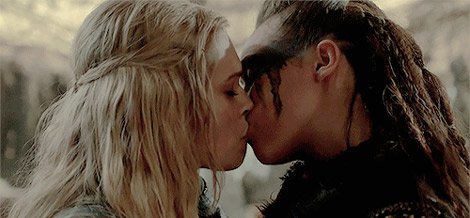
We’ve had a couple of high-profile pieces of lesbian extermination in the last couple of months- both The Walking Dead’s dispatching of Denise, and The 100’s openly gay Lexa catching a stray bullet in the same episode she consummated her relationship with the show’s lead character, Clarke. I could list off fifty other examples off the top of my head- Naomi in Skins, Tara in Buffy, Sara Lance in Arrow (killed to make way for a straight woman to take up the mantel of her superhero alter-ego, no less)- but you get the idea. TV writers seems to have trouble not killing off their queer ladies, and that’s clearly a problem.

the-100-clarke-and-lexa-470

Why? After all, aren’t these shows in which people die- straight people, gay people, anything in between? Well, yes, and this is the excuse fans and writers alike will give when there’s a backlash over the killing of LGBT characters, but it’s not quite as simple as “anyone can die, so you can’t get mad that your favourite queer character gets it”. The number of queer characters on TV is still at a surprising low, so watching an LGBT character get unceremoniously bumped off the show isn’t the same as seeing your favourite straight character die. Yes, the latter might suck, but bluntly, there’s plenty more straight characters to choose from. Even the most progressive shows might only have one or two non-straight characters, so when we lose one, it matters in terms of representation. Sure, anyone can die, but the fact that it just so happens to be this show’s only openly gay/lesbian/bisexual/trans character is just a coincidence, right? God forbid we don’t hit our quotas for straight representation, after all.

There’s also the question of why queer characters are so often chosen to be the ones killed off. After all, with whole casts to choose from, it seems odd that TV writers keep indulging this particular trope. Take the example from The 100 I quoted above- the openly gay character dies after sleeping with Clarke, who’s heterosexuality had been assumed till she’d met Lexa. In fact, Lexa dies taking a stray bullet for her. It’s one of a bunch of examples in which queer characters die in order to service the stories of their straight (or straight-passing, or previously straight) counterparts. The people behind Smash confirmed that they killed one of their only openly gay characters, Kyle, so that his straight scriptwriting partner could learn a lesson. Boardwalk Empire kills off it’s only regular queer character to further the plot of her husband. Denise buys it in The Walking Dead so Daryl can get a quick blast of emotional development. Introducing queer female characters- often hastily shacking them up with another character to create some semblance of happiness- only to kill them off to service a non-gay characters arc suggests that they’re only there as accessories to the stories of straight people, unworthy of an independent story of their own.

There are a huge number of unfortunate implications whenever a writer kills off a queer character, whether or not their intentions might be innocent, because it plays into this trope. And TV’s habit of ploughing through it’s female LGBT characters with reckless abandon just further sidelines real, meaningful LGBT stories getting shared in the mainstream media. In short, this trope needs to die faster than your new favourite lesbian character inevitably will.

The Flattering Fallacy

Flattering. It’s a funny word to use to describe clothes that apparently make you look better. It suggests that the weird peplum skirt thingy you’re pulling faces over should actually have you blushing and going “oh, stop, you” as it showers you with compliments. And recently, I’ve been thinking about what that word actually means, and how it applies to our perception’s of women’s bodies.

If you type the word “flattering” into Google, it’ll shoot back with a bunch of suggestions –flattering clothes for a full figure, clothes to flatter a big tummy, flattering clothes for a pear shape. And if you do search for any of those things, you’re likely to get back a bunch of articles that offer solutions to your wardrobe woes, generally by pointing you at ways to cover up your imperfections. I’m sure you must have heard of at least some of the “rules” for dressing as a woman- wear black because it’s slimming, horizontal stripes will make you look (whisper it) fat, draw attention away from your flaws by accentuating parts of your body that are societally acceptable. Flattering your figure, if it falls outside the slim, tall hourglass standard, involves perfomring some impossible optical illusions so the world thinks your bangable.

I hadn’t really considered that up until now, because I guess it’s been so ingrained in me that buying “flattering” clothes generally equates to fooling the world into thinking that you’ve got a traditionally attractive shape- long legs, flat stomach, big boobs, curves “in all the right places” (ugh, that phrase still makes me think of fanfiction Mary-Sues). And that seems kind of…shitty.

Suggesting that the clothes that make us look best are the ones that have us adhering closest to societal standards of femininity is pretty fucked up. It took me a really long time to get it through my head that the world would not tilt on it’s axis if someone saw my decidedly not-flat stomach, or were forced to gaze upon the scars on my arms. I was convinced that I had to dress myself in clothes that “flattered” me, that covered up all the ugly bits of me and presented a kind of smoothed-out, homogenized version of my body to the world. Even though I feel like a badass in my men’s-sized Evil Dead t-shirt and chunky boots, I always have that voice ticking away in the back of my head that tells me I should be dressed in a way that makes me look more feminine, more acceptable, because those clothes don’t flatter my body.

I guess what I’m trying to say is that the concept that the clothes that look best on you are the ones that have you conforming to a generic standard of female beauty seems ridiculous when you examine it at all. If you want to take it further, it’s easy to argue that no clothes look really “bad” on people, they just move them further away from how society reckons they should be presenting themselves. So I’m dumping the concept of “flattering” clothing, and I’m from here on out I’m going to wear whatever the fuck makes me feel awesome.

If you like this post and would like to see more things like it, please consider supporting me on Patreon!

Yes Means Yes

So, as with many of these articles, this one got started from a conversation I was having with some friends about consent, rape, and sexual assault (we also occasionally eat free cake and twirl about on spinny chairs). And it struck me that, while I’ve written quite a bit about sexual assault and rape in fictional media (see: Fifty Shades of Grey), I’ve not actually said much on the subject of real-life rape. Trigger warning, obviously, for discussions of rape and sexual assault.

I unequivocally support the notion of Yes Means Yes- that is, that consent does not constitute the lack of a no, but rather the presence of a yes (or of another kind of affirmative consent- you can read more about that here). And I’d like to talk about why. Because I’m tired of explaining to people why supporting affirmative consent is not a radical act.

Look, I’ll get straight to it: if I find out that one more of my female friends being raped and having it shoved aside as a “consequence” for “reckless” behaviour, if I hear one more story about a guy being raped that ends with “but he still got laid though”, if I step out of my house one more time and have to face someone grabbing my body in the street, if I hear one more person asking “Well, what was she wearing?”, if I hear one more punchline ending with a joke about prisoners getting raped, if I hear one more story like this one, or this one, or this one, I’m going to fucking scream. It blows my mind how fucking mixed-up our society’s view of what consent constitutes is. It fucking terrifies me, because I, along with millions of people in this country and across the world, have to face the repercussions of what happens when we don’t teach people to actively seek consent for sexual activity from someone who is of age, concious, and not under the influence of drugs or alcohol. All the above scenarios, while not entirely preventable with yes means yes in action, would at least be seriously different if people took the acquisition of affirmative consent seriously.

And yes, I’ve heard the ridiculous arguments against yes means yes. Yes, I know that some people are concerned that having to acquire consent of the people they’re having sex with will ruin their sex lives. And to those people, I’d like to say this: if you’re genuinely concerned that asking the person you’re having sex with whether or not they’d actually like to be doing it with you will get in the way of you getting laid, you need to take a serious look at your sexual encounters. Why does the thought of asking for consent bother you? Seriously, why? If you’re having consensual sex anyway, the only thing that will change is the occasional “Hey, is it okay if I do X?”. If you’re not sure, then I can see why actually asking that question might freak you out so much.

So, that’s why I support affirmative consent, and I always will. Until we get to a place where we can trust that people recognise what consent is or isn’t, I’m quite happy encouraging people to wait for a “yes” before doing any manner of filthy, disgusting, and utterly consensual stuff they want to get down to.

Redux: Is The Big Bang Theory Sexist?

So, last year (HOW IS IT 2016 ALREADY JESUS), I wrote an article talking about the treatment of women in the sitcom The Big Bang Theory. And, for some reason, that’s the article that people talk to me about most- I guess because the show’s so popular, and people are keen to defend their weekly dose of warm, fuzzy sitcom goodness. And one of the things I hear quite a bit is that the show laughs at the guys on the basis of their gender as much as it laughs at the women, ergo it can’t be as bad as all that. Well, since you mention it…

ovp_blog_bigbangtheorycast

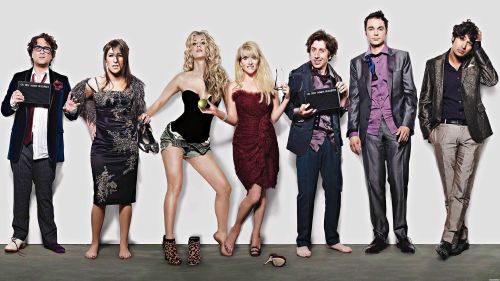
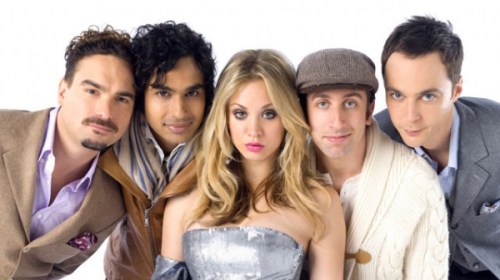
The Big Bang Theory, as you probably know, revolves around a group of four scientists who spend most of their free time engaging in geeky pursuits- attending comic-cons, playing board games, reading comics. They’re not especially successful with the ladies, they’re not particularly physically  fit, they’re often emotional and needy. Basically, they don’t fit the dictionary definition of masculinity- and the show openly mocks them for it.

20

I remember when The Big Bang Theory first became really popular- when the stars were on the front covers of magazines that declared smart the new sexy. And it always took me by surprise, because the show seems to show open disdain for the geeks at it’s core, specifically for their geekiness; their inability to fulfil traditionally masculine traits is often the source of much of the humour on the show. Take the episode The Fish Guts Displacement (which this article explores in greater depth) , where Howard has to be taught how to fish in order to spend time with his father-in-law; Howard (and the rest of the group by extension) is shown to be incapable, squeamish, and a little bit pathetic, contrasting with the depiction of his father-in-law- the strong, stoic, silent type who apparently represents the epitome of masculinity, at least in contrast to Howard and his friends. The show openly draws a line between the “real” men of the show and the leading foursome, and takes much of it’s humour from their inability to live up to those standards of masculinity.

the_big_bang_theory_funniest_tv_show_2012

And speaking of standards of masculinity, there’s a lot to be said for how much the show hinges the normality of these characters on their sex lives. Up until very recently, breakout character Sheldon Cooper showed no interest in any kind of sexual activity with his girlfriend Amy, leading her to trick him into a variety of intimate situations with her (which, ugh). His lack of sexual desire is framed as something hilariously freakish, because what kind of guy doesn’t want to fuck his girlfriend at any given opportunity, right? By extension, the rest of the male characters are similarly portrayed as less than masculine by the show due to their lack of success with women- Raj’s chronic anxiety, Howard’s horrendous creeping, and Leonard’s bumbling insecurity have all been played for laughs, especially when contrasted with the apparently more masculine traits of their eventual partners (like having had more sex partners, more confidence with the opposite sex, etc). The show regularly casts aspersions on their sexuality, a gag so apparently brilliant that it became a running joke because HAHA GAYS, I guess.

The Junior Professor Solution

It’s interesting to note that Stuart, a side character who owns a comic book shop frequented by the leading men, was originally introduced as intelligent, charming, and successful, despite-or, indeed, because of- his involvement with geeky culture. Within a few appearances, he had been reduced down to a caricature of a lonely guy whose staggering incompetence with women is a big part of his comic value.

the-big-bang-theory-02

The Big Bang Theory, basically, is a show which draws it’s humour from the subversion of traditional gender roles. Which could be a great idea, if they didn’t frame the men who subvert these roles as often creepy, socially incompetent, and childlike (remember, Howard still lives with his mother for most of the series’ run, and all four characters are shown to have often dependent relationships on their mothers). The show is taking steps in the right direction by revolving around men who don’t live up to the traditional standards of masculinity, but it could be doing even more by not laughing at them for it.


.

Have Yourself a Gory Little Christmas

What are you doing for Christmas tomorrow? I’ll be drinking heroically, eating delicious homemade sweets and watching Fifty Shades of Grey with my best friends, so if you don’t hear from me for the next week or so it’s because I’m fighting off the usual festive roundabout of drunk/hungover/drunk/hungover. While I am generally a cynical old cow, if there’s one thing I do like the festive season for, it’s the excuse to watch copious amounts of horror- after all, what better way to cut through the warm, fatty, cuddly layer of familial happiness than the knowledge that you WILL die and it might well be at the hands of a psychopath with a machete?

So, with that in mind, let’s take a look at the best pieces of horror television for you to spice up your festive season with. Preferably watch when you’ve eaten too much to bother getting up and hiding behind the sofa.

  1. Whistle and I’ll Come to You

    hurtweb_1791467a

    This screenshot still freaks me out. Left corner.

The 2010 version of this fucking brilliant MR James story is a must-watch for fans of old-fashioned horror given a modern twist. The connection to the original story-which you can read online, for free, and should immediately do -is just clear enough to satiate fans of James’ inimitable work, but Neil Cross (who adapted this version) gives leading man John Hurt plenty to play with in the modern setting, with a properly chilling (and affecting) final act. Following Hurt’s character as he visits a seaside resort only to find himself stalked by a mysterious and unrelenting figure in white, it’s a fascinating exercise in the unseen and the power of anticipation. For pure, unadulterated horror with a heart and soul, hunt down this slow-building tale of terror.

2. The X-Files- How the Ghosts Stole Christmas

the-x-files-how-the-ghosts-stole-christmas-2

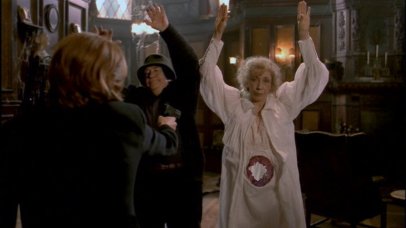
Lily Tomlin and Gillian Anderson onscreen together is…certainly something that’s crossed my mind before.

DID YOU KNOW that The X-Files is coming back in less than a month? I do, because I accidentally surrounded myself with die-hard fans of the series who will not let me just care about the goofy freak of the week episodes as I’d like. Even still, I’m glad they inflicted this episode on me, because it’s a bunch of Christmassy fun. Mulder and Scully go to investigate an apparently haunted house, and find a couple of spirits- played by Lily Tomlin and Edward Asner-ready to entertain themselves torturing the twosome. It’s grim, gruesome, with a dark sense of humour to boot- perfect for the post-dinner lull when you’ve decided to murder your entire family (because it’s Christmas and you’ve got to make this time SPECIAL even though you see these sods every bloody week of the year and the pressure’s just broken you).

3. Tales From the Darkside-Seasons of Belief

hqdefault

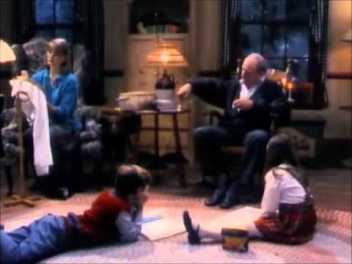
“Gather round, kids, I’m going to scare the fucking bejeesus out of you.”

I don’t think anyone’s head will be exploding with surprise when I tell you that I love campy eighties horror, but I don’t think I’ve ever caught the craic regarding how much I love Tales from the Darkside. Like any anthology series it’s patchy as hell, but when they get it right, boy howdy, they usually come up with something memorable. And this Christmas episode- revolving around a horrible creature conjured up by the parents of some Santa-skeptic kids- is gleefully unpleasant, revelling in torturing it’s kiddy co-stars with the properly unsettling monster and subverted festive feel.

4. Supernatural- Roadkill

350px-2-16_roadkill

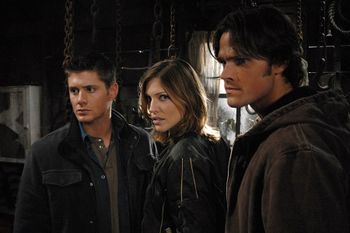
I enjoy everything about this picture. Also, is Tricia Helfer looking directly into the camera or is that just me?

Yes, I know Supernatural has a Christmas episode and yes, I know this is not it, but the excellent Roadkill has always felt like a darkly festive outing to me. Maybe it’s the snow, maybe it’s the moral of the story, or maybe it’s the fact that I get to admire Tricia Helfer AND Jensen Ackles at the same time (truly, a merry Christmas for Lou), but this is my Christmas pick from the long-running (and long-suffering) horror show. Sam and Dean stumble across Molly after she’s involved in a mysterious car accident that causes her husband to vanish, and the three of them help put a stop to the yearly hauntings that possess that particular strip of road. It’s good and creepy, with a clever little arc that fills me full of festive goodwill/desire to acquire my own deadly knife-finger.

5. The Twilight Zone- Five Characters in Search of an Exit

vlcsnap-2011-12-21-12h18m02s230

There are a number of great Twilight Zone Christmas episodes, but this one- inspired by Sartre’s No Exit, for all you beginning to feel the cold grip of festive ennui-is my favourite. Following the story of five people who wake up in a cylinder with no knowledge of where they are or why they’re there (why yes, this DID serve as inspiration for Vincenzo Natali’s excellent movie Cube), it’s a simple, straightforward story with the usual Twilight Zone twist in the tail to keep you sleepless all the way through to new year.


Labour Pains: Women, Horror, and Reproduction

So, since it’s nearly Christmas, I’ve been watching some horror movies (and yes, those things go together perfectly logically) and other assorted spooky paraphernalia. And I’ve started noticing a few patterns emerging with the way horror treats it’s female characters.

I don’t think it’ll come as news to anyone that horror, as a genre, doesn’t necessarily treat it’s women super well. Not to say there aren’t some exceptions-plenty of movies do well in providing female characters who are just as nuanced as their male counterparts (Cabin in the Woods, Grave Encounters, Lords of Salem, just off the top of my head). But beyond the usual final-girl tropes, I can’t shake the feeling that horror movies just have a problem with female bodies in general.

lords-of-salem-movie-page-3

Sheri-Moon Zombie in Lords of Salem

And, yeah, I can hear it now- it’s not as if men get off without being stabbed, shot, eaten, or stabbed with a spear mid-way through sex. But women are much more often victimised for their femaleness than men are for their masculinity.

I mean, periods alone have a long and deeply unpleasant tradition in horror history as it is. Menstruation in horror is often used as a way to signify sexual maturity, and generally that comes with the nasty side-effect of turning the woman in question into a raging serial murderess when all she needs is some tampons and a lie-down- from the seminal Carrie (1976), which opens with our protagonist getting her period for the first time and ends with her destroying an entire town, to Excision (2012), where AnnaLynne McCord’s character deliberately loses her virginity while on her period to try and satiate her erotic obsession with blood.. The titular character in Ginger Snaps (2000) is attacked by a werewolf specifically because the smell of blood from her first period attracted it, and Dog Soldiers (2002) has a female werewolf referring to her metamorphosis as her “time of the month”. Basically, if a women in a horror movie gets her period, get out of there, because chances are she’s about to go on a violent killing spree. These movies, along with many others, directly connect menstruation with an often uncontrollable urge to wreak havoc, which is, at best, only 30% true.

excision_onset_june29_194

AnnaLynne McCord in Excision, which is spectacularly good and deserves to be far more known that it currently is. GIVE ME AN EXCUSE TO TALK ABOUT THIS MOVIE PLEASE.

I don’t think I need to underline how many times teenagers, and women in particular, are punished for having sex in horror movies- films like Jennifer’s Body (2010), which features a teenager forced to lure her classmates with sex in order to feast on their innards due to the fact that she lied about still having her virginity, specifically pinpoint women’s sexuality as something demonic. It Follows (2014) lands in the same ballpark, with a teenager girl being stalked by a murderous vision because she slept with the wrong guy. I couldn’t really write this article without acknowledging this exists, so jump over to here if you’d like to read more about it.

megan20fox20jennifers20body20movie20image

Megan Fox in Jennifer’s Body. This movie is somewhat better than you think. 


And, what comes after sex? Babies. The demon pregnancy trope  and it’s implications have been discussed at great length elsewhere, so I’m going to focus in on a couple of specific movies that take it one step further- firstly, Grace (2009), which revolves around a woman who’s foetus is killed in the womb. She insists on carrying it to term, only to birth it and find out that it’s actually alive- but with a terrible appetite for blood. The film very specifically focuses in on the practical biological impulses of motherhood- labour, pregnancy, breastfeeding, and so on- and subverts them into something unthinkably horrible. In French New Wave horror Inside (2007), a woman loses her husband in a car accident while pregnant, and, just before she is due to give birth, is terrorised by another woman who is intent on acquiring her unborn foetus through scissor caesarean (seriously, you should watch it, it’s fantastic).

inside02

Alysson Paradis in Inside. You have no idea how long it took me to find a screenshot with less than full gore in it.

In both movies, whether literally or metaphorically, the woman in question is being victimised for her ability and willingness to carry and birth children, punished with insane levels of violence or tortured by impossible moral questions for her decision. This can be applied to a bunch of other movies that use demon-pregnancy trope- there are so many films that employ the idea I don’t think I could list them all here- A Nightmare on Elm Street 5 (1989), Devil’s Due (2014), Dawn of the Dead (2004), Ju-On 2 (2004), It’s Alive (1974), and, of course, the one that started them all, Rosemary’s Baby (1969), to name a handful. That’s not to say that the men who feature in these movies get off scott-free- usually the opposite, in fact- but their deaths have less to do with their biology than their female counterparts.

I’m not necessarily criticising every horror film that utilises one or more of these tropes- in fact, I think there are more than a few movies that explore femininity, motherhood and pregnancy in the horror with really interesting results (Most notably 2014’s The Babadook, which you absolutely should have seen by now). But it does get a little bit tiring, in a genre that I love so much, to see women’s biological processes so often depicted as something twisted, demonic, or uncontrollably evil.

Feminism in Time and Space, Part Two: Sexuality and Representation

I swear to God I am rubbing my hands together right now, because this is a topic I’ve wanted to get to for a long, long time: Steven Moffat’s dealings with LGBTQ representation on Doctor Who. Now, I’ve written loads before about bisexual representation (or lack of it) on TV, and it’s something I always look out for in new shows, because bisexual characters-that is, characters who identify as bisexual and aren’t reduced down to their sluttiness, greediness, or, um, lying-ness-are pretty thin on the ground. But Steven Moffat has plenty of characters that don’t fit on either end of the binary, so let’s take a look, shall we?

While this is going to be about Doctor Who for the most part, I’d like to touch on a couple of his other shows that are relevant to this discussion. The first is Coupling, a so-so sitcom following a fictionalised version of Steven Moffat meeting a fictionalised version of his wife. They have a recurring group of friends, one of whom not-Steven is dating at the start of the series- when he tries to break up with her, she tells him she’s bisexual to titillate him into staying. Her “bisexuality” is played for laughs throughout the series, and then, in the final episode, someone shows her some naked ladies, she’s utterly horrified, and her ruse is shattered.

No relevant pictures for that paragraph, but just LOOK at how early-noughties this title card is.

And then, of course, there’s A Scandal in Belgravia, the Sherlock adaptation of the superb Conan Doyle story A Scandal in Bohemia. In the original tale, Irene Adler becomes the only person to outsmart Sherlock and gets away scott-free. In this version, she’s a dominatrix who spends a good chunk of her screentime naked, and she identifies as a lesbian. Despite that, however- despite the fact she says she’s only attracted to women- Steven Moffat’s self-insert  Sherlock is just so sexy and charming and clever that she falls in love with him and gives the whole game away. How they managed to write a story more regressive than one penned over a hundred years ago is beyond me, but there it is. Not to mention the hi-larious running joke of people assuming Sherlock and Watson are a couple, which Watson must quickly and vehemently deny lest those strangers think he likes men, rue the day.

So, you know, the problems I’m talking about here are not limited to Doctor Who. Far from it. But let’s get into the nitty-gritty of representation in the series.

Bring back Donna 2K15

Firstly, Steven Moffat has confirmed that both the Doctor and River Song are “happily bi”, which is cool, and I’m pleased to hear someone actually use the term for once (even if he did follow that up by saying that bisexuals didn’t need representation because they were having “FAR TOO MUCH FUN” and were to “BUSY!!” to watch TV, but let’s skim by that for now). But the fact is that, watching the show, the references he points to as proving their bisexuality- such as an offhand comment from River about fancying everyone in the crew except one, and her making reference to kissing Cleopatra- are always kind of…brushed over? Sure, the Doctor kisses men once or twice during the series, but it’s never as much more than a joke. Neither River nor the Doctor actually find themselves seriously attracted to a person of the same sex without it being breezed past with a barely-audible “No homo though” every time it comes up. Steven Moffat had to confirm their sexuality outside the show, which proves that what he’s doing inside the show is, at the very most, leaving people confused (but I’m sure they’ll make their mind up when they just meet the right episode and settle down, huh?).

And let’s talk about Clara, who has, on a couple of occasions made reference to being attracted to women. The first time, she’s Oswyn, and comments on her crush on a girl, only to quickly dismiss it as a phase; earlier this season, she spoke about Jane Austen being a “fantastic kisser” (right, sure, give Shakespeare his own episode but relegate Austen down to off-screen kissy-kissy faces). Some people have deduced from this that Clara bisexual, and they’re welcome to this interpretation, but to me it feels like a gross kind of pandering- sure, we’ll mention these things, but we’ll never talk about them again, see how the impacted Clara, let alone actually get an episode dedicated to them. Amy flirts with another version of herself, but it’s mostly shown to be a massive turn-on for her male partner Rory. Again, it’s there, but it feels more like a punchline that an actual attempt at representation.

To be fair, I’m bisexual and I’m SUPER into myself so maybe this is accurate.

I’d be doing a disservice if I didn’t make mention of Madame Vastra and Jenny, an openly lesbian couple who join the Doctor on some of his adventures. Broadly, this is obviously good news, as having a long-term loving gay relationship on a show like Doctor Who is excellent for representation. But then again, let’s not forget that the show paints them as generally bickering, with Vastra’s straying eye and Jenny’s still-servant status. And, of course, the fact that the show had Jenny forcibly kissed by the Doctor (who knew she was both gay and in a relationship) before she shared an on-screen smooch with her partner. So, sexual assault comes before lesbian kisses. Good to know where the hierarchy is.

Look, I tried to find a picture of their first kiss but the search just returned a lot of fanart porn and frankly I’m just not up to sifting through it today.

Look, in some ways, I really appreciate that the show is trying to depict non-binary sexuality, and I think they have succeeded before. Even though Captain Jack Harkness (who appeared for the first time in a Moffat episode, but was created by Russel T Davies) kind of fits the hyper-slutty mould for bisexual characters on TV, he’s probably one of my favourite non-binary characters ever because he’s funny and brave and a bit of a sleaze (I worship at his altar in this review of Torchwood, if anyone cares). But since then, the show has treated non-binary characters like a novelty, who’s straightness is the only aspect of their sexuality worth exploring or even seriously discussing. And, considering we’ve got the whole of time and space to explore, I’d happily chop in another Dalek episode for one that actually took a look at the wide range of sexualities Moffat promises us are on his show.

How I Slut-Shamed Your Mother

So, I’ve written before about How I Met Your Mother, because it was one of the first sitcoms I truly loved- sure, it might have paled in comparison to Frasier and Happy Endings and Suburgatory and Frasier (did I mention Frasier?) in recent years, but it’s still my baby and I adore it. I last watched it when the final season was airing in 2014, and I kind of forgot about it after that atrocious ending. A few nights ago, the Consort and I were looking for something to do (besides writing Doctor Who reviews, shameless plug), and we decided to watch a few of our favourite episodes of HIMYM. And both of us came away feeling kind of…urgh. I’d never before realized just quite how fucking grim one of my favourite comedies actually is.

I picked a shot with headless women in the background, because SYMBOLISM.

If you’re in any way acquainted with the show, you’ll know that Neil Patrick Harris, the King of my heart and also of this version of Sugar Daddy from Hedwig and the Angry Inch, plays breakout character Barney Stinson, a hyper-horrible pick up artist who treats women entirely as conquests to be slept with then discarded through any means necessary. Obviously, that’s pretty gross as it is, but generally the audience is encouraged to laugh at his pathetically grim attempts to pick up women, not with him. But then there’s the way he talks about women-hos, sluts, hefties, amongst a variety of other terms, all of which the studio audience howl along with. Guys, guys, look how funny it is that he consistently treats women like shit for engaging in casual sex or not conforming to society’s idealised version of them! And that ends up blurring the line uncomfortably between laughing at his convoluted “plays” to hook up with women, and laughing at the women he takes in with them for being so easy. Equally, there are a couple of episodes where less-than-perfect men are derided for, you know, having a sex drive and wanting to be treated like a normal human being.

If every single tertiary female character didn’t look and act like this, I might feel better about the whole thing.

His character might be a caricature, but the use of these terms isn’t, as evidenced by the fact the rest of the characters regularly describe women like that too. But who can blame them, considering the fact that almost every secondary female character on this show is treated like a dumb slut? They’re consistently stupid, drunk, gullible, vulnerable people, just waiting for our main character to swoop down on them, manipulate them, fuck them, and dump them. Or they’re prudes, torturing our innocent male characters with a lack of sex, (seriously, that plotline turns up an embarrassing amount during the series) which is equally awful. I’ve written before about how sitcom’s compressed time frame often cause sexist/racist/whatever-ist stereotypes, but none have done so as consistently as this. Especially when you compare them to the tertiary male characters, who get actual funny plotlines and don’t have to have their tits out to be shown on camera.

To be fair though, Kyle Machlachlan has a recurring role in the series so I love everything about it and it’s perfect.

But hey, I hear you cry, they have two female lead characters on this show (three if you count the titular Mother in season nine), so they can’t be that bad, can they? Well, yeah, I’m not going to dispute the fact that Robin (played by Cobie Smulders) and Lily (played by Alyson Hannigan) are as well-realized characters as their male counterparts, but they’re regularly shown as part of the Not One of Those Girls trope- they drink, they smoke pot, they enjoy sex, and they’re just as happy to describe women as “bitches” or “sluts” as their male counterparts. It’s okay to deride them, the show seems to tacitly argue, because even though they engage in a lot of the behaviours the derided “hos” do, because they shame other women for doing it, too. There’s something uber-grim about women shaming other women for their behaviour- Christ, it took me months to get rid of the involuntary twitch of disapproval whenever I met a woman who was engaging in behaviours I’d been taught weren’t “ladylike”-but here it’s used to show how cool and down these women are. Ladies, take note: dudes will like you if you call other women dumb sluts!

They’re not like those other girls, because the show often makes jokes of Lily’s high sex drive, or has the men encouraging them to perform lesbianism for them, or other characters calling them sluts for hooking up with people “too soon”. And it’s doubly a shame, because HIMYM has done some awesome stuff with it’s women characters- an infertility plotline was handled fucking beautifully, and the way the show treats their careers as just as valid as the male character’s is heartening. But let’s not forget that one of the biggest plotlines of the series revolves around Barney and Robin, and how he manipulates her by lying to her, dating someone she doesn’t like to make her jealous, and telling her they could never be together, only for her to fall at his feet when he proposes and have it treated as the most romantic thing in the world. For everything good they do with their women characters, they undermine it by holding up manipulation, unwanted persistence, and outright cruel behaviour as something women should look for in a man (and something men should be doing to get women).

Josh Radnor, who plays main character Ted, makes decent riffs on Woody Allen films now. Skip Liberal Arts, go for happythankyoumoreplease.

But when it comes down to it, this is a show that consistently shames women for their sexual behaviour, while it holds up men’s conquests as a victory. And that’s a shame, because it’s a really excellent comedy show- which is not to say that I suddenly don’t find it funny, but, with whole episodes revolving around how Barney has cruelly manipulated women into sex and then discarded them, it’s difficult to laugh along quite as heartily. God-dammit, How I Met Your Mother.

Stop Making Excuses for Transphobia

https://twitter.com/joshychoi/status/607011925998899200

https://twitter.com/coreydsomers/status/606692203218522112

If you agreed with any or all of the above statements, you might be transphobic. And I think it’s time we stopped making excuses for you.

I think it’s time we stopped pretending that people we like, people who are broadly liberal and progressive, need to be cut some slack when they repeatedly misgender someone. I think it’s time that people who claim to support the LGBTQ+ community but staunchly refuse to educate themselves on trans topics need to be told they’re not the allies they think they are. I think it’s time that trans issues weren’t such an omnipresent punchline in the media. I think it’s time we stopped dancing around the issue, stopped tacitly endorsing transphobia, and started admitting that it’s bigotry backed up by ignorance, and that it should never have become the background noise of discussing trans issues.

I’m a feminist and part of the LGBTQ+ world, and in both communities I’ve seen people trying to close down or directly exclude trans people. Don’t bother bringing up trans stuff in general company, as you will find at least one person pulling a face and calling it gross. Whether it’s conservative politicians joking about wishing they had been transgender so they could sneak into the girl’s showers in high school. or famed feminists explaining why trans women are just men trying to impinge on female spaces, transphobia is omnipresent, no matter what political or social groups you align with. And it’s godamn time we stopped dismissing it with excuses- “they don’t understand”, “they don’t mean it”, “they’re allowed to voice their opinions”. All these things could be true, but it doesn’t stop what they’re saying being transphobic. And it doesn’t stop them from contributing to a culture that continually ignores, belittles, or actively attacks trans people. Your ignorance is not a defence.

When you hear people spouting the same tired transphobic rhetoric, call them on it. If you yourself are not sure how to appropriately discuss trans issues, there are some great resources out there- try here and here to start with. Call out the many, many mainstream news sites that promote transphobic articles- including The Guardian and The Blaze. Right now, the attempted suicide rate amongst trans people is at 41%, as opposed to 4.6% for cisgender people. The Human Rights Campaign estimates that 1 in 12 trans people face being murdered in their lifetime. We’re still living in a world where Ruby Ordenana, a trans woman, was found strangled and beaten to death, only for the funeral home to change her clothes from a dress to a suit, a world where a young gender non-conforming man was showered in LGBT slurs as he was beaten, cut, and burnt with cigarettes, only for the police to refuse to work on a composite with him. Only one state in America has officially banned the trans panic defence for the murder or assault of a trans person. Violence against trans people is everywhere, and when we sit back and allow transphobia to flourish unchecked-whether it’s in the media or in our day-to-day lives- we’re further allowing that to stay as the status quo. And we can do better than that- more importantly, we should be doing better than that. Because respecting people as people- no matter what their gender identity- shouldn’t be something we have to debate.