The Cutprice Guignol

The Ninth Year: The Haunting of Swill House

Category: Discussion

Where Did the New Top Gear Go Wrong?

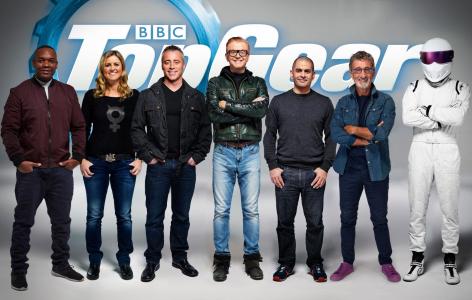
“Welcome to Top Gear!” shrieks Chris Evans, as the camera swoops in across the studio to give us a better look at the slightly unhinged panic behind his eyes.

tg_-line-up_maincloser_af1

In March 2015 last year, the BBC faced a dilemma. With Jeremy Clarkson dismissed from Top Gear, and his cohorts James May and Richard Hammond leaving with him, they were left without the iconic leading trio for one of their biggest-and most profitable-shows. The Top Gear brand was worth around £50 million per year and pulled in around 350 million viewers across the world when Clarkson and company left the show, according to estimates by the Guardian. Understandably, they couldn’t just dump the show and start over with a new Sunday night motoring magazine programme to fill the gap- no, they had to keep one of their biggest moneyspinners alive, at whatever the cost. The Top Gear brand was to be kept afloat, even with thousands of fans campaigning for Clarkson’s reinstatement and many declaring it dead after the trio, who fronted the show for more than twelve years.

Read the rest of this entry »

On “Angry Feminists”

I’m a feminist, and I have been for a long time. And, even though it’s 2016, I see “angry feminist” cracks everywhere-all over the internet, in the real world, even in banter between ourselves because we know it’s basically a central part of how the world views feminism.

And, in the last few weeks, I have definetly been living up to that stereotype. First it was the Stanford rape case, then the re-dredging of the horrific Vanderbilt rape trial, the arrest of this Dutch woman for daring to report her rape. Not to mention this, or this, or this, or a thousand other stories I’m sure you or I have come across this week. It seems like every time I’ve met up with a friend in the last month, we’ve had some devastating new injustice to discuss. And it’s made me so, so angry.

Read the rest of this entry »

Why Are Superhero Movies Shit Now?

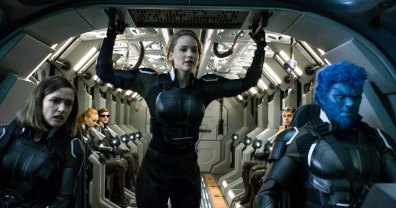
As I’ve said before, I don’t go in to movies expecting to hate them (unless they’re made by Woody Allen, but then, who could blame me?). But when it comes to superhero films, I often find myself cursing the God who made this franchise pile-up possible- and now that each major superhero franchise has released it’s big blockbuster for the summer, I feel like I can form some opinions on why they all sat somewhere between approaching  passable and downright catastrophic (to be clear, I’ll be focusing on X-Men: Apocalypse, Dawn of Justice, and Captain America: Civil War in this piece).

xmen0001

Read the rest of this entry »

“Not Just an Armchair Researcher”: Bigfoot, UFOs, and the Modern Truthseekers

Ever since I could remember, I wanted to be a conspiracy theorist.
LOUISE - WIN_20141217_222253

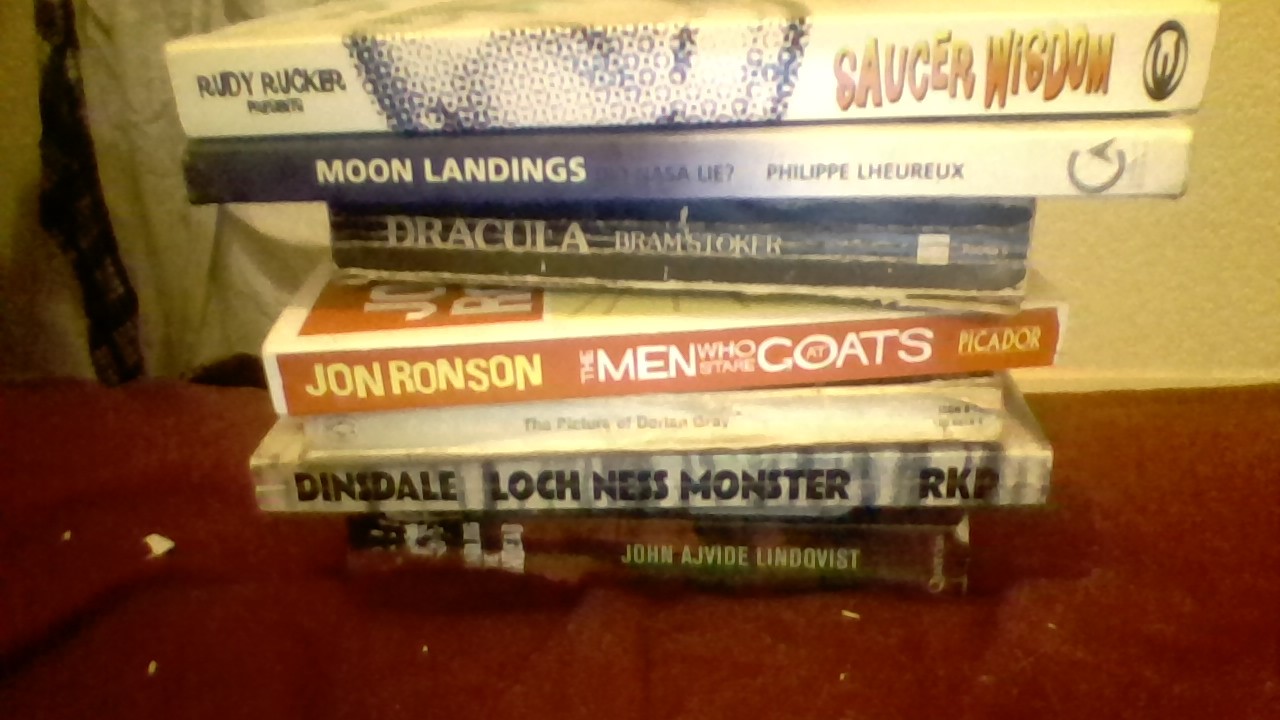
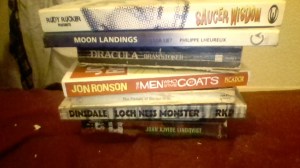
And why wouldn’t I? The concept that there might be far more to the world and, hell, the universe I live in was and still is exciting. I grew up in a house full of imaginative skeptics; people who collected libraries of books documenting alien abductions, yetis, hauntings, political cover-ups, skinwalkers and everything else you could imagine. My childhood and adolescence was spent buried in Whitley Streiber, Tim Dinsdale, and Jon Ronson, and my first job was mere metres away from the biggest conspiracy theory in the country, Loch Ness.

But as I got older, I realised that conspiracy theories, and the subscription to them, isn’t something that’s discussed with passion in polite society- at least not without some kind of sheepish disclaimer attached. The majority of people don’t actively and wholeheartedly subscribe to certain conspiracy theories; hell, the name alone conjours up images of Joaquin Phoenix peering out beneath the brim of a tinfoil hat in Signs.  Being a conspiracy theorist- like those who passionately defend earth against alien invaders- is a job or hobby that involves being told constantly that you’re wrong or crazy or both. With little to no widely accepted proof, people dedicate their lives to convincing the rest of the world that they’re the ones who’ve got it wrong and that stories and creatures that many would dismiss as urban legend could have palpable consequences on our lives. In terms of lifestyle choices, it’s the path of most resistance. The question is: why do they do it?

“Not just a armchair researcher”

At the start of last year, there was a flurry of activity in the Bigfoot-hunting community. Rick Dyer, a used car salesman, announced that he had the motherlode. Dyer claimed that he had shot and killed Bigfoot in 2012, and was now planning to take it’s corpse on tour. And he was true to his word; Dyer went on tour with a body, which he claimed had been subject to a number of tests that had ascertained it’s authenticity as a new species. During the tour, Dyer pulled in an estimated $60,000 from the public, who he charged to view the body. But holes began to appear- he was reluctant about releasing the DNA results, and had previously been caught out in a suspiciously similair Bigfoot hoax back in 2008. Towards the end of the tour, Dyer admitted that the creature he’d been parading across America with was a fake; a prop made by a specialist costume company. There was a brief flurry of interest in the media, and he was forgotten.

And that’s really the only thing you’ll hear about cryptids (creatures whose existence hasn’t yet been confirmed). The media is fascinated by duping, cases where hoaxers have convinced hundreds-sometimes thousands-of people that they’ve got undeniable proof of a new creature. But for many people, cryptids aren’t just a novelty, or a strange thought held onot by those with nothing better to do. For these people, they’re a maligned area of biology and science, an area of study that deserves as much meticulous research and patient effort as any other. With hundreds of anecdotal sightings and hotly debated evidence, I can understand why; there’s some part of me that thinks this can’t all be coincidence.

Eddie, from the Minnesota Bigfoot Research Team, agrees with me. He’s part of a no-kill group in North America, he and a bunch of enthusiastic researchers have focused their efforts on humanely and ccompassionately proving the existence of the animal through working with those who’ve encountered it. Their day-to-day work involves ” … talking with other like minded people who have had encounters, Checking groups to see if anything is new in them. Also taking reports and interviewing people. Going to the location and meeting them there to help them go through what happened to them. Look at sites for buying new equipment…” This is not just an idle hobby; this is a serious business.

The world of cryptozoology is a maligned area. For mainstream scientists, it’s generally dismissed as the work of a bunch of well-meaning but ultimately misguided organisations, while the media reflects them in sensationalist TV specials (like Finding Bigfoot, which offered a reward of ten million dollars if a group could unequivocally prove the existence of the animal. No-one claimed the cash prize.). There are dozens of Bigfoot research teams across North America, where Bigfoot is most often spotted, suggesting that this isn’t just the raving of some single-minded, very loud individuals. It’s for sure one of the most popular areas of cryptozoological study, and one that constantly seems to see itself as teetering on the edge of proving it’s point. But what would change if they actually found Bigfoot?

“Maybe equal energy and focus from all members…More ways to get funding for investigations. I think the impact would be huge if presented right way,” explains Eddie. I ask him what it would take to prove beyond reasonable doubt that Bigfoot exists, and he admits that, despite the groups well-reasoned no-kill policy, “Unfortunately, a body for analysis to take samples of and have DNA. Then, like, the National Geographic channel to have a press conference with the findings and body on display for the whole world to see.”

“There is loads of evidence out there if you start to look into it and are not just a armchair researcher sitting behind a computer and being objective”, Eddie tells me, “Depending on the scepticism and the degree of it, I answer questions leaving [people] able to be more open-minded about the subject.” Sitting behind my computer, attempting to be objective, I can’t help but feel a little fraudulent.

“I don’t sugar coat anything”

Frank Khoury is a skeptic. That’s how he describes himself on his website; also to be found there are “Are you an abductee?” tests, a guide to surgically remove alien implants, and an in-depth, four-part account of Frank’s personal encounter with what he believes to be aliens in 1997.

The story starts with him and his then-girlfriend viewing strange lights in California shortly after the passage of the Halle-Bopp comet. After a period of investigation, they had an argument that resulted in her walking away towards some nearby woods; according to Frank, she then vanished. While following her, Frank claims to have encountered strange carvings and impossible trees before he found his girlfriend, disorientated, in the middle of the forest. In the weeks that followed, they filmed footage all across America before his girlfriend suddenly left and filed an injunction against Frank. Frank puts this sudden change of heart down to whatever happened to her in the forest; he has also shared screenshots on his website, which, according to him, come from footage she had taken unbeknownst to him during their travels. They appear to depict small objects travelling through the sky at great speed while his girlfriend, Franks writes, chants and slurs in the background of the video. I attempted to confirm some of his story with prominent figures mentioned throughout; while they couldn’t remember Frank by name, they didn’t mark out his contact with them as impossible.

Since his encounter, he’s taken on the mantle of UFO investigator, and has set up a website that covers everything from alleged aliens encountered by NASA astronauts to photographs from Roswell, 1947. According to a ticker at the bottom of the page, the site as had nearly seven million views since 2008. The guestbook is packed with submissions from other people keen to have their own extra-terrestrial encounters verified by a bonafide expert; some of the entries are only a matter of days old.

I emailed Frank in the early days of planning this article; some part of me was desperate to talk with someone who believed they’d had a genuine alien encounter. Studying or hunting for cryptids is one thing, actually having an encounter with a creature or entity that directly affects one’s life is something else. It struck me, while I was in contact with the sasquatch hunters, that they were able to detach themselves somewhat from their work. It’s not that they weren’t totally passionate and entrenched in their area of study, but they didn’t have to spend a large portion of their lives trying to convince their friends and family that something utterly unbelievable had happened to them, and was the very reason that major events in their life had taken place. During my research, it became clear that attempts to create a global community of people who’d had ET encounters hadn’t been totally successful. Many accounts recount the loneliness, the isolation, the confusion that followed contact, because alien encounters aren’t taken seriously in polite society (whether they should be is another question entirely). Alien contact groups, at least the ones I came across, aren’t primarily there to provide support for those who’ve been affected by perceived contact, but rather to collect evidence, verify contact, and prove a point. Frank was one of many who had a perceived alien contact, and spent most of the rest of his life trying to rebuild and find answers for what he and many others have experienced.

“It changed my life forever. I quit my job managing car dealerships for 20 years and travelled 24/7/365 for 12 years straight. In 2002, my life savings were all but gone, so I decided to design websites for hotels, motels and inns, although I had no idea how to design websites. I taught myself as much as I could and faked the rest”,  Frank writes to me in an email that I receive in the very early hours of a bitter December morning.

“When I first became a UFO Investigator in late 1997, it was not by choice. During a 6-week period, we filmed strange objects almost daily, spanning 6 western states. In September 1997, my entire world was turned upside down. In November 1997, I made a decision to find answers and became a UFO Investigator…Despite the initial insults and criticism, I bought all of the UFO related iron-on patches and lettering I could find and everywhere I went, I stood out in every crowd. To my surprise, the insults got quiet and people started approaching me and telling me about their own experiences, that they had never talked about before.”

Frank, who describes himself as the biggest sceptic he’s ever known, prides himself on his alternative approach to UFO investigation. “Unlike most people in the so-called UFO Community, I present cases that I’ve personally investigated, like the Alien Autopsy Video, with my findings, then let people decide for themselves. I don’t sugar coat anything, nor do I ever try to convince someone that it’s real, just because I believe it is.”

And there’s no doubt that Frank truly believes that aliens are real. When I ask him what he thinks would prove to the wider world that UFOs and ET contact are real, I receive his longest reply yet; “Nothing more can be done. There is way more hard evidence available right now than we need to prove that UFOs and non-human beings visit our planet regularly. One out of hundreds of credible cases comes to mind. The Betty and Barney Hill incident. Under regressive hypnosis, Betty recalled in complete detail a three dimensional star map that was shown to her by a tall grey alien. After professionally recreating the map, it did not match up with anything in our skies. The case was dismissed and forgotten for almost 20 years, when a young journalist took interest in the case and quickly discovered that Betty’s star map matched up perfectly with a star system named Zeta Riticuli. Years earlier, it did not match anything, because no telescope on Earth could see that far into space. If this is not conclusive evidence or proof, then please tell me what is.”

(It’s worth noting that the Betty and Barney Hill incident, which took place in 1961, is a key piece of evidence both for and against the existence of alien abductions; aside from the star map Frank describes, there were implications that the couple had been influenced by a contemporary science-fiction show called The Outer Limits. It was broadcast twelve days before the couple’s testimony, and featured an episode with aliens that bore a striking resemblance to the ones the couple described under hypnosis. You can read more about the fascinating case and it’s implications here).

I had one more question for Frank: was it important that wider society accepted and started believing in UFOs and alien contact? The response was definitive. “It’s extremely important. I’d say that at the current rate of social and environmental deterioration on Earth, that ETs are the only hope left for Earth’s survival.”

In the course of writing this article-which took a gruelling month, hours of research, cancelled interviews, and fascinating people- something started to make sense to me. For the people involved in this kind of research, simply proving a point isn’t the main aim. There’s more to their involvement than smugly proving that they were right all along. However bizarre their intentions and actions seem to most, there is a compassionate undercurrent to their work. They want to support people who’ve encountered things that would have them defined as crazy by their friends and family, and that’s pretty fascinating. Is that the reason they do it? Possibly. But their work to help legitimize the experiences of people who’ve been through the out-of-the-ordinary is something that most of us just won’t accept, despite the fact that these kinds of encounters can have far-reaching and profound effects on the lives of those afflicted. Now, I’m not sure whether I believe in any of this any more than I did when I started writing this article, but what I do believe is that the people who are convinced that these events have happened to them can find themselves dominated by isolation and confusion. If listening a little closer to their experiences helps alleviate that, I can’t really find much to argue with there.
On Trigger Warnings

So, a few months ago, a couple of friends and I were discussing safe spaces and trigger warnings. One of them mentioned a post he’d seen on social media, which displayed an image of someone holding a knife to their arm, and he snortingly described a comment from someone asking that it be tagged with a “trigger warning” for people who self-harm. And then he saw my expression of apologetic “I’m going to disagree with you quite a bit here”, and realized it was going to be an awkward five minutes.

I know damn well that the concepts of “trigger warnings” and “safe spaces” have become a dogwhistle term for overly sensitive social justice warriors and all kinds of apparently swooning lefties who can’t so much hear the word “fat” without keeling over into a weeping pile of mush- or so most of the internet would have you believe, anyway. And I know a lot of you reading this may well fall on the “pull yourself together, you can’t be protected from every little thing that bothers you” side of the scale. And I know I can only talk about this from my own perspective (ie, dealing with self-harm), but indulge me a few minutes while I try to explain why these concepts are perhaps not the ridiculous pandering you might think they are.

As I have written about before, for me, self-harm is an addiction. Which means that it’s never really been something I’ve “recovered” from- it’s still there lurking away at the back of mind most every day, and I would say not a full hour goes by where my brain doesn’t shout “DO IT YOU PUSSY” at me. For the vast majority of these incidences, I can snuff out those kinds of thoughts pretty quickly, because they usual come from nowhere-there’s nothing backing them up and making them legitimate. These thoughts just sort of slither to the front of my head, and, finding nothing to hook on to, then slither off again a few seconds later.

Sometimes, I might be scrolling through social media of some kind- maybe even come across an article like the one my friend mentioned- and see an image of someone injuring themselves, or see pictures of self-harm scars, or whatever it might be. Again, most of the time, I can see this images and brush straight by them. But if seeing an image like that happens to match up with a moment or period of time when my brain is pushing for me to harm myself again, it’s like someone has yanked the concept to the front of my brain and nail-gunned it there. It’s hard to explain the singularity my brain locks into when I want to hurt myself, but it’s kind of the same feeling I get when I’m walking home in the rain carrying a heavy bag- that internal promise that it’ll be done soon, and then I can relax. I find it difficult to shake these thoughts without actually acting on them, else they just sit and leach at the back of my head for hours or days or weeks.

As I’ve said before, mental illness works differently for everyone, so some people who self-harm (or suffer from other forms of potentially triggerable illness, like PTSD) might find themselves absolutely fine looking at these images. Which is great for them. But for me, and people who react similarly to difficult reminders of things they’d rather not think about, putting a trigger warning on something isn’t there to pander to my agonizingly delicate sensibilities; it’s something that gives me the choice to opt out of seeing or watching or reading something that might tip my brain upside down. I understand that if you don’t find anything in particular “triggering”, the concept might seem like cotton-wool wrapping the world, and you’re welcome to continue arguing that it is. But for me, it’s just a promise that I get to choose whether or not to carry on my day like a normal person, and I appreciate the effort.

The Short Life of TV Lesbians

(Spoilers for The Walking Dead, The 100)

I really liked Denise. I did. The Walking Dead had so far done well with their resident nurse, a smart, insecure but compelling side character. And, when she got into a relationship with the show’s resident lesbian Tara, I was pleased. After Tara’s last girlfriend had scored a bullet through the brain earlier in the series, it was good to see the show’s only queer female character getting an actual love interest.

tara-and-dr-denise-talk-in-the-walking-dead-season-6-episode-5

And then Denise got shot through the eye with a crossbow bolt.

Let’s ignore the fact for a minute that this whole plot was clumsily set up and poorly executed and entirely there to service the story of a straight male character. Let’s talk about dead lesbians on TV, and the fact that, even in 2016, TV writers struggle to keep their queer women characters alive.

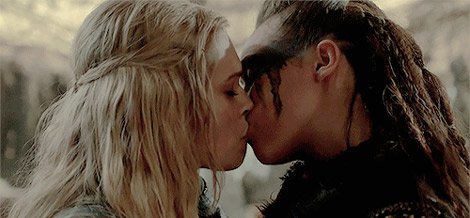
We’ve had a couple of high-profile pieces of lesbian extermination in the last couple of months- both The Walking Dead’s dispatching of Denise, and The 100’s openly gay Lexa catching a stray bullet in the same episode she consummated her relationship with the show’s lead character, Clarke. I could list off fifty other examples off the top of my head- Naomi in Skins, Tara in Buffy, Sara Lance in Arrow (killed to make way for a straight woman to take up the mantel of her superhero alter-ego, no less)- but you get the idea. TV writers seems to have trouble not killing off their queer ladies, and that’s clearly a problem.

the-100-clarke-and-lexa-470

Why? After all, aren’t these shows in which people die- straight people, gay people, anything in between? Well, yes, and this is the excuse fans and writers alike will give when there’s a backlash over the killing of LGBT characters, but it’s not quite as simple as “anyone can die, so you can’t get mad that your favourite queer character gets it”. The number of queer characters on TV is still at a surprising low, so watching an LGBT character get unceremoniously bumped off the show isn’t the same as seeing your favourite straight character die. Yes, the latter might suck, but bluntly, there’s plenty more straight characters to choose from. Even the most progressive shows might only have one or two non-straight characters, so when we lose one, it matters in terms of representation. Sure, anyone can die, but the fact that it just so happens to be this show’s only openly gay/lesbian/bisexual/trans character is just a coincidence, right? God forbid we don’t hit our quotas for straight representation, after all.

There’s also the question of why queer characters are so often chosen to be the ones killed off. After all, with whole casts to choose from, it seems odd that TV writers keep indulging this particular trope. Take the example from The 100 I quoted above- the openly gay character dies after sleeping with Clarke, who’s heterosexuality had been assumed till she’d met Lexa. In fact, Lexa dies taking a stray bullet for her. It’s one of a bunch of examples in which queer characters die in order to service the stories of their straight (or straight-passing, or previously straight) counterparts. The people behind Smash confirmed that they killed one of their only openly gay characters, Kyle, so that his straight scriptwriting partner could learn a lesson. Boardwalk Empire kills off it’s only regular queer character to further the plot of her husband. Denise buys it in The Walking Dead so Daryl can get a quick blast of emotional development. Introducing queer female characters- often hastily shacking them up with another character to create some semblance of happiness- only to kill them off to service a non-gay characters arc suggests that they’re only there as accessories to the stories of straight people, unworthy of an independent story of their own.

There are a huge number of unfortunate implications whenever a writer kills off a queer character, whether or not their intentions might be innocent, because it plays into this trope. And TV’s habit of ploughing through it’s female LGBT characters with reckless abandon just further sidelines real, meaningful LGBT stories getting shared in the mainstream media. In short, this trope needs to die faster than your new favourite lesbian character inevitably will.

The Flattering Fallacy

Flattering. It’s a funny word to use to describe clothes that apparently make you look better. It suggests that the weird peplum skirt thingy you’re pulling faces over should actually have you blushing and going “oh, stop, you” as it showers you with compliments. And recently, I’ve been thinking about what that word actually means, and how it applies to our perception’s of women’s bodies.

If you type the word “flattering” into Google, it’ll shoot back with a bunch of suggestions –flattering clothes for a full figure, clothes to flatter a big tummy, flattering clothes for a pear shape. And if you do search for any of those things, you’re likely to get back a bunch of articles that offer solutions to your wardrobe woes, generally by pointing you at ways to cover up your imperfections. I’m sure you must have heard of at least some of the “rules” for dressing as a woman- wear black because it’s slimming, horizontal stripes will make you look (whisper it) fat, draw attention away from your flaws by accentuating parts of your body that are societally acceptable. Flattering your figure, if it falls outside the slim, tall hourglass standard, involves perfomring some impossible optical illusions so the world thinks your bangable.

I hadn’t really considered that up until now, because I guess it’s been so ingrained in me that buying “flattering” clothes generally equates to fooling the world into thinking that you’ve got a traditionally attractive shape- long legs, flat stomach, big boobs, curves “in all the right places” (ugh, that phrase still makes me think of fanfiction Mary-Sues). And that seems kind of…shitty.

Suggesting that the clothes that make us look best are the ones that have us adhering closest to societal standards of femininity is pretty fucked up. It took me a really long time to get it through my head that the world would not tilt on it’s axis if someone saw my decidedly not-flat stomach, or were forced to gaze upon the scars on my arms. I was convinced that I had to dress myself in clothes that “flattered” me, that covered up all the ugly bits of me and presented a kind of smoothed-out, homogenized version of my body to the world. Even though I feel like a badass in my men’s-sized Evil Dead t-shirt and chunky boots, I always have that voice ticking away in the back of my head that tells me I should be dressed in a way that makes me look more feminine, more acceptable, because those clothes don’t flatter my body.

I guess what I’m trying to say is that the concept that the clothes that look best on you are the ones that have you conforming to a generic standard of female beauty seems ridiculous when you examine it at all. If you want to take it further, it’s easy to argue that no clothes look really “bad” on people, they just move them further away from how society reckons they should be presenting themselves. So I’m dumping the concept of “flattering” clothing, and I’m from here on out I’m going to wear whatever the fuck makes me feel awesome.

If you like this post and would like to see more things like it, please consider supporting me on Patreon!

Yes Means Yes

So, as with many of these articles, this one got started from a conversation I was having with some friends about consent, rape, and sexual assault (we also occasionally eat free cake and twirl about on spinny chairs). And it struck me that, while I’ve written quite a bit about sexual assault and rape in fictional media (see: Fifty Shades of Grey), I’ve not actually said much on the subject of real-life rape. Trigger warning, obviously, for discussions of rape and sexual assault.

I unequivocally support the notion of Yes Means Yes- that is, that consent does not constitute the lack of a no, but rather the presence of a yes (or of another kind of affirmative consent- you can read more about that here). And I’d like to talk about why. Because I’m tired of explaining to people why supporting affirmative consent is not a radical act.

Look, I’ll get straight to it: if I find out that one more of my female friends being raped and having it shoved aside as a “consequence” for “reckless” behaviour, if I hear one more story about a guy being raped that ends with “but he still got laid though”, if I step out of my house one more time and have to face someone grabbing my body in the street, if I hear one more person asking “Well, what was she wearing?”, if I hear one more punchline ending with a joke about prisoners getting raped, if I hear one more story like this one, or this one, or this one, I’m going to fucking scream. It blows my mind how fucking mixed-up our society’s view of what consent constitutes is. It fucking terrifies me, because I, along with millions of people in this country and across the world, have to face the repercussions of what happens when we don’t teach people to actively seek consent for sexual activity from someone who is of age, concious, and not under the influence of drugs or alcohol. All the above scenarios, while not entirely preventable with yes means yes in action, would at least be seriously different if people took the acquisition of affirmative consent seriously.

And yes, I’ve heard the ridiculous arguments against yes means yes. Yes, I know that some people are concerned that having to acquire consent of the people they’re having sex with will ruin their sex lives. And to those people, I’d like to say this: if you’re genuinely concerned that asking the person you’re having sex with whether or not they’d actually like to be doing it with you will get in the way of you getting laid, you need to take a serious look at your sexual encounters. Why does the thought of asking for consent bother you? Seriously, why? If you’re having consensual sex anyway, the only thing that will change is the occasional “Hey, is it okay if I do X?”. If you’re not sure, then I can see why actually asking that question might freak you out so much.

So, that’s why I support affirmative consent, and I always will. Until we get to a place where we can trust that people recognise what consent is or isn’t, I’m quite happy encouraging people to wait for a “yes” before doing any manner of filthy, disgusting, and utterly consensual stuff they want to get down to.

Redux: Is The Big Bang Theory Sexist?

So, last year (HOW IS IT 2016 ALREADY JESUS), I wrote an article talking about the treatment of women in the sitcom The Big Bang Theory. And, for some reason, that’s the article that people talk to me about most- I guess because the show’s so popular, and people are keen to defend their weekly dose of warm, fuzzy sitcom goodness. And one of the things I hear quite a bit is that the show laughs at the guys on the basis of their gender as much as it laughs at the women, ergo it can’t be as bad as all that. Well, since you mention it…

ovp_blog_bigbangtheorycast

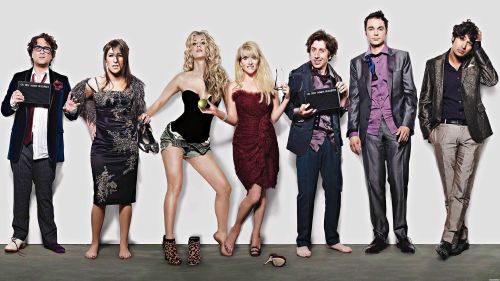
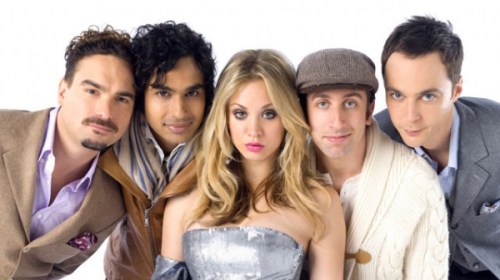
The Big Bang Theory, as you probably know, revolves around a group of four scientists who spend most of their free time engaging in geeky pursuits- attending comic-cons, playing board games, reading comics. They’re not especially successful with the ladies, they’re not particularly physically  fit, they’re often emotional and needy. Basically, they don’t fit the dictionary definition of masculinity- and the show openly mocks them for it.

20

I remember when The Big Bang Theory first became really popular- when the stars were on the front covers of magazines that declared smart the new sexy. And it always took me by surprise, because the show seems to show open disdain for the geeks at it’s core, specifically for their geekiness; their inability to fulfil traditionally masculine traits is often the source of much of the humour on the show. Take the episode The Fish Guts Displacement (which this article explores in greater depth) , where Howard has to be taught how to fish in order to spend time with his father-in-law; Howard (and the rest of the group by extension) is shown to be incapable, squeamish, and a little bit pathetic, contrasting with the depiction of his father-in-law- the strong, stoic, silent type who apparently represents the epitome of masculinity, at least in contrast to Howard and his friends. The show openly draws a line between the “real” men of the show and the leading foursome, and takes much of it’s humour from their inability to live up to those standards of masculinity.

the_big_bang_theory_funniest_tv_show_2012

And speaking of standards of masculinity, there’s a lot to be said for how much the show hinges the normality of these characters on their sex lives. Up until very recently, breakout character Sheldon Cooper showed no interest in any kind of sexual activity with his girlfriend Amy, leading her to trick him into a variety of intimate situations with her (which, ugh). His lack of sexual desire is framed as something hilariously freakish, because what kind of guy doesn’t want to fuck his girlfriend at any given opportunity, right? By extension, the rest of the male characters are similarly portrayed as less than masculine by the show due to their lack of success with women- Raj’s chronic anxiety, Howard’s horrendous creeping, and Leonard’s bumbling insecurity have all been played for laughs, especially when contrasted with the apparently more masculine traits of their eventual partners (like having had more sex partners, more confidence with the opposite sex, etc). The show regularly casts aspersions on their sexuality, a gag so apparently brilliant that it became a running joke because HAHA GAYS, I guess.

The Junior Professor Solution

It’s interesting to note that Stuart, a side character who owns a comic book shop frequented by the leading men, was originally introduced as intelligent, charming, and successful, despite-or, indeed, because of- his involvement with geeky culture. Within a few appearances, he had been reduced down to a caricature of a lonely guy whose staggering incompetence with women is a big part of his comic value.

the-big-bang-theory-02

The Big Bang Theory, basically, is a show which draws it’s humour from the subversion of traditional gender roles. Which could be a great idea, if they didn’t frame the men who subvert these roles as often creepy, socially incompetent, and childlike (remember, Howard still lives with his mother for most of the series’ run, and all four characters are shown to have often dependent relationships on their mothers). The show is taking steps in the right direction by revolving around men who don’t live up to the traditional standards of masculinity, but it could be doing even more by not laughing at them for it.


.

Have Yourself a Gory Little Christmas

What are you doing for Christmas tomorrow? I’ll be drinking heroically, eating delicious homemade sweets and watching Fifty Shades of Grey with my best friends, so if you don’t hear from me for the next week or so it’s because I’m fighting off the usual festive roundabout of drunk/hungover/drunk/hungover. While I am generally a cynical old cow, if there’s one thing I do like the festive season for, it’s the excuse to watch copious amounts of horror- after all, what better way to cut through the warm, fatty, cuddly layer of familial happiness than the knowledge that you WILL die and it might well be at the hands of a psychopath with a machete?

So, with that in mind, let’s take a look at the best pieces of horror television for you to spice up your festive season with. Preferably watch when you’ve eaten too much to bother getting up and hiding behind the sofa.

  1. Whistle and I’ll Come to You

    hurtweb_1791467a

    This screenshot still freaks me out. Left corner.

The 2010 version of this fucking brilliant MR James story is a must-watch for fans of old-fashioned horror given a modern twist. The connection to the original story-which you can read online, for free, and should immediately do -is just clear enough to satiate fans of James’ inimitable work, but Neil Cross (who adapted this version) gives leading man John Hurt plenty to play with in the modern setting, with a properly chilling (and affecting) final act. Following Hurt’s character as he visits a seaside resort only to find himself stalked by a mysterious and unrelenting figure in white, it’s a fascinating exercise in the unseen and the power of anticipation. For pure, unadulterated horror with a heart and soul, hunt down this slow-building tale of terror.

2. The X-Files- How the Ghosts Stole Christmas

the-x-files-how-the-ghosts-stole-christmas-2

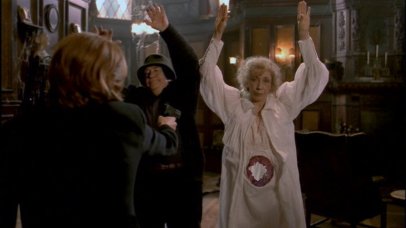
Lily Tomlin and Gillian Anderson onscreen together is…certainly something that’s crossed my mind before.

DID YOU KNOW that The X-Files is coming back in less than a month? I do, because I accidentally surrounded myself with die-hard fans of the series who will not let me just care about the goofy freak of the week episodes as I’d like. Even still, I’m glad they inflicted this episode on me, because it’s a bunch of Christmassy fun. Mulder and Scully go to investigate an apparently haunted house, and find a couple of spirits- played by Lily Tomlin and Edward Asner-ready to entertain themselves torturing the twosome. It’s grim, gruesome, with a dark sense of humour to boot- perfect for the post-dinner lull when you’ve decided to murder your entire family (because it’s Christmas and you’ve got to make this time SPECIAL even though you see these sods every bloody week of the year and the pressure’s just broken you).

3. Tales From the Darkside-Seasons of Belief

hqdefault

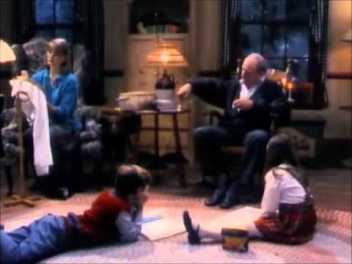
“Gather round, kids, I’m going to scare the fucking bejeesus out of you.”

I don’t think anyone’s head will be exploding with surprise when I tell you that I love campy eighties horror, but I don’t think I’ve ever caught the craic regarding how much I love Tales from the Darkside. Like any anthology series it’s patchy as hell, but when they get it right, boy howdy, they usually come up with something memorable. And this Christmas episode- revolving around a horrible creature conjured up by the parents of some Santa-skeptic kids- is gleefully unpleasant, revelling in torturing it’s kiddy co-stars with the properly unsettling monster and subverted festive feel.

4. Supernatural- Roadkill

350px-2-16_roadkill

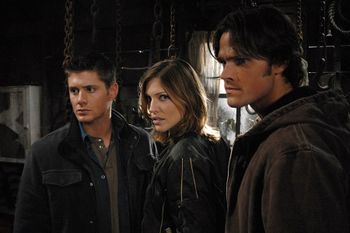
I enjoy everything about this picture. Also, is Tricia Helfer looking directly into the camera or is that just me?

Yes, I know Supernatural has a Christmas episode and yes, I know this is not it, but the excellent Roadkill has always felt like a darkly festive outing to me. Maybe it’s the snow, maybe it’s the moral of the story, or maybe it’s the fact that I get to admire Tricia Helfer AND Jensen Ackles at the same time (truly, a merry Christmas for Lou), but this is my Christmas pick from the long-running (and long-suffering) horror show. Sam and Dean stumble across Molly after she’s involved in a mysterious car accident that causes her husband to vanish, and the three of them help put a stop to the yearly hauntings that possess that particular strip of road. It’s good and creepy, with a clever little arc that fills me full of festive goodwill/desire to acquire my own deadly knife-finger.

5. The Twilight Zone- Five Characters in Search of an Exit

vlcsnap-2011-12-21-12h18m02s230

There are a number of great Twilight Zone Christmas episodes, but this one- inspired by Sartre’s No Exit, for all you beginning to feel the cold grip of festive ennui-is my favourite. Following the story of five people who wake up in a cylinder with no knowledge of where they are or why they’re there (why yes, this DID serve as inspiration for Vincenzo Natali’s excellent movie Cube), it’s a simple, straightforward story with the usual Twilight Zone twist in the tail to keep you sleepless all the way through to new year.