The Cutprice Guignol

The Ninth Year: The Haunting of Swill House

Category: doctor who recaps

Doctor Who: Torturous Account Rounds Down Irrelevant Season

I was never sure if I had a cut-off for Doctor Who. In quality, I mean- I sat through Kill the Moon with my eyes rolling so hard that I thought they might get permanently wedged towards the back of my head, and I dragged myself through what felt like the physical assault of The Girl Who Died, and I kept watching. I truly believed that nothing could shake my faith in Doctor Who so badly that I would basically have come to terms with the fact that I would never want to watch it again. But, as it turns out, I have my limits. And that limit was pranced over in this week’s season finale, Hell Bent.

hell2bbent2b-2b04

As soon as I saw the guitar I knew we were in trouble

I honestly don’t know where to begin with this nonsensical garbage, so I’ll start by harkening back to a quote from Jenna Coleman, explaining the show to Conan O’Brien a few months back: “Don’t apply logic, ever.” This, to me, is one of the biggest problems about this season, and about Capaldi’s run in general: many of the plots don’t make logical sense. And yes, I know that this is a show about an alien flying through time and space in a phone box, but every science fiction world should have it’s own internal logic, through which the stories do actually make sense. This season of Doctor Who failed dismally at so many turns to do that, and Hell Bent was the worst offender of the lot. This episode failed in providing logical character motivation, logical development, or a fucking coherent plot on top of all of that.

As you can probably tell, the script for Hell Bent-written by Moffat himself- was a staggering disaster. The direction, the acting, the look of everything, it was fine- but the script was a pointless, flabby waste of time that offered no real answers but swanned off all smug with itself at the end up anyway. The plot was so bitty and broken that I have no interest in trying to string it together here, keen as I am to crush this episode into a tiny cube in my brain to make way for more important things like how to peel an orange, but suffice to say it was fuckery of the highest order.
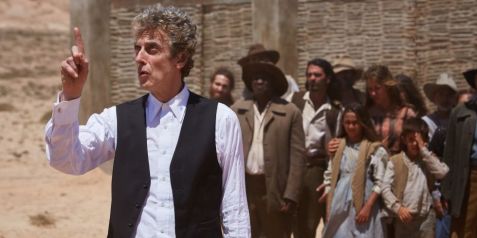
landscape-1448810038-doctor-who-hell-bent-04

Where to begin with the logic-fails? You might think rule one is “The Doctor Lies”, but it’s actually “Moffat Retcons”. First, how can Rassilon be the mightiest force in all of Gallifrey, only to be usurped and mutinied-on within minutes of his arrival on screen? Why did the Doctor shoot someone, when he’s always been passionately against using violence as a method of resolution? How come Clara’s continued existence hasn’t broken time and space, considering that she was meant to die at a fixed point in time? If the Doctor has his memories of Clara wiped, how can he remember enough to tell her about their adventure together? Why was Clara so insistent on her death and the Doctor letting go of her, only to jaunt off to fly through time and space with Ashildr at the end of the episode? On top of that, ARE WE EVER GOING TO GET A RESOLUTION TO THE ORSON PINK PLOT?

gallery-1448810235-doctor-who-hell-bent-08

I dug the costumes a lot, all that said- one of the few even acceptable parts of this episode.

Then there was the pointless time-wasting- I’m sad to say that most of the stuff on Gallifrey felt utterly without reason, especially the endless time they spent wandering around the dimly-lit rogues’ gallery while the Doctor warbled on about…well, that’s a good question actually, because it had nothing to do with the plot or themes of the episode. To bring the Doctor back to Gallifrey for the first real time in the whole of New-Who’s run, and that have it serve as barely-relevant background for a plot that had to do with the Doctor bringing Clara back to life felt like a slap in the face after having it as a distant shadow over the show for so long. All of that plot revolved around the Doctor finding a way to travel back in time to save Clara between her final heartbeats, and surely there was a better way to do it than by invoking Gallifrey’s name in vain?

Oh, and let us not forget the “resolution” to the Hybrid arc. It staggers me that someone, somewhere, sat in the DW writer’s room and went “what if we make up a creature, a creature so powerful that it will apparently stand in Gallifrey’s ashes, one that we build to all season and purposely invite endless speculation around with a parade of would-be candidates, and then, and here’s the twist, it turns out that it’s nothing? Wouldn’t that be revolutionary storytelling?” And, in all fairness, I didn’t see the end of the Hybrid plot boiling down to “Maybe it was the Doctor and Clara, maybe it was Ashildr, but who cares when we’ve got a Tardis shaped like a goofy 50s-themed diner!”. I wrote earlier in the season that I was firmly sick and tired of Moffat’s habit of ending potentially interesting stories with a smug “gotcha!” and this was the worst of the lot, because the story didn’t even really get a resolution. It sort of wetly disappeared into nothing, like a fart in a bath. I threw a bottle against the wall when Missy was revealed last season (where was she, by the way?),  and I almost punched a hole in it with this jaw-droppingly lazy “tell”.
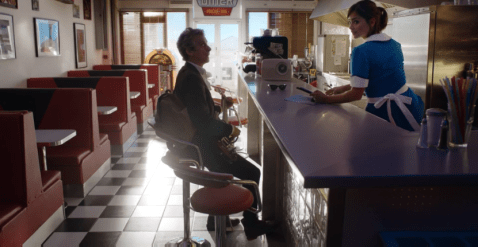
d2

But Hell Bent hinged on, above anything else, me buying Clara as the Doctor’s soulmate. And I don’t. Nor have I ever. Clara is another in a parade of Moffat’s wise-cracking, know-it-all women without much to differentiate her from Amy or River, and I never really, really brought the relationship between her and Capaldi’s Doctor. If this episode had come during Matt Smith’s run, it might have been a touch less infuriating, but here it was violently awful. The Doctor breaks his codes-codes that are integral to his character, like not committing murder or messing with time- just to serve the episode, and when you’e writing an episode where the characters do whatever you need them to in order to push the plot along, you’re penning an anthology, not a series.

Clara asks him to let her die; his not respecting that is some condescending bullshit. And the “devastating” ending I was promised- where the Doctor wiped his memories of Clara, except didn’t really, because he could remember her- made me long for the days when Martha took a stand and left the Doctor for her own good. Essentially Hell Bent reversed the polarity of the Donna plot, and someone made it even worse than that already was. I used to think that some of RTD’S writing was unforgivably schmaltzy, but I take back every bad word I’ve ever said about him after this almost offensively awful drivel. When the Doctor can just save anyone he chooses, when death doesn’t actually stick, all the stakes for the show are gone. And it makes the Doctor look particularly evil in retrospect, when you think about all the people he could have saved had he really wanted to. When Clara has died so many times before, forgive me if I’m not exactly chewing my nails wondering how this one will turn out.
20150826-dw2bs9b8-192056

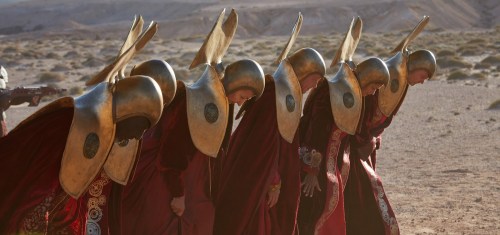
“If we bow, we can keep our faces off-camera and pretend we were never involved with this mess.”

All in all, Hell Bent was a catastrophe- overwrought, underwritten, poorly plotted and embarrassingly cheesy, a series-worst episode that rendered season nine even worse than it’s dull predecessor. It’s only saving grace was the return of the sonic screwdriver, and even that felt like finding a penny coin at the bottom of a barrel of steaming horseshite. I don’t know if I’ll be bothering with the Christmas special, or indeed season ten, but time heals all wounds- maybe Capaldi can take me back to before I watched this episode, considering that all logic has been thrown to the four winds at this stage. I’m thoroughly looking forward to getting back to my New Who recaps (which will start back next week, with the superb Father’s Day from season one), and leaving this mess firmly behind me, so if you’re looking to continue your Who coverage in between seasons, please do join us. I’ll have you yet, Moffat, if the rest of the anti-fans don’t get there first.


Doctor Who: Terrific or Awful? Really, Doctor is Sensational

So, I’ve been browsing the forums (Gallifrey Base is basically my second home) and I’ve been seeing a lot of…mixed opinions about night’s episode, Heaven Sent. To say the least. Some people seem to think it’s a pointless wreck of an episode, one that basically could have been skipped out and replaced with taking us straight to Gallifrey (because, yeah, after more than two years we’re finally addressing that plot point), and some think it’s a staggering work of genius unparalleled in Capaldi’s run to date. And for once- for once– I’ve found myself on the side of defending a controversial episode.

gallery-1448361809-doctor-who-heaven-sent-05

Look, I loved this. I loved this passionately and almost without restraint. A fifty-four minute special, directed by my hero Rachel Talalay and written by Steven Moffat, I know that this wasn’t perfect, but it was audacious and smart and featured a frankly staggering performance from Peter Capaldi whose endless talent (did you know that he’s got an Oscar?) was finally matched by the strength of the script. After a season that’s mostly ended up on the wrong side of patchy, Heaven Sent finally pulled up it’s bootstraps and produced something compelling, clever, and emotionally impactful. At least to me.

It’s nice, for a change, to have a lot to say about an episode that I actually liked, as the other episodes I’ve rated this season (Under the Lake, Sleep No More, and The Zygon Invasion, in that order) have been good in such a way that doesn’t require me to say much about them (even if my thousand-word reviews would suggest the contrary). They’ve just got a decent story, some good performances, and a finale that doesn’t feature a violently annoying plot twist instead of an actual resolution. But Heaven Sent had more than that.

gallery-1448361658-doctor-who-heaven-sent-02

The episode revolved around the Doctor, trapped in a time loop, as he’s dumped in the middle of a mysterious castle in the middle of the sea and forced to fight for his life (anyone else getting Fort Boyard vibes?) against a creature that moves slowly but simply never stops coming. It’s a cool, horror-centric premise to set an episode around, and one that was genuinely frightening at points: a couple of good jump-scares and a general air of doom marked this out as one of the few actually scary episodes of the last few years, and that’s something I can firmly get behind. The direction was gorgeous, too, and made the most of the circular premise of the plot, turning the long corridors and shifting rooms into an endlessly repetitive nightmare that sums up how I feel about a lot of Moffat’s run to date.

And yeah, I can give this one to Moffat, much as I still have my problems with a lot of his writing this season. It was a smart script that stopped just short of getting too hammy or cheesy, even if I could have done without him ripping off Sherlock with the mind palace nonsense. It also, somewhat tragically, featured Clara’s best performance this season, in which she basically stood with her back to the camera and wrote things on a board the whole time. It also gave Capaldi a chance to run the full gamut of emotions, from fear to exasperation to grief and back again, and man, did he deliver- it’s occasionally easy to forget that Capaldi really is a tremendous actor, and it’s a real treat to see him get the chance to thesp his velvet coat off. Seeing the Doctor suffer in a visceral, violent way is something we don’t see in every episode, and the images of him, bloodied and scarred, dragging himself up the stairs so he could sacrifice himself once again hung around uneasily in the back of my head for a while after the end credits.

HEAVEN SENT (By Steven Moffat)

And yes, I accept that there are flaws in this episode. If he had his confession dial the whole time, did that mean he had a portal to Gallifrey that he didn’t bother to use? Why didn’t they just take him straight to Gallifrey as opposed to having him dick around in a castle for a whole episode? And seriously, have we just forgotten about the events of Listen completely? Are they ever going to be resolved? But the audaciousness and strength of this episode made it worthwhile, at least for me, and I’m glad to see Moffat trying something a little bit different. After the curiously low stakes of this season- Clara’s death last week, which felt particularly pointless, stands as the biggest example- things are finally going somewhere. The Doctor is back on Gallifrey, and, according to him, “The Hybrid is me” (I swear to God, me and the Consort spent about an hour talking about how this didn’t make any sense until I woke up in the middle of the night going “CHRIST, LADY ME, OF COURSE”). Things feel big and important, and I can get behind that.

heaven-sent-promo-pics-15-570x380

Alas poor Davies, I knew him well…

You don’t need to remind me, if you’ve been following these reviews for any length of time, that I felt precisely this way about last season’s Dark Water, only to have my hopes shattered by the basically shite Death in Heaven, so I am fully expecting the series to balls up it’s finale. But for now, I’m happy- after a series of lazily contrived stories, Heaven Sent finally felt like it was going somewhere, and I can get behind that.

Don’t think I didn’t notice that thunderously out-of-place incidental music, though. I’ll have you yet, Moffat.

Doctor Who: Thin Adventure Revels Despite Inconsistent Surroundings

So, since watching last night’s episode Face the Raven, I’ve found myself kind of stuck about what to say about it. Clearly, it’s an important episode-maybe the most important episode of the season so far-but at the same time it felt strangely unaffecting, and I couldn’t figure out if that was a good thing or a bad thing. And, oh, before I begin, SPOILERS. SERIOUSLY. DON’T READ THIS IF YOU HAVEN’T SEEN THE EPISODE. Don’t say I didn’t warn you.

dw9_e10-81-1200x800

As I suspected, this week saw the (ostensible) end of Clara Oswald, which makes it a tricky episode to review. I started reviewing Doctor Who on this blog when she arrived in the series as a regular-my very first recap was The Bells of Saint John– and I’d quite like to go back and look at Clara as a character and look at how her arc has and hasn’t worked, considering how much of an investment I’ve put into her story. But that would do a disservice to what was an interesting episode, so let’s first take a look at the meat of Face the Raven, written by Sarah Dollard.

The episode kicked off as Rigsy (the excellent Jovian Wade, back from last season’s shrug of an outing, Flatline) ended up with a tattoo on his neck that was counting down to zero. He calls up the Doctor and Clara, and the three of them head off to discover that the person behind the tattoo is none other than Ashildr. She’s running a kind of refugee camp for displaced aliens, one of whom Rigsy apparently killed, and she’s sentenced him to death by the Pigeon of Doom (or a raven that imbibes their soul, whatever). Clara offers to put herself in his place, believing the Doctor will be able to get her out of the whole inevitable-death scenario, but he can’t and she ends up buying it. Not before, of course, Ashildr reveals the whole thing was a trap to lure the Doctor and that she never had any intention of killing Rigsy in the first place.

p037z6f3

Much as I enjoyed this episode as I was watching it, I felt like it did….struggle somewhat, what with the giant, huge, episode-dominating plot point that lands in the middle of the story. Clara’s death goes off like an atom bomb and flattens almost everything around it, making it hard to look at the episode as an independent entity: I will say that I am liking Maisie Williams more and more with every passing episode and Dollard came up with a strong script that did well in filling out the background in the limited time it had to do so, but there’s only really one thing worth talking about in Face the Raven.

Okay, so let’s think a little bit about Clara. I think, if this is her exit (which I strongly doubt, but it’s certainly coming in the next two episodes, so let’s run with it for now), she’s been by far my least favourite assistant. I never quite felt like I had a grip on Clara as a character, even in the two and a half season she’s been around. I’ve been saying, ever since the start of season eight, that she’s spent most of Capaldi’s episodes doing whatever the plot requires her to do as opposed to having anything really consistent of her own to hang on to, and that’s been a huge problem with her character.

DW9_E10-21-1200x773.jpg

And I think it’s her nebulous nature that makes it difficult to genuinely feel affected by her death this week. Which is not to say it wasn’t handled well (aside from the four-angle smash-cut of the actual moment of her death, which was spectacularly badly judged)- in fact, I’d wager that it’s the best her and Capaldi have been together in his entire run, and she was given a quiet dignity and bravery by the script and Jenna Coleman’s solid performance. But it just felt as if once again she was doing what the Doctor’s story needed her to do, and that’s irritating. (Also irritating: another fucking pointless reference to Clara getting off with Jane Austen. I wrote an article on sexuality in Doctor Who a few weeks ago so it was fresh in my brain, so that line had my eyes spinning like fucking marbles, but I digress).

Yes, I get that the series had been trying to show that she was reckless and believed herself to be invincible, and was constantly putting herself in more and more danger after the death of Danny Pink (BY THE WAY: does Danny Pink still not have some kids to spawn, if we are to take what happened in Listen seriously?). But none of it felt…what’s the right word here? Earned? Consistent? Real? Yes, real-when Clara was revealed to be a series of splinters in the Doctor’s timeline back in series seven, that made a lot of sense to me, because she’s always seemed more like a fast burned-out sliver of a character than a real person. Her reckless and pointless death fits pretty well with how I’ve always interpreted her as a character, but only because it always felt as if she was a bumped-up episode companion who way overstayed her welcome.

hqdefault

And, let’s face it, she’s been around too long. There’s a tacit agreement amongst my band of Doctor Who fans that Clara probably should have headed off in the Christmas special, as she felt like a hangover from Matt Smith’s manic, excitable young Doctor and never really fit too well with Capaldi’s dour style. I’m thoroughly looking forward to a new companion who’s original to Capaldi’s Doctor, because, in all honesty, Clara has seemed out of place since Deep Breath. And I don’t intend that to be a criticism of Jenna Coleman, who’s usually been quite solid, but I’ve never wanted rid of a character more than Clara.

And that, ultimately, is why Face the Raven didn’t hit me with that much of an impact. I’ve been waiting for Clara to leave the series pretty much since the start of season eight, and it’s difficult to feel sad about losing a character I was glad to see go (which, to stress again, was nothing to do with the script or the acting, both of which were at season-highs in this episode). And the problems with Clara don’t fall on this episode, they fall on the two and a half seasons leading up to it.

2EADC20C00000578-3328701-image-a-22_1448142087598.jpg

What I am looking forward to, though, is how this affects the Doctor in the next few episodes. Though I know Jenna Coleman will be back in the season finale, we also know that she’ll be gone by this year’s Christmas special, and her utterly pointless death surely has to weigh heavy on the Doctor who basically led her by the hand into her fate. Capaldi has never been more impressive than when he was quietly explaining to Ashildr that she should steer clear of him, even though Clara had made him promise mercy on the person who killed her, and I want more of that. Plus, next week looks really interesting, and I’m thoroughly looking forward to seeing how the next couple of episodes unfold.

You best not be planning a fake-out with Clara, all that said. I’ll have you yet, Moffat.

Doctor Who: Turpitudinous Arsehole Re-Defines Insomnia Symptons

(Yes, so I cheated a bit with the title this week. Look, those things are hard, alright?) Ever since I heard about this week’s episode of Doctor Who, I’ve been quietly pumped about it. Starring Reece Shearsmith (always in my heart for the screamingly funny and occasionally powerfully disturbing League of Gentlemen) and written by Mark Gatiss (writer of a bunch of DW episodes, the most recent being Robot of Sherwood which I will defend unto the grave, and also, you know, Mark Gatiss), the episode came with a found-footage horror twist and a big fat Macbeth reference in the title, Sleep No More (I don’t think it’s ever come up before, but I consider Macbeth pretty much the greatest thing ever written and have the scene from which this episode’s title is taken pinned up in my kitchen) looked like it was going to be, at the very least, a memorable episode.

I’m just the sort of dick who’d throw all that at you just to say that I thought Sleep No More was a load of pish, but I actually loved it to pieces. Following a crew on an abandoned spaceship, the Doctor and Clara soon turn up and figure out that the reason for the spaceship’s deserted status is the mysterious Morpheus pods that are gaining popularity across the universe, inventions that streamline the sleep process into five minutes. Sounds awesome! Until they realize that the pods hyper-sleep settings have created sentient monsters out of sleep dust-pretty much what happens to me when I don’t get enough shut-eye.

I mean, I suffer from insomnia pretty badly and can confirm this is exactly what I look like on five minutes sleep.

Which is, yes, a hilariously silly idea, but one that’s played straight to great effect. This morning, when I was planning this review and thinking about what I was going to talk about and what I would have to leave out, it was nearly impossible because so much of this episode’s strength lay in the little details- the fact that a drunken ship’s crew had reprogrammed a door for a joke, forcing a doomed soldier to sing a silly tune into it to make it open, the jolly, old-school and utterly sinister announcement lady who introduced the Morpheus pod to us, the bickering over whether or not the creation of a dumb grunt soldier was ethical or not. Gatiss has always been good at little additions that make the universe his stories are set in feel like a real place with real connections to wider world, and that really helped fill in a convincing backdrop for this episodes scares.

And boy howdy, I’m not kidding about those scares. I try to measure Doctor Who’s scariness off how long it would have kept me awake when I was ten, and I don’t think I’d have slept for a month after this outing (also known as the Empty Child effect). I don’t know how well this episode would have worked without the found footage conceit, but that’s irrelevant because it was. It subscribed gleefully to all the genre tropes it could get it’s sandy little hands on, from the dramatic cutaways to the wobbly cameras obscuring  the approaching villains, and the ending revealing a secret hidden in the choppy footage. As a horror fan till the end of my days, I liked this, and I liked it a lot, even if I can understand other viewers seeing it as a gimmick or a grasping flail for originality, as it totally was.

Ugh, just looking at this gives me the squicks. Partly because it’s obscuring Reece Shearsmith’s lovely face (entry number #67843987 on Lou’s Weird Crush list)

The episode squeezed in a few good jump-scares, as well as some legitimately gruesome effects that made me cringe a little bit even now. I said in the Under the Lake review that what made the monsters so frightening was their corporeal-ness, the fact that they didn’t just finish you with a zap of death or blast from their whisk or whatever. And the same went for this episode. The creatures were present and very, very real, and served as an actual threat to our leading cast- munching them up whole, smashing their way through doors, and generally being a lot more threatening than the usual Who villain. Speaking of villains, Reece Shearmsith deserves a nod for his role as Rassmussen, the man behind the Morpheus pods and instigator of a plan so fiendishly evil it’ll tie you to the railroad tracks while twirling it’s moustache before you’ve had a chance to say “Wait, weren’t you in League of Gentlemen?”.

I think what I liked most about Sleep No More (aside from trying to figure out the connections to Macbeth beyond the title and the line quoted in the middle of the episode- maybe the theme of ambition? Or looking like the innocent flower but being the serpent under it? Ooh, I’m going to have fun with this one for weeks, I can tell) was the fact that it was driven by story, first and foremost.

I always love a slightly decrepit-looking future, too, and Mark Gatiss always does them so well.

Think about it: this season we’ve had the Magician’s Apprentice two-parter, which was really a bunch of loosely connected character vignettes (for the Doctor, for Davros, for Missy), Under the Lake and Before the Flood, which were focused on exploring the fiendish time-bending the Doctor can get up to, the Girl who Died which, well, introduced us to Ashildr (who’s back next week) and a whole new low for the series, and then the Zygon two-parter which apparently revolved around that speech which I am now convinced lasted at least seven hours. Sleep No More- with no back end to tie it all together- had forty-five minutes to tell a tight, smart, scary story, and it succeeded. It was driven by plot first and foremost, and it’s breakneck pace-occasionally a little too breakneck, to the detriment of the tertiary characters-didn’t let up for a moment of navel-gazing or laboured character points. And for that, I give Sleep No More a firm pass, and strongly recommend it if you’ve been drifting away from this season a little bit.

But what’s this I hear about the Cybermen next week? I’ll have you yet, Moffat.

Doctor Who: Testy Allegorical Radicals Destroy Interplanetary Security

I think alien invasion episodes are the bread-and-butter of the Doctor Who universe (outside of a thousand stories set in Victorian London, that is). From subversive takes like the Empty Child to straight invasion episode like, um, The Christmas Invasion, it seems as if Earth is never free from the intergalactic scourges who want to take over the planet. Maybe the real estate is cheap or something.

Sonic Sunglasses: Here to stay, it seems.

Either way, I’ve always enjoyed alien invasion episodes because there’s something inherently cool about seeing a world I know completely changed by whatever alien race is after us this week. They usually fall into a pretty predictable formula, but one that never grows old- U.N.I.T figures out aliens are invading, they ring up the Doctor, and they launch a counter-strike against Earth’s new visitors. The use of the ever-welcome U.N.I.T saves them the bother of expanding on one-episode tertiary characters and lets the focus fall entirely on the plot, and, in the Capaldi years, the Doctor gets to ponce around in an plane and play at be being president of Earth. As a die-hard sci-fi fan at heart, it’s always fun when the show flexes it’s science fiction muscles, and this week’s episode proved that the show still has plenty of straight-up alien invasion romps left in it yet.

After a seriously wobbly two-parter, this season seems to have settled down a bit with The Zygon Invasion. It’s not a mind-buggeringly amazing outing or anything, but it just about holds it’s nerve, as a peace treaty with the Zygons falls to pieces and U.N.I.T braces itself to save the world once again. Aside from the fact the entire premise for the episode is based on a plot hole- why would they try to integrate the Zygons into the human race, after they’d tried to invade the planet twice already?- it’s difficult to fault this week’s tight, globe-trotting adventure, one that speaks to writer Peter Harness’ comfort within old-style Doctor Who stories.

Jenna Coleman gets her first really notable performance of the season-seriously, this is the most relevant she’s been to the plot in about a year-and reminds me why I did love her so much all those distant seasons ago. And Capaldi looks like he’s having a ball prancing around the world on U.N.I.T’s arm, even though someone in the screenwriting team obviously REALLY LIKES the guitar gag and just doesn’t want to let it die. And I’ll never turn down a chance to hang out with Kate Lethbridge-Stewart and company- even Osgood, who I’ve never really understood the fuss around, was interesting this episode, and provided another candidate for the Hybrid mentioned a few episodes back (it’s going to be Clara, isn’t it? It’s ALWAYS Clara).

ALWAYS

The Zygons, still looking like the most menacing play-doh models in history, are always a welcome villain because of their shape-shifting abilities (which I’d successfully forgotten about, because my brain is full of more important things like how to imitate Evan Peters Vincent Price voice in this season of American Horror Story and when I next need to go buy cat food). The show managed to eke some legitimate pathos out of the Zygons torturing people with the images of their own family (even if no-one in UNIT is allowed to shoot a fun, apparently), and it’s always fun to have retro villains lumbering around the modern Who universe. The Zygons were an obvious allegory for immigration, which sort of half-worked and half-didn’t.

Osgood(s)

On the one hand, there was a legitimate point to be made about the way we other people who we perceive as different and our quickness to write every member of a certain cultural group off based on the actions of a few. On the other hand, if your allegory for immigrants is violent alien invaders attempting to take over the world and destroy those who’ve hosted them, you might need to go back to the drawing board, because you’ve got a bit of the True Bloods about you. It’s nice to see Doctor Who attempt to take on real-world problems, especially after last season’s  disastrous IF YOU TAKE MEDICATION FOR MENTAL HEALTH DISORDERS YOU’RE KILLING THE EARTH, but it definitely could have done with a little more work.

I’d like to introduce you all to my wife

But that aside, this was a good episode. I don’t want to spend too long picking it apart at the seams because it all rests on how next week’s The Zygon Inversion (if that ISN’T a reference to the solution that can turn Zygons inside out, then I officially quit the show) sticks or doesn’t stick the landing. Either way, it’s nice to have Doctor Who feeling a bit more settled- packed with sharp humour, exciting action, and bastard alien overlords, The Zygon Invasion proved that we don’t need fiendishly complex paradoxes to come up with a good story, we just need a hearty embrace of all things old-school.

But what’s this: no teaser for next week? I’ll have you yet, Moffat.

Doctor Who: Turgid, Awful, Rancid, Dreadful, Intolerable Shite

Firstly, in case you missed it, yesterday I shared my newly-started Patreon for this blog-check it out here. But now, on with the episode.

I mean, where to start with this one? I knew when I saw the teaser for this episode that I was probably going to hate it, but I was hoping that I’d have my low expectations subverted by something that was at least….entertaining? Witty? Emotional? And it’s not that The Girl Who Died didn’t try to give me all those things. It just failed dismally on every count.

Just sidling over to the old Robin Hood sets again, I see.

Outside of the sonic sunglasses being broken (OH YES OH YES OH YES), I can’t bring to mind one bit of this episode that worked for me. Let’s take this beat by beat, folks, because that’s the only way I’ll be able to take a look at The Girl Who Died without tearing my eyes out.

Let’s get the obvious fuck-ups out of the way: firstly, the Mire, a fearsome alien warrior race, declare war on a small Viking village (I cannot be remotely fucked explaining why, because every single twist and turn of this episode was so fucking contrived that I could see the veins on the writer’s necks standing out as they strained to be slightly original). I’ll repeat that: a fearsome alien warrior race, described by the Doctor as one of the most efficient and brutal in the Galaxy. And they’re defeated by….electricity? And the threat of an embarrassing video on space Youtube (I almost slit my wrists when Yakety Sax started playing, by the way)? Not to mention the fact that the immortality chip that the Doctor gave to Ashildr came from the Mire so…why aren’t they immortal? Look, I know the Mire were just a poorly-conceived plot point to push the story along, but nothing about them made the remotest bit of sense. They didn’t even have the good manners to look really cool, for fuck’s sake.

Then, there was Ashildr. Look, I have something potentially controversial to admit here: I think Maisie William is a TERRIBLE actress. I’ve never understood why Arya is such a popular character on Game of Thrones (which is where she found her fame), partly because the writers just went “here’s a trope, you fill in the rest”, and partly because Williams absolutely cannot convey any emotion no matter how hard she tries (side note: Emilia Clarke is only good when she’s speaking a made-up language). And I knew that her presence wasn’t going to enhance this episode for me, but I figured I could get past it, hell, maybe even come round on her- do you remember how fantastic the usually nail-chewingly irritating Frank Skinner was last season?

She was fucking atrocious. The script (by James Mathieson and Steven Moffat, both equally responsible for this monstrosity) didn’t give her much to work with, to be fair, but it’s blindingly clear that she had to directly spell out every bit of her own characterisation in a painfully affected speech (“The boys thought I was just a girl, and the girls thought I was a boy”- oh, so you were just Arya, then?) for the audience because she sure as hell couldn’t convey it in her performance. There was a long shot at the end, of her against the apparent desktop screensaver backdrop of changing skies to signify the years she’d lived, and the camera was focused in on her face, and it was almost hilarious what a complete lack of….well, anything there was to her.

See for yourself. Christ, staring at this face is like listening to white noise- it’s so meaningless it starts to drive you a little insane.

When she died, I was fully hoping Peter Dinklage would wander on-screen with a wheelbarrow and cart her back to GoT, but instead she became the Hybrid, referenced by Davros earlier this season, which terrifyingly suggests we’re going to be seeing a lot of her. The words “hoist” and “petard” spring to mind, because-and I don’t say this often- she was unwatchably bad in this episode, and showed no signs of improving. I think she’s a potential disaster for the series, mainly because Moffat cannot let things go and if he’s come up with this idea he’s going to force it down our throats until he’s satisfied we understand the full extent of his genius.

The Doctor was terrible in this episode, as well- I was on the messageboards yesterday (That’s right, I messageboard about Doctor Who, you wanna make something of it?) and there were a lot of people lamenting the fact that one of the best actors we’ve ever had for the role is getting hurled this level of half-baked garbage. Not only is he patronizing Clara in this episode (“I have a duty of care”- funny, because the last time I heard that line it was in reference to a literal child, which Clara most certainly is not), he’s translating baby soliloquys, he’s grunting out terrible nicknames, and he’s generally fucking about like the most irritating of cocks. He’s been boiled down to a handful of pop-culture references, self-referential jabs to the ribs, and a swerving attitude that darts between a complete lack of care for whatever tertiary characters are about this episode and “I’M THE DOCTOR AND I DO DRAMATIC MONOLOGUES ABOUT HOW I SAVE PEOPLE IN THE MOST OVERBLOWN AND UNDERWRITTEN SCENES OF ALL TIME”.

I’ll say it again: Capaldi is not at fault here. He’s doing his best. But the Doctor is irritating and inconsistent and mean. This episode contained the “reveal” about why Capaldi chose the face he did (basically the show retconning the fact that the actor had already appeared in season four episode the Fires of Pompeii), and the revelation fell flat with an audible thud. So, he chose that face because he wants to save people? I mean, I…I know that. That isn’t a revelation. That’s what he does every single week. I’ve seen a lot of people touting this as a defining moment for this Doctor, but is it, really?

The less said about Clara, the better, in an episode where she exuded almost nuclear levels of smug. Again, Jenna Coleman is not at fault here, but Christ, considering that they re-write the character every episode to fill whatever plot-hole they’ve created for themselves, it’s no wonder that I can’t get a hold on who Clara’s character actually is.

Really getting the most out of those spacesuits, aren’t they?

Then, there was the rest of the episode to contend with: the terrible jokes, the baby giving a monologue (was I supposed to be howling with laughter through that entire speech? I assume not, but fuck me, it was HILARIOUS), the scrappy, half-baked story, the thundering lack of emotional stakes…I really didn’t think that the show would ever outdo (under-do?) last season’s Kill the Moon. But this might have done it.

Kill the Moon was at least ostentatiously terrible, in a way that meant I could sort of see what people liked about it. But this…despite reading a bunch of adulatory reviews and scrolling through the worshipful Twitter feed, I still cannot find one thing that didn’t annoy me about this episode. I’d make a case for this being the worst episode of Moffat’s run by quite a stretch, which is a shame because Under the Lake/Before the Flood were actually pretty decent in retrospect and season nine looked to be shaping up as a stronger entry than the last year.

But this is unforgivable-it would be one thing if it were this awful in a sort of low-budget, rollicking fun way, but the thing that really put the nail in coffin of The Girl Who Died (puns are my FAVOURITE) was how fucking self-satisfied it all seemed. Smug, even. And that infuriated me the most. Well, that, and the knowledge that we’ve got a whole other episode to go yet.

And you think you can dangle Tennant and Donna in front of us and expect it not to make the episode worse by comparison? I’ll have you yet, Moffat.

Doctor Who: Time Altering Romp Delivers Inconsequential Shrug

Usually, after an episode of Doctor Who, I spend a whole evening thinking about what I’m going to write in these reviews the next day. I’ll lie in bed thinking about the themes, the faliures, and the successes of the episode so that I can spring out of bed on a Sunday morning with nothing better to do than write Tardis puns and delve into whatever batshit outing Moffat has delivered to my iPlayer this week. You might deduce from this that I have no life, and I’m certainly not going to contest that. But, either way, that just didn’t happen this week. The most ardent reaction I could come up with for this week’s episode, Before the Flood, was a giant shrug.

And honestly, that’s better than I was expecting after last week’s excellent adventure. I was pretty much resigned to the fact that they would find some way to balls up the second part of the story in a long and proud Moffat-era DW tradition, but they didn’t necessarily do that. In fact, there were a lot of things about the episode I liked-an attempt to come up with a legitimately new monster, a collection of cracking supporting actors, and the lack of a giant, unwieldy twist ending all made me pretty happy. On the subject of that monster, as well, I loved (in a twisted kind of way) how ropey and rubbish and old-series Doctor Who it looked- the whole costume wobbled when it walked, for fuck’s sake. But an effort had been made to actually construct a legit alien being, and I thoroughly enjoyed it’s presence.

It was also voiced by Peter Serafinowicz, who’s a brilliant actor and has one of my favourite voices ever, but unfortunately his presence meant that every time the Fisher King spoke I was instantly reminded of the “DO YOU WANT ME TO COME, FRAN?” scenes from Black Books (have you seen Black Books? Why not? Why aren’t you watching it RIGHT NOW?). But there wasn’t enough Fisher King for my liking- and, in fact, there wasn’t enough of anything in this episode, and that was the problem.

Really can’t say enough good things about the supporting cast, especially these two.

The plot of Before the Flood revolves around the Doctor heading back in time to try and stop the message of the Fisher King imprinting on the crew of the vessel from Under the Lake. This involved a lot of time-travelling jiggery-pokery, and an astonishgly on-the-nose explanation of the Bootstrap Paradox (UM THANK YOU TOBY WHITHOUSE I’VE BEEN WATCHING THIS SHOW FOR TEN YEARS I THINK I KNOW WHAT A BOOTSTRAP PARADOX IS), and a whole lot of cool scenes that didn’t really seem to reach any satisfying emotional or plot-related climax. Sure, I loved the scenes with the ghost-Doctor, and I thoroughly appreciated the bitter-sweetness of the romantic subplots, but this episode, for once, left me completely opinion-free. And that can’t be a good thing. Surely?

So spectacularly retro

Look, I feel annoyed that I didn’t really care for this episode, because I can’t tell you why. The supporting cast were great (though can someone confirm or deny the fact that the deaf woman was apparently able to use sonar to assess her surroundings?), and the script managed to eke out a couple of legitimately touching moments from the plot. It felt strange, after the light and airy characterisation last week, that this week’s plot should revolve around the Doctor essentially gloating because he survived through his own ingenuity even as he let numerous people die.  But aside from all of that, the whole thing felt…rushed.

Yes, that’s what it is: after the thoughtful, pretty slow build of Under the Lake, Before the Flood seemed to power through plot points at the speed of light without giving much thought to motivation or, indeed, occasionally logic. Though this was a good episode in terms of character (for once, Jenna Coleman actually had something to do and reminded me just why she’s such a popular assistant), the plot read like something I’d have written when I was fifteen- a half-cool idea that I swiftly lost interest in and sort of muddled an ending out of. The episode seemed harried, as if it was always working against it’s running time. It felt like a bunch of connecting scenes had been cut out to make space for the bare bones of the plot (and a reference to a probable big bad this season, in the form of the as-yet-unknown Minister of War).

Corey Taylor did the roar of the Fisher King, which is the BEST NEWS EVER

They introduced a cool villain, only to give him about ten lines. They seemed to be invested in the emotional arcs of the supporting cast, but then just quarantined and cut loose their ghosted loved ones. It wasn’t the kind of catastrophically half-baked episode that completely negates everything that came before it, but I can see myself remembering certain scenes and lines over a strong plot or cohesive arc. I wish I had more to say about Before the Flood, but aside from a few neat scenes, I have no real opinions either way on this episode. I can offer you up a resounding “meh” and not much more, much to my chagrin, because if there’s one thing (and there is only one thing) I do well it’s having strong and shouty opinions on Doctor Who episodes.

I tell you one thing I won’t be quick to forget though, and that’s the Doctor straight-up winking down the camera at the episode’s end. And endlessly, constantly, unironically playing the guitar. I’ll have you yet, Moffat.

Doctor Who: Tardis Afraid as Rising Damp Incurs Spirits

Some episodes of Doctor Who are bad (Deep Breath, Kill the Moon, whatever last week’s fiasco of an episode was called). Some Doctor Who episodes are fiendishly clever (Name of the Doctor, Listen). But some episodes are just good- deliciously, deliriously, simply good, and that’s what this week’s outing, which should so obviously have been called Under the Sea in order for me to hum the best Disney song ever through it’s entire run, staked it’s claim in.

I’m not getting my hopes up too high just yet, because the last couple of two-parters the series has done with Capaldi’s Doctor have had amazing first halves and a funeral dirge of a second half. But right now I can linger in that lovely space between knowing and not knowing, without having to qualify any discussion of Under the Lake (the episode’s actual, less exciting title) with “…but the second half was pish”.

The Doctor’s prompt cards were a joke that was just on the right side of obvious.

So let’s discuss what worked about this episode, shall we? Firstly, it was written by Toby Whithouse, he of the patchy but very creative supernatural dramedy Being Human- his Doctor Who episodes have been equally all over the place. For every School Reunion (brilliantly touching), there’s a Vampires of Venice (trudgingly unfunny), for every God Complex (sublimely excellent), there’s a Town called Mercy (??????). But whatever his episodes have been, they’re usually memorable- maybe for some cool new monster, an interesting concept, or fabulous world-building. I’d wager that this episode had one major advantage over the host of recent DW episodes, and that’s the fact that it got the Doctor pretty much spot-on.

What I’m saying is, in short, fuck Moffat’s version of the Doctor, who swerves between calculating self-preservation and grating silliness that’s the equivalent of the show refusing to stop tooting a kazoo right in your ear, and give me this version instead. Capaldi careers around a hilarious script, one that matches decent laughs with pretty impressive horror, and for once he’s not ahead of the game, he’s figuring it out along with everyone else. Something about the slapdash nature of this Doctor is really charming and balances out the ever-present arrogance that oozes off him at every turn.

But ah, I’m getting ahead of myself. What about the story? After the crew of an underwater base haul an alien ship on board, they find themselves infested with ghosts- not the benign, wise-cracking, Hogwarts kind, but the kind that threateningly pick up spanners and brutally drown various crew members to make new ghosts. The Doctor has to try and figure out why they’re collecting the souls of the base’s crew. but as the base starts going a bit haywire he’s forced to leave Clara behind and travel back through time to work out a way to keep everyone alive. As I said earlier, it’s the first part of a two-parter, so I fully expect them to fuck this up royally next episode, but this was a fun, tight, rollicking script that didn’t let the action drop for a moment, and I can respect that. And let’s take no notice of the fact that it seemed to be ripping off previous well-respected Who episodes, with obvious visual nods to The Satan Pit with the corpse floating past the window plus the fact that the Prentis character had very obviously appeared in Silence in the Library. Don’t even think about it. It’s gone.

It was also bloody scary- well, when I say that, I mean that I would have been shit-scared by this episode ten years ago, which is my watermark for how scary a Doctor Who episode is as now I sit around watching House of 1000 Corpses over breakfast so my current scary-radar is kind of skewed. Even the Tardis was too scared to get near the creatures in a cool touch that really spooked me. The ghosts looked legitimately cool-

-and I appreciated the fact that they didn’t go for the traditional bloodless DW deaths (which, when you think about it, only really come in the form of deadly zaps- the Autons, the Cybermen, the Daleks…) and had the ghosts committing straight-up murder. I’ve written before about how keen I am for Doctor Who to terrify kids, partly because it stops them running around with their sticky hands smelling of yoghurt and trying to come near me all the time, but mainly because it gives kids an easy way into good horror, the same way it did for me. Part of Doctor Who’s legacy is sending generations of kids cowering behind the sofa, for Christ’s sake, and it’s about time they upheld that.
A solid supporting cast really helped up the ante and give the episode some stakes, and the addition of a character who communicated through sign-language could have felt tacked-on but just doesn’t. Clara also works best when she’s got some normal people to interact with, and she had a genuinely decent episode for once. I know this show likes to bring the Doctor and his companions together only to brutally rip them apart-

I felt you would appreciate this joke as much as I did, dear reader.

-(ugh, maybe I’m due my period or something, but the memory of David Tennant getting cut off just before he tells Rose that he loves her made me choke up a little) but it’s nice to have them on the same side for once, especially when they seemed to spent so much of last season at odds with each other.

Look, sometimes I just don’t want to criticise Doctor Who because it is, after all, my favourite show, and this episode didn’t make me want to pick it apart at the seams. I’m sure most of the plot would collapse if I took a closer look at it, but I have no intention of doing so because this episode provided everything I wanted-scares, laughs, an interesting story, and apparently next week a monster voiced by Corey Taylor. Because yeah, the big twist set up by this episode is basically resolved by clicking on the Wikipedia page. I’ll have you yet , Moffat.

Doctor Who: Tedious Adventure, Rewritten Details Impact Series

Do you remember the Matt Smith episode Rings of Akhaten from season seven (shout out to my fellow shameless Whovian nerds)? It’s a pretty average episode, but it features what is arguably Matt Smith’s finest moment out of his entire run on Doctor Who- a big speech, plopped right in the middle of the third act, where he spoke of everything he had seen, everything he had lost, everything he had to carry with him. Sure, the writing was a little cheesy, but Smith was so thoroughly ingrained in the character by that point that no-one noticed. It’s a bloody excellent scene, a reminder that past the quirky, fun sci-fi adventures, the Doctor has suffered like the rest of the universe, particularly surrounding the destruction of his home planet, Gallifrey. The acting was great, the writing was intuitive, and it felt like everyone involved with that moment understood it’s significance.

I’ll say this, for what it’s worth: I think Capaldi has the right look for the Doctor, even if the writing hasn’t been doing him many favours.

If you haven’t already figured it out, the fact that I’ve started the review for The Witch’s Familiar off by talking about a completely different episode is a bad sign. The episode, the second part to last week’s The Magician’s Apprentice (oh, by the way, my fellow Doctor Who blogger is catching up on his reviews for season 9 now, and has just posted his Magician’s Apprentice review, to be shortly followed by a vastly different take on this episode, so check that out), follows the Doctor as he tries to grapple with a dying Davros and save Missy and Clara. After the fun and rollicking adventure of last week, I had a sneaking suspicion that the follow-up wasn’t going to be as good. Sure, there are a handful of great moments mixed up in there- each and every one of Missy’s lines was a dizzying delight, to the point that I attempted to break up with my boyfriend half-way through the episode, believing it dishonest to stay with him when I was so clearly in love with Michelle Gomez. So let’s get that straight (or, in my case, very, very gay): Missy is excellent, and one of the best things to happen to the series in ages. Her take on the Master has echoes of Roger Delgado’s original series campy dastardlyness, and might even eclipse John Simm’s Tennant-era interpretation (allow me to go flog myself for blasphemy for a few years before I continue).

And don’t even get me started on Clara in this episode: no, seriously, don’t, because she did basically nothing except exist as a conduit for Missy’s humour. It’s gotten to the point now that I was praying Clara would bite it by the end of this episode, just because the show has no clue what to do with her and continues to underwrite her in every episode. Fly free, my sexy Bambi, fly free.

Her hair looks nice at that length, I guess?

But the rest of the episode…it was kind of a shrug. Muted. Meh. The Doctor’s encounters with Davros should have held a clash-of-the-Titans style seriousness to them, but seemed cheap and overwrought. Clara getting all hooked up inside a Dalek was a neat idea that seemed to lead to another “the Doctor and Clara love each other 4eva OMG” climax that I’d seen at least ten million times before. The Daleks themselves seemed…secondary, which is not really a complaint because COME UP WITH NEW VILLAINS FOR CHRIST’S SAKE, but when you set your episode on the planet of the fucking Daleks, I expect a bit more of the trundling teapots of Death. And was it just me, or did Skaro-the planet of the Daleks- seem to only be taken up by about an acre of Dalek-infested land?

Lots of dramatic looking in this episode.

One of the things that really jumped out at me was how average the writing was- I’m not sure if I haven’t already mentioned it a thousand times, but I’m reviewing New Who with another blogger, and we’re currently working our way through series one. Now, every single episode so far has a handful of brilliant lines- whether funny, emotionally resonant, or just plain spine-tingling (like this quote from the season opener), and that’s true of the series pretty much up until Capaldi’s arrival- from the Matt Smith example quoted above, to David Tennant’s goodbye to Rose, the show always had some prestige writing wrapped up in easy-to-swallow sci-fi nonsense.

Cast your mind back over Capaldi’s run: could you quote any of his lines? Pick out any really defining moments without having to grope around a bit first (I’d go with his non-discovery of Gallifrey at the end of the last season, but even that was pretty overwrought in restrospect)? The Witch’s Familiar was the first episode that I’d really put my finger on what was up with the series, and it’s lazy, unpolished writing that focuses more on amusing-but-forgettable quips over characterisation, Thinking about it, that’s one of the reasons Capaldi still doesn’t feel like the Doctor to me, despite the fact that he’s a tremendous actor who’s giving his all to this role.

UNF

But I’ll tell you the main reason this dude doesn’t feel like the Doctor. Because, with Gallifrey returned in the 50th Anniversary Special, half his angst is gone. All that seriousness that followed the Doctor around- as the man who remembered, then the man who forgot- is gone. He’s not the last of his race any more (well, he never was, because the Master existed, but you know what I mean), and that’s taken something from his character. When I first saw Day of the Doctor, I knew that Moffat had done something cataclysmic to the continuity of the show, and to the characterisation of it’s leading man, but it’s only now that I’m really noticing how shallow the Doctor seems now. Take that scene from Rings of Akhaten- it meant something because we believed that this person really had suffered, really had lost something unthinkable. But with that undone, Moffat seems to have stuck two fingers up to the brilliant work both he and The Davies had done earlier in the series making that such a central and fascinating part of the Doctor’s character, and he just doesn’t have the clout he once did.

Oh, and REPLACING THE SONIC SCREWDRIVER WITH SONIC SUNGLASSES? I’ll have my revenge in this life or the next, Moffat.

Doctor Who Recaps, Season One, Episode Six: Dalek

The Doctor: What’s the nearest town?

Henry Van Statten: Salt Lake City.

The Doctor: Population?

Henry Van Statten: One million.

The Doctor: All dead. If the Dalek gets out it’ll murder every living creature. That’s all it needs.

Henry Van Statten: But why would it do that?

The Doctor: Because it honestly believes they should die. Human beings are different, and anything different is wrong. It’s the ultimate in racial cleansing, and you, Van Statten, you’ve let it loose!

IT’S DALEK O’CLOCK!

First and foremost, I’d like to introduce you to this blog. Yep, that’s right, someone else has joined Red Whine and I on our adventure through space and time and has started reviewing episodes, so if you’d like yet another take on the series, check their blog out. And, of course, head over to Red Whine for his take on this episode.

But, more to the point, let’s take a look at this week’s seminal episode, Dalek. Now, the Daleks have sort of been the bane of my existence since New Who started, and not in the way the show intends them to be. It seems that every time a writer can’t come up with something better or more interesting or maybe even fucking original, they chuck the Daleks at the story, dust off their hands, and walk away. I understand that the Daleks are the most iconic villains in the Whoniverse, and they’re a kind of hazing process that all new Doctors have to go through. But you can’t deny that they’ve been painfully, painfully overused, to the point that I hear those famous tinny voices of doom and roll my eyes, wondering what laboured new “twist” Moffat is going to put on them this time. How many times can the last of the Daleks be destroyed, only for them to return? HOW MANY TIMES, MOFFAT?!

Sure, this gif is from this episode, but I need a hug whenever I think about how painfully the Daleks have been overused. Bleh.

Ahem. But then- then there was this episode. Honestly, it was almost tragic for the show that they seemed to understand instantly that they would never top this episode. It’s probably the best standalone episode of this season, and I can still remember vividly the hype that surrounded it’s broadcast. I remember them on the cover of the Radio Times, I remember my parents insisting that they had to watch it with me “just to see”. This was proper event television, so it was a brave choice to subvert pretty much everything we knew about them over the course of these exquisite forty minutes.

Obviously, the first and most important change is the fact that they can fly, rendering my Dad’s jaw uncharacteristically stiff as it dawned on him that he couldn’t just go up a flight of stairs and render them harmless.

Now with 50% more nightmares!

But, past that, this episode was the first to really delve into what happened in the Time War, as the Doctor ends up face-to-face with a lone Dalek housed in the collection of an American millionaire. It’s here that we find out the Doctor was the only one of his race to survive, and that the Daleks and the Time Lords were wiped out together. As the Dalek points out (with it’s terrifying whisk of death) in their first encounter, the two cowards survived. But for once, the Doctor doesn’t have empathy for this lone survivor, but instead demands that it be killed, and now, no matter what the consequences.

It’s a brave twist to make your leading man the murderous villain (no matter how reasonable his thought process), but Christopher Eccleston- in what is his best performance of the season to date- works in perfect contrast to the Dalek who’s been driven mad by years of torture at the hands of it’s captors. The episode, as well as making the Doctor a bad guy, makes the Dalek a sympathetic character, which is a pretty amazing feat for a tin cylinder with a plunger and whisk sticky-taped to it. There’s a scene towards the start of the episode where the staff who experiment on the collection are trying to get it to talk, but are only able to make it scream. That’s audacious fucking stuff for a teatime TV show, but this episode goes all-out on exploring the cost of war and the impact of survivor’s guilt. As well as, phew, the urge to domesticate the out-of-the-ordinary, the definition of “evil” and how motivation affects that, and how you should NEVER ask a Dalek “what are you going to do, sucker me to death?”, because that’s just asking for trouble.

This guy knows.

So, after Rose (in another fabulous supporting performance where she basically wanders round the collector’s underground bunker flirting with an exceptionally dull supporting Ken doll) accidentally sets the Dalek free, the Doctor is forced to chase it down and stop it killing every last one of the crew. There’s lots of fun action sequences to be had as the Dalek rampages through the bunker, killing everyone in it’s path as Henry Van Statten (the mad collector behind it’s acquisition) insists that it be left intact. The claustrophobic setting is great as the Doctor is forced to watch Rose attempt to flee as the Dalek bears down on her. Eventually, the Doctor and the Dalek have their face-off, and it’s the Doctor- storming into the scene in a maelstrom of fury and frightening presence- who’s the really scary one as the Dalek tries to comprehend something, anything, beyond it’s urge to kill. The ending is genuinely moving, and so good I won’t ruin it here, as it’s proof that Doctor Who can tug at the heartstrings without dipping over into the realm of cheese.

I know there are a lot of quotes in this episode, but it’s supremely well-written and worth quoting, so there.

It’s hard to say much about this episode when I can’t reach through the screen, grab your shoulders, and shake you repeatedly while bellowing “WWWWWAAAATTTTCCCCHHH IIIITTTT” into your face over and over again. I doubt there are many people reading these review who haven’t already seen Doctor Who, but on the off-chance there are: this is your way in. This is where you start. If you want to find an episode that’s packed to brimming with ideas, brilliant performances, and a sharp vein of humour, this is it. There’s no better place to begin than with the most iconic Who villain of all time, and those villains have never been served better than in this episode.

Join us next week as we head off to a space station with Simon Pegg and something questionable in the ceiling.