Well, I’m sick as that proverbial dog today, so I thought I’d update the blog with a bunch of stuff I’ve been thinking about lately.
Firstly, this blog has been around for well over two and a half years now, and the number of people coming to the blog has gone up inexplicably and hugely over the last month or so: thanks to everyone who’s reading, commenting, or sharing these articles.
Secondly, you might have noticed a “contact me” tab at the top of the page: I mean it. If you want to write for the blog, suggest a TV that’s so amazing/terrible you want to see it reviewed, suggest article ideas, write a rebuttal about why I’m wrong about Fifty Shades of Grey (seriously, I want this so much), just drop me a message or a tweet. I want to write things that you want to read, and being pointed in the write direction never hurts. Doooo ittttt.
Thirdly, in future, I’m going to be sticking to a sort-of schedule to try and regulate the kind of stuff I’m getting up on the blog. Starting this week, Monday will be Fifty Shades Recaps day (God rest my soul), Wednesday will be A Wanker’s Literary Reaction day (where I’ll essentially review whatever crap/amazing thing I’ve been watching this week, because this TV blog doesn’t actually review TV any more), and Friday will just be a general chat day- the next couple of weeks will involve a snarky analysis of the new Thunderbirds reboot, and a look into how self-harm is represented on TV, so expect anything that’s been playing in my brain for the past week. I’ll also try and get a film review done every now and then, and there might occasionally be a rant or grumpy shout about whatever I’ve seen on the news/Twitter this week.
In short: thank you for reading, and I hope you enjoy the new schedule.
Last year, during the New York Pride Week preparations, three people- Johnathan Groff, Laverne Cox, and Lea Carey- were announced as representatives. And it wasn’t until Faith Cheltenham, prominent bisexual activist, wrote an op-ed and pushed forward a petition that everyone noticed a disturbing oversight- there were no bisexual representatives selected as part of Pride 2014.
And NYC Pride isn’t the only place where bisexuals have found themselves pushed to the sidelines. Earlier this year, the Williams institute released a paper identifying around 1454824 (0.6%) members of the adult population of the USA as bisexual. Despite these numbers, the representation of bisexual people in the media remains at a depressing low.
To clear something up: I’d be trying to be exactly like Catherine Trammel whether or not she was bisexual. Because those LEGS.
While lesbian and gay characters have slowly but surely gained a place amongst the casts of mainstream television shows and in movies, bisexual characters remain thin on the ground. While many characters will find themselves attracted to more than one character throughout the course of their screentime, many will simply identify as gay or straight, as opposed to considering the possibility of bisexuality- take landmark LGBT character Willow Rosenburg from Buffy. Initially shown to be romantically attracted to men, she engages in an important relationship with another woman, and from then on describes herself as a lesbian- even though the admits to still finding men attractive. There’s no problem with her and her partner Tara being gay, but it seems odd that this possibility wasn’t even considered by any characters on the show.
Really, this post is an excuse to have lots of lovely pictures of men kissing men. Incidentally, this was the best and most realistic first kiss Glee has done in it’s entire run so far.
When a prominent gay character on Glee, Blaine, considered the possibility that he might be bisexual after enjoying a kiss with a woman, he is told that “Bisexual is a lie gay guys tell in high school to hold hands with girls in the corridor so they can feel normal for a change” (I wrote a whole, massive article on the biphobia and transphobia Glee was guilty of in it’s early seasons; read it here). Sex and the City, considered a vital part of the definition of the modern sexual woman in the media, had their lead character admitting that she didn’t believe bisexuality even existed, describing it as a “layover on the way to gaytown” when she encountered a bisexual guy. Finding any kind of representation of bisexual characters is difficult enough, when even sex-positive and progressive shows continually wave it away with jokes, mistruths, and shaming.
Fuck you, Bradshaw.
But there are indeed bisexual characters on television. Even bisexual characters who openly call themselves bisexual. But their representation is often problematic. Cult pop culture website TV Tropes- which archives thousands of clichés in film, television, and across other mediums- does a great line in identifying the irritating number of negative platitudes often attached to bisexual characters- promiscuous, evil, manipulative, sociopathic, dishonest, or any combination of the above. Sharon Stone in Basic Instinct played a serial-killing, promiscuous vixen who used sex as a way to get what she wanted, while any number of American teen soaps have female characters indulging in what TV Tropes affectionately refers to as a Sweeps Week Lesbian Kiss to pull in more viewers. And bisexual men are one of the most woefully under-represented groups on television. If they exist at all, it’s often as characters totally removed from anything resembling a modern, vaguely realistic world- take Ragnar Lothbrok from Vikings, the vampire Eric Northman from True Blood, or Oberyn Martell from Game of Thrones, all of whom exist in the vacumn of either fantasy or history. Some male bisexual characters do make it through, but they’re rarely too groundbreaking- Captain Jack Harkness from Torchwood (below, with loves interest Ianto Jones) is an alien who actually identifies as “omnisexual”, while Frank Underwood from House of Cards is a cruel psychopath. It seems that bisexual characters can either be lavicious fantasies or manipulative sociopaths- and those that do exist as strong, nuanced characters rarely do so in anything resembling our world.
The name for this ship is “Janto Jorkness”, which thrills me almost as much as this sexy as fuck picture.
So, we’ve established that bisexual characters don’t earn great representation in pop culture Why? There’s a term, bierasure, that puts the lack of bisexual representation in the media and beyond down to the fact that they uncomfortably straddle two groups who are often positioned at odds with each other- that is, gay people and straight people. They often find themselves placed outside both groups and treated with suspicion by both- not straight enough to be straight and not gay enough to be gay, they find themselves landed with monikers like “greedy”, “in denial”, or “lying”. That’s why it’s important for the media to reflect the truth of bisexuality-that it does not define anything other than who that particular person is attracted to.
Man, I need to re-watch The L Word.
Too often, bisexuality on TV and in film is shown as a choice, as a dalliance, as a fantasy. It’s the “safe” way to portray gay characters- writers and directors can pat themselves on the back for LGBT representation, and then land their character of choice with a member of the opposite sex and have them forget about that silly phase almost immediately. There’s an apparent reluctance to identify bisexuals as characters who exist outside of their sexuality (The L Word, which featured confidently bisexual character Alice Piezecki, had her describing bisexuality as “gross” by the end of the show),
as people who’s only separation from other characters is the fact that they’re attracted to men and women. The only thing that the label of bisexuality confirms is that the subject is, believe it or not, bisexual- not that they’re more likely to be be evil, promiscous, or cheat on their partners (whatever gender they might be). There’s a temptation to focus on a bisexual character’s sexuality over anything else because so few of them exist on television, but the best thing that the media could do is to create interesting, layered, prominent characters who’s sexuality is an aspect, and not the focus, of their existence
So, I’ve been catching up on The Walking Dead recently (specifically, to write satirical scripts for this awesome site, which are crazy-fun to write and hopefully slightly entertaining to everyone else, please check it out). And I was watching the second-to-most recent episode yesterday, when a certain scene made me cock my head a little. Without spoiling anything, a character who has suffered a recent loss feels numb, and pushes a lit cigarette into their hand in reasonably graphic detail. My first reaction – after a series of “URGH-WHA-EEUGH-SHHHUU” – was to pause the video and go and play with my cat for a few minutes. Why? Because I found it a little bit triggering. I’ve written about my continuing struggle with self-harm on this blog and, while this scene didn’t actually cause me to do anything untoward, it did make a small bit of my brain to go “hey, we haven’t done that for a while, maybe we should-” until I could shut it up by making my kitten chase after the string on my pocketwatch. And it got me thinking: should TV come with a trigger warning?
I’m filling this post with pictures of adorable kittens to counteract any potentially upsetting material! Look at this wee fucker!
Firstly, what the hell is a trigger warning? Basically, it’s a bit of netiquette that’s arisen for use in online articles, blog posts, and various other outlets to let potential viewers know that what they’re going to see or read might cause them to relive some painful or difficult emotions (the most common are for rape, sexual abuse, depression, suicide, and other mental health problems). In a lot of ways, it makes perfect sense: my Mum doesn’t like really violent films (unless Scorcese directed them), so showing her The Texas Chainsaw Massacre without first telling her that there’s loads of graphic violence in it would probably make her pretty upset (by which I mean, furious). Unfortunately, until there’s a trigger warning for Ben Affleck movies, my needs go unmet, but surely there’s no harm in flagging up topics that some people might not want to think about or be reminded of?
But there are a lot of people who think that trigger warnings actually patronise those who might be upset by the content their watching. And I can see that side too: I’d be really annoyed if someone told me that I shouldn’t watch something because I might find it triggering, because no-one except me has any idea what I find triggering (Christ, the most triggered I’ve ever been was watching an episode of Glee that depicted someone preparing for a suicide attempt, and not their cover of MCR like you might imagine). But I’ve discouraged close friends from watching certain films and TV shows because they reflect things that I know they would rather not be reminded of. There’s a very thin line between dictating what someone can and can’t cope with, and suggesting that certain people avoid certain films, movies, books, or articles because they might put them in a seriously upsetting place that they have no control over.
I just Googled “kittens cute as fuck” and this little charmer came up. Look at his tiny little face! Look at it!
So, where do TV shows fit into all of this? How do you warn people, in this age where spoilers are the ultimate crime, that there might be triggering material in this episode? As most shows that depict graphic rape, self-harm, or in-depth explorations of mental health are aimed at adults, some people argue that those who don’t want to risk getting triggered should either suck it up or avoid these shows altogether. And I can see why: we’re all grown-ups here, and if that means I have to sit in the bathroom and cry for twenty minutes before I carry on with this immensely upsetting episode of American Horror Story, that’s my choice. Nobody is holding me at gunpoint and making me watch this stuff, and, if I find it upsetting, I can always check out and watch something lighter. Watching adult TV means dealing with adult themes, and if those themes- like rape and suicide- are dealt with in a mature, honest, and emotionally resonant way, then I think there would be something a bit wrong with me if I wasn’t a bit discomforted by it.
LOOK AT THIS ONE’S GRUMPY LITTLE FACE I WANT IT I WANT IT SO MUCH
But I think the problem arises from shows which sneak up behind you and spring something potentially disturbing, like The Walking Dead. That might sound ridiculous considering the constant light drizzle of blood spatters and emotional character deaths, but these are things I’ve come to expect from the show having watched it for five seasons (despite a suicide attempt in season two, which-and I hate to admit this- had no affect on me at all because I had no emotional attachment to the character and her motivations so differed from anything I had experienced). I didn’t expect to see a pretty graphic depiction of self-harm thrown at me out of nowhere, committed by a character I like very much and whose reasoning I could relate to, and it triggered me.
So, should television have trigger warnings? It’s a tough question, because there’s a danger of every Hannibal episode starting with a disclaimer that states “DON’T. JUST DON’T”, or otherwise coddling audiences in a way that removes any trust in their own abilities to handle disturbing things in an adult way. But I think that yeah, from time to time, shows that are showing potentially distressing material that’s outwith what they’d normally broadcast could do worse than to give their audiences a chance to prepare themselves and make a decision that they’re comfortable with.
Wonderful; I’ll take a thousand please.
Oh, and this post should probably have come with a trigger warning.
Another year of film floats by, another excuse for me to bitterly rant about the Oscars because I still haven’t been sworn on to the official selection panel (those arrogant pricks). Neil Patrick Harris will host the awards tonight, and if he doesn’t do something at least as good as or better than his opening for the 2013 Tony Awards-
– Then we’ll have final proof that musical theatre is ultimately a more worthwhile medium than film. But anyway, I have a big fuckton of OPINIONS to drop on your heads, so let’s take a look at what’s going to happen at the Oscars tonight, versus what I actually want to happen.
Best Picture
American Sniper
Birdman
Boyhood
The Grand Budapest Hotel
The Imitation Game
Selma
The Theory of Everything
Whiplash
Notes: It’s really odd that Selma has appeared in the best picture category but not been nominated for actor, actress, screenplay, or director. Surely you can’t be the best movie without having the best something else too? Who cares, it’s the only one of this list directed by a woman (Represent, Ava DuVernay).
THEY USED A SPEECH FROM MACBETH IN THIS MOVIE THAT I HAVE TACKED TO MY BEDROOM MIRROR AAAAEEEUUUUURRRRGGGHHH
What should win: Birdman. There’s no question that Birdman is the most original, zeitgeist-riding, ambitious and intelligent movie on this list, and I cannot implore you enough to see it. It’s skewering of the industry, however, might not go down so well, and I’d settle for Grand Budapest Hotel if not, because there’s lots going on under the surface of the seemingly straightforward caper.
What will win: Boyhood. In something I’ve dubbed The Scorcese Effect, directors and actors receive worship from the Academy just because the Academy realized they should have worshipped them long before now (because if you really think The Departed- which Scorcese got his Oscar for- was better than Goodfellas you can go back and snuggle down in front of your My Little Pojny DVDs). Linklater probably does deserve an Oscar for this, but I find the very thought of this movie enough to send me into a comatose state. I am horrified to consider the thought that American Sniper might get this, though.
Best Director
Wes Anderson, The Grand Budapest Hotel
Alejandro G Inarritu, Birdman
Richard Linklater, Boyhood
Bennett Miller, Foxcatcher
Morten Tyldum, The Imitation Game
Notes: I feel like Grand Budapest was out at least ten years ago.
Go and watch Innaritu’s transcendent Amores Perros though. DO IT.
What should win: Probably Inarritu, because his direction was stridently, seriously stylish and Hitchcockian in it’s ingeniousness. I think it’s going to be all or nothing for Birdman, so if this doesn’t get best picture I’ll pick out Bennet Miller for the stunning, slow-burning Foxcatcher.
What will win: Richard Linklater. See above. I’ve got to add that I’m stunned to see the wildly average The Imitation Game and Theory of Everything nominated for so much, and I sincerely hope they don’t do that well in the face of some genuinely boundary-pushing cinema.
Best Actor
Steve Carell, Foxcatcher
Bradley Cooper, American Sniper
Benedict Cumberbatch, The Imitation Game
Michael Keaton, Birdman
Eddie Redmayne, The Theory of Everything
Notes: If Bradley Cooper wins this- and I say this as a sworn-in Bradley Cooper enthusiast- I’m going to be somewhere between thoroughly unimpressed and fully murderous, depending on how far this comes into the ceremony and how much wine has been drunk.
I’ll admit that the first time he walked on screen in Nightcrawler my heart exploded. Because pretty>evil. Because I am a flawed person.
Who should win: Jake Gyllenhal. BECAUSE NIGHTCRAWLER WAS A SENSATIONAL PERFORMANCE AND WHOEVER MADE THE DESICION TO COMPLETELY IGNORE IT IN FAVOUR OF THE THEORY OF NOTHING AND THE IMITATION OF A GOOD MOVIE CAN ROT IN AN OVERWROUGHT, OVER-DRAMATIC VERSION OF HELL URGH FUCK THE ACADEMY. Would also be okay seeing Keaton win, typecast as he was- it was a screen-dominating performance. Steve Carrel would be fine too, but he’s got plenty more movies in him to pick up an award yet.
Who will win: Eddie Remayne. He was decent, don’t get me wrong, but the whole movie was just a bit above average and his performance was just okay. It seems that people got confused over Stephen Hawking being a fascinating, compellingly interesting man and a film about him being good by default.
Best Actress
Marion Cotillard, Two Days, One Night
Felicity Jones, The Theory of Everything
Julianne Moore, Still Alice
Rosamund Pike, Gone Girl
Reese Witherspoon, Wild
Notes: I went to high school with Felicity Jones’ half-sister.
If looks could kill, I’d be going down on Rosamund Pike right now. Wait, what?
Who should win: ROSAMUND PIKE, BECAUSE FEMALE VILLAINS ARE EXCELLENT TOO. Next.
Who will win: Julianne Moore, as per the Scorcese Effect (although I have no doubt she was brilliant in a movie that I find to profoundly upsetting to think about seeing).
Best Supporting Actor
Robert Duvall, The Judge
Ethan Hawke, Boyhood
Edward Norton, Birdman
Mark Ruffalo, Foxcatcher
JK Simmons, Whiplash
Notes: Hold the fuck up, Robert Duvall was nominated for an Oscar?!
This look like a publicity shot from a shit new sitcom to anyone else?
Who should win: Again, although he was typecast as a moody, difficult character actor, Ed Norton did an amazing job in Birdman. Mark Ruffalo was also great in Foxcatcher, though it seems like the kind of role he could do in his sleep.
Who will win: JK Simmons. Yeah, alright- he probably deserves this by now.
Best Supporting Actress
Patricia Arquette, Boyhood
Laura Dern, Wild
Keira Knightley, The Imitation Game
Emma Stone, Birdman
Meryl Streep, Into the Woods
Notes: I’d be surprised and unsurprised to see Meryl Streep win, partly because I think the Academy is contractually obliged to nominate for something every single year. I guarantee she’s been up for editing and sound design a few times, just to hold up their end of the bargain.
Rene Russo withers the testicles of the Academy with one glance.
Who should win: Rene Russo for Nightcrawler. HOW DARE YOU OVERLOOK SUCH A POWERFUL AND MATURE PERFORMANCE ACADEMY YOU WOULDN’T KNOW REAL ART IF IT CAME UP AND KNEED YOU IN THE BALLS AS HARD AS I’M PLANNING TO DO YOU PIECES OF SH-
Who will win: Ech, probably Laura Dern. Nice to see Emma Stone get a nomination, but there were better supporting actresses in that movie.
Best Original Screenplay
American Sniper
The Imitation Game
Inherent Vice
The Theory of Everything
Whiplash
I mean I just don’t get the fuss about this movie.
What should win: Whiplash. Just tight and well-written in this pretty bad-to-average lot of movies.
What will win: Urgh, probably The Theory of Everything Wrong with Academy-Baiting Movies.
Best Original Screenplay
Birdman
Boyhood
Foxcatcher
The Grand Budapest Hotel
Not enough actual crawling through the night for the literal-minded Academy.
What should win: NIGHTCRAWLER NIGHTCRAWLER NIGHTCRAWLER NIGHTCRAWLER NIGHTCRAWLER NIGHTCR-
What will win: Honestly, this is a good bunch. Out of the favourites I’m pulling for Birdman, but Boyhood is more ambitious and far more worthy.
Best Animated Feature
Big Hero 6
The Boxtrolls
How to Train Your Dragon 2
Song of the Sea
The Tale of Princess Kaguya
The Lego Movie, or “This Is Still Better Than the Last Three Films Liam Neeson Starred In”
What should win: What in the name of all that is good and chesty is The Lego Movie not doing here? Hilarious, touching, exciting, and innovatively animated, it’s beyond a disgrace that this hasn’t even had a nod.
What will win: Big Hero 6. No notes. It’s a great film. There’s just no Lego Batman in it.
And that’s me at the end of the list of things I can legitimately have an opinion on. Join me on Twitter tonight for a live-tweet of the ceremony as long as I can be fucked to stay awake, and again the next morning for copious drinking/rending of garments over the results. Be there, or be anywhere else. Send an ambulance if American Sniper wins.
I write a lot about sexism in TV shows. And I’ll tell you why: it’s because there’s a shocking amount of sexism in TV shows. I don’t spend my entire life, eagle-eyed, looking out for terrible representations of women; I just watch a shit-ton of TV and can’t turn off the feminist inside me who’s pretty reasonably explaining to me why these things are kind of offensive. And I get asked a lot what it would take for me to find a TV totally inoffensive on the sexism front. Well, I’ve been thinking long and hard about this, and here’s my attempt at answering that question, with a few questions of my own.
1. Have You Presented Either Gender’s Sexuality as Dangerous, Manipulative, or Deceptive?
Positive representations of sexuality give Gael Garcia Bernal the horn.
Think about it: I can’t bring to mind many TV shows in the last ten years or so in which no-one-usually a woman- uses their sexuality in a deceitful way. And look, sexuality is a really complex thing, and there are a minority of people who do use their sexuality, not as expression of sexual attraction or personal pleasure, but as a weapon. The problem with showing that on TV is when you don’t provide an alternative view. Sure, show some people who use their sexuality in a manipulative way, because sexuality is an important and powerful thing, but don’t make that the be-all and end-all of your depiction of sexual expression.
Bad Example: Game of Thrones. Basically any expression of female sexuality- whether it be from the good guys or the bad guys- leads to someone getting hurt. In fact, you know what, don’t get me fucking started on the way women are treated in Game of Thrones. Now is not the time.
Good Example: Mozart in the Jungle. People are allowed to express their sexual desires, and they all receive pretty much the same consequences for their actions.
2. Are All Genders Being Paid the Same Respect?
Seriously though, watch Transparent. It’s flawless, moving, powerful, devastating television. And Jeffery Tambor (right) is superb.
Some characters are just there to push the plot on. That’s something that’s required from time to time in TV shows. But if the only representations of a certain gender come in the form of people who are there, not to have their own defined characters, but to provide conflict, romance or blatant exposition, then you’ve got a problem. All genders have the potential to be fully-formed, fascinating characters, so you’re doing everyone a disservice by writing off most of a gender as solely useful in relation to the other.
Bad Example: Lori from The Walking Dead. She had literally no discernible character of her own, and was there to cause conflict between Rick (her husband) and Shane (her ex-lover), flip-flopping and unable to stick to her own opinions for more than half a scene if they were getting in the way of the plot. Gratifyingly, everyone hates Lori.
Good Example:Everyone in Transparent. All the leading characters feed off each other, with everyone paid appropriate attention and respect regardless of gender. God, Transparent is bloody brilliant.
3. Are You Relying Entirely on Stereotype for Characters of One Gender?
I mean, I was going to use the picture of her looking fine as hell in the Wonder Woman costume but I felt that it would undermine the integrity of these article.
Essentially, if you find yourself with nicely laid-out, deeply characterised examples of one gender, and end up depicting the other entirely through reliance on stereotype, you’re doing it wrong. There’s a temptation in shows that revolve around one particular sex (like Sex and the City or Suits) to focus entirely on the way that your leading characters see them, as opposed to how they actually are. As long as you can call out your lead characters for being awful people (See: It’s Always Sunny in Philadelphia), you can get away with it. But focusing on the lazy stereotyping of one gender is stupid, because you’re doing a disservice- and cutting off a lot of exploratory ground for your show- by refusing to acknowledge the possibility that people might exist beyond a sketched-in outline.
Bad Example: Two and a Half Men. Almost all the women are gold-diggers, liars, idiots, and-if they’re sexually active- generally a bit scary too,
Good Example: Ros from Frasier. While she’s not the best character in the show, she plays a self-reliant single mother with a full-time career that she loves and an active sex life that occasionally crosses over with romance.
4. Are you disproportionately representing one gender as overtly sexualised?
Carol is unarguably the greatest thing to ever happen to The Waling Dead.
This is genuinely worth looking at, because we just don’t notice it a lot of the time. And yeah, I’m going to go out on a limb and say that women do have the rougher end of this stick, with even my favourite shows- like Battlestar Galactica, Neon Genesis Evangelion, How I Met Your Mother- guilty of offering a flash of female flesh for no real reason, even if they often do try to temper it with brilliant characterisation. Let me be clear here when I say that nudity in context is fine, but if there isn’t really a plot-worthy reason for you to show that nipple or flash of arse- or to stick your female crime-fighters in corsets, ahem Arrow- don’t do it. Over-use of a certain gender’s sexualised nudity suggests-well, it suggests something quite profound about the way you look at that gender, but it all suggests that you’re trying to cater to an audience that would appreciate this kind of sexualisation, and that can alienate the people who don’t fall into that bracket.
Bad Example: I could very easily pick on Game of Thrones here and, fuck it, I’m going to. The number of tits and naked woman compared to naked men is almost hilarious, to the point that one of their leading actresses refused to do any more nude scenes after series one.
Good Example: The Walking Dead. Once you get past the dearth of excellent female characters in the first couple of seasons, women and men are basically all treated the same way- as if they’re trying to survive- so the way they look is basically irrelevant.
5. Are you giving one gender power by taking it away from the other one?
Sian Philips as Livia from I, Claudis: Cercei Lannister, eat your heart out.
In short, power is not finite. If you have to strip one gender of all power just so that the other one can seem strong by comparison, your just not writing a very good show. The idea that one character must seem weak for another to seem strong is generally pretty daft, and it’s especially annoying when this is gender-based.
Bad Example: American Horror Story. Look, I love this show and I love the female characters in it, but I don’t like that so many of the men are psychopaths/murderers/losers/pathetic/generally unsympathetic by comparison.
Good Example: I, Claudius. With a constant exchange of power running through the whole series, no gender is shortchanged. Power recedes and increases based on influence, not on gender.
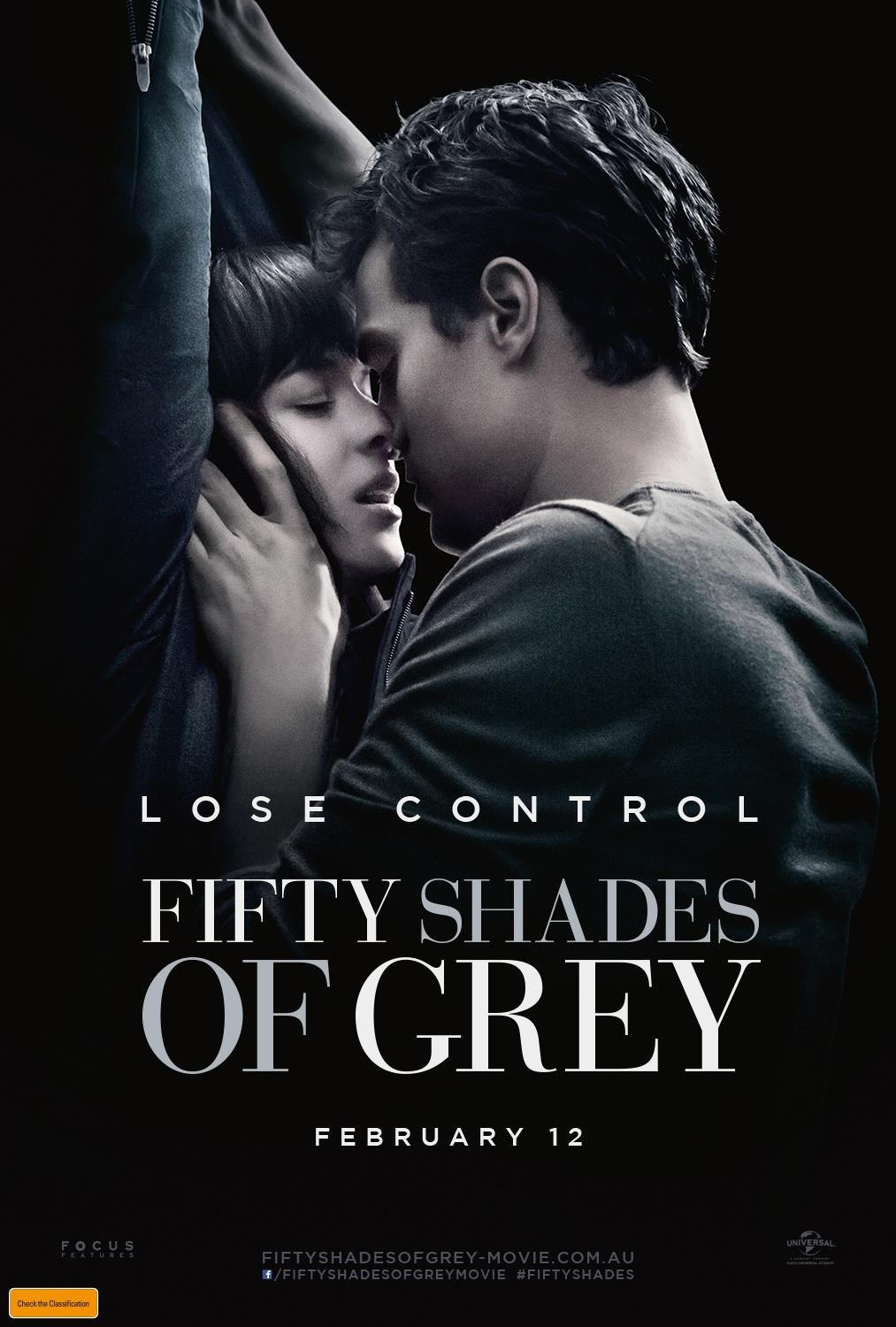
The Fifty Shades of Grey film hits cinemas later this week, and I think it’s time we take a bloody good look at why Fifty Shades is a story about an abusive relationship. Hundreds of people are defending EL James’ best-selling novel as a depiction of a love story. but it’s time to add to the maelstrom of people arguing that no, it fucking doesn’t.
Fifty Shades, as people who’ve been keeping up with my shouty recaps will know, follows the story of Christian Grey, mysterious multi-millionaire wanker and dominant, and his relationship with Ana Steele, mousy, pretentious college student. And, right from the off, their relationship is abusive. Because Christian has an inability to respect boundaries, he travels cross-country to pick a drunk Ana up from a party, takes her home, undresses her, and sleeps next to her, without once asking if it’s okay. Christian gets angry at Ana for being a virgin. He stalks her with tracking devices on her phone. She never signs the infamous sex contract he presents her with in order to establish their boundaries as dominant and submissive, but he uses it against her when he decides that she shouldn’t see her mother. He buys her place of work so he can exert more control over her life. He grabs her and pulls her at several times throughout the novel. Christian occasionally outright threatens Ana with violence for doing things he doesn’t like- describing himself as “palm-twitchingly mad” when she visits a male friend. He pulls Ana away from her friends and locks her in a room with him until she tells him why she won’t return his calls. He admits to getting her drunk in order to get her to agree to what he wants. At the end of the first book, Ana explains to Christian that she doesn’t like the idea of getting punished- he manipulates her saying that she said she’d never leave in her sleep, and Ana asks just how painful things could get. With no discussion of boundaries, Christian beats Ana with a belt so hard she finds herself unable to speak through the pain and thus unable to use her safeword. When she does manage to count the blows out loud, her voice is a “strangled sob”, so pretty safe to say that things had gone too far; Christian doesn’t even stop to check she’s okay. Read this breakdown of Fifty Shades with regards to an emotional abuse checklist if you don’t believe me; throughout the first book alone and the whole series by extension, Fifty Shades is peppered with emotional abuse, manipulation and emotional blackmail. That’s a fact. Trust me, I know.
But what does that mean for people who like the book? If you are a fan of Fifty Shades, it doesn’t automatically mean that you support or condone abusive relationships. It means that you’re welcome to enjoy any kind of fantasy you want provided you’re able to draw the line between what you let happen in your head (or on the page) and what you would let happen to yourself or someone else in real life. As long as you’re able to accept the fact that the relationship depicted across the trilogy is a horrendously bad one, feel free to enjoy all the slightly kinky BDSM sex. No, seriously- go ahead and enjoy it. But stop counting yourself amongst fans who defend the book as a love story, or argue that those saying the book is abusive just don’t understand how BDSM works. Fifty Shades is often sold as the love story of a generation, with articles on Match.com and countless other websites giving readers tips on how to find their own Christian Grey. And therein lies the problem with the book- people aren’t satisfied with just the fantasy of a boring, emotionally manipulative manchild- they’re being encouraged to go after it in real life. The problem here arises from a worry that there are probably all too many people willing to become Christian Grey, and all too many people who, thanks to the books, might conflate romance and love with emotional abuse. Because at not one juncture in the book does EL James suggest what Christian is doing is abusive (similarly, the book steers mostly clear of labelling the sexual relationship Christian had as a young teenager with his mother’s manipulative friend as what it is – statutory rape). The reader is supposed to fall in love with him as much as Ana, when we should be encouraged to look out for the often tacit signs of emotional abuse (in our own relationships and in others) that Christian so perfectly epitomizes. Fans who defend this book are basically saying “LOOK! THIS CAMPAIGN OF EMOTIONAL AND BORDERLINE PHYSICAL ABUSE THAT CHRISTIAN CONDUCTS AGAINST ANA IS LOVE!” They are saying that they wouldn’t see a problem with this if it was happening to them or someone they knew. If that doesn’t worry anyone else, you’re probably less invested than me (lucky thing).
EL James has spoken about how upsetting she finds people describing her book as abusive is, saying “”Bringing up my book in this context trivializes the issues, doing women who actually go through it a huge disservice. It also demonizes loads of women who enjoy this lifestyle.” The problem with that statement? A) Most people calling the book abusive aren’t only annoyed at the pathetically mild BDSM the book depicts, even though that’s it’s practiced in an inaccurate and unsafe way B) It’s everything that happens outside the bedroom that counts as abuse, as well as some aspects of the relationship within it. Countless people have run down the ways in which Fifty Shades depicts an abusive relationship, so I won’t reiterate them all here, but too many critics of the book are framed as prudes or those conflating a consensual BDSM relationship with abuse. We’re not. Defenders of the book are conflating abuse with a consensual BDSM relationship, and they’re wrong.
Hey, you know who else thinks they’re wrong? Hundreds of members of the BDSM community. Here’s a fascinating link to a blog post by someone from without the world of BDSM explaining that the dominant/submissive dynamic depicted in Fifty Shades just wouldn’t fly in most BDSM circles because of how irresponsibly Christian practices BDSM. Some people have voiced concern over the fact that readers, inspired to try out BDSM by Fifty Shades, might well engage in play that blurs the lines of consent. BDSM is a complex lifestyle that requires work in order to keep things safe, sane and consensual- Fifty Shades does not show the planning, the long discussions about boundaries, and the aftercare required to have a successful experience. And then there’s depiction of BDSM as a disease that’s curable by True Wuv, as Ana consistently characterises Christian’s kink as the scariest thing about him (it’s not).
So, with the mighty behemoth that is Fifty Shades rolling into cinemas this week, what can you do to take a stand against the movie (past just not seeing it at all)? Well, I’m donating the cost of my movie ticket to Broken Rainbow, a charity that supports LGBT victims of domestic abuse. Whether you donate or not, keep talking about Fifty Shades- read the books for yourself, and find the countless pieces of evidence that define this as an abusive relationship. You don’t have to shame people for reading it; you have to get people thinking about if this kind of thing is acceptable in real life. I was looking for the right quote to end this piece on, and I found it, courtesy of Gail Dines: “Battered women’s shelters and graveyards are full of women who had the misfortune to meet their Christian Grey.”
If you like this article and would like to see more stuff like it, please consider supporting me on Patreon!
If you like my work, please consider supporting me on Patreon!
I was watching a few episodes of The Big Bang Theory last night, and, since I haven’t really watched it since feminism happened to me, my brain started wantonly analysing the treatment of women in the show. And you know what? The results weren’t good.
The show sprung from the mind of Chuck Lorre, the man behind the mind-bogglingly sexist Two and a Half Men, so it shouldn’t come as too much of a thundering surprise that The Big Bang Theory is sexist. But I guess it comes under a veneer of seemingly unintended forward-thinking ideas- showing several main female characters as accomplished and respected scientists, for example- but it undermines this message at so many turns it seems like a horrible mistake.
Let’s start with Penny. Question: can you tell me Penny’s last name? Nope? That’s right, because the show has never given her one-not as a long-running gag, but simply because it hasn’t come up in over eight years. She’s portrayed from the off as a stereotypical hot, dumb blonde who sleeps with a lot of men- sure, she has street smarts, but her booksmarts are regularly compared to the four leading men’s to make a joke at her expense. Har, har, fucking har. She eventually does go to college; the decision is made, not because she wants to continue her education to further her career or expand her prospects, but because she wants to be smart enough to date her scientist boyfriend. When she snaps back at Howard, the resident endearing creep, for hitting on her one to many times after she’d said no, she’s made to apologise for upsetting him- so when she does stand up for herself, she’s slapped down for it. You don’t even have to delve into why these examples are sexist, they’re so bloody obvious. And more numerous than I’d care to count.
And then you’ve got the rest of the women on the show, who are, without fail, introduced to be romantic or sexual interests for the men (excluding a few overbearing mothers). Amy, who’s introduced as the direct counterpart to socially awkward, hyper-intelligent Sheldon, is soon boiled down to her desire to make Sheldon her boyfriend and engage in “coitus” with him (and occasionally, brilliantly, criticise the Indiana Jones movies), which is hilarious because she isn’t conventionally beautiful. Leslie Winkle, a scientist, appears almost always when she’s a fuck-buddy to one of the main cast. Bernadette is probably the most complex portrayal on the show, and she does have her own merits- her refusal to quit her job to have kids, for example- but she’s still essentially there to marry Howard. When the men display negative character traits, like lying or cheating, it’s often played for laughs- when women do it, it’s usually played off to show how much it hurts the men in their lives. Many of the female characters are barely given personalities beyond what they offer to the men in the show, with many- like Raj’s big-eyed squeeze- directly reflecting the characters of the men their paired with.
Then you’ve got the silly marginalisation of women in geek culture. Look, here’s the thing: women like nerdy shit too. And some men- I stress, not all men- see women as an impingement on their sacred ground, accusing them of wielding nerd culture as an excuse to dress up in sexy outfits and go to Comic-Cons to exploit the loneliness and vulnerability of male geeks (tiny violins play). Things which are just blatantly, blunderingly not true. The Big Bang Theory doesn’t want girls near it’s boy’s toys. Women are rarely, if ever, shown engaging in geek culture in the same way the men in the show are- in fact, when the three leading women walk into a comic book store everyone stops to stare. Later, Penny picks out a Thor comic book because he is “hot”. In the world of The Big Bang Theory, women aren’t welcome in geek culture because they couldn’t possibly understand it the same way the guys do. And no, just because we’re invited to laugh at the guys for their obsession doesn’t mean that exclusion is okay, because we’re being encouraged to giggle at the intensity of their fascination, not the idea that they might have a fascination at all.
It seems doubly odd, too, when two of the leading women in the show have presumably followed a reasonably similar educational/career trajectory as the men, with regards to the fact that they all ended up working as respected scientists (albeit in different fields). Is it really beyond the realms of possibility that they, or literally any other female character on the show, might have found their way into the same fascination with pop culture and entertainment? Evidently not.
I wrote last month about sitcom sexism, and how it often comes down to an across-the-board lazy use of stereotypes. The Big Bang Theory doesn’t escape with that questionable honour. Women are actively excluded, mocked, and stereotyped. And this is one of the longest-running, most watched, and most awarded sitcoms on television. I won’t just ignore it, because this is television which, whether you like it or not, matters.
So, I saw Ex Machina today. And it was an okay film: I’m slightly surprised by the number of people hailing at as one of the best science fiction films in recent memory, with insta-classics like Looper, District 9, and Moon on the proverbial radar, but sure, it was fine.
Following the story of twenty-someting coder Caleb (Domnhall Gleeson) after he’s invited to the home of reclusive tech genius Nathan (an electric Oscar Isaac), the plot revolves around Caleb’s interactions with Nathan’s latest creation: a high-functioning robot called Ava (played by an otherworldly, nuanced, slightly calculating Alicia Vikander). Nathan encourages Caleb to conduct a kind of Turing test to establish the validity of the AI he’s created, and Caleb finds himself drawn to the intelligent and beautiful Ava. Predictable shenanigans ensue.
I don’t want to talk about the actual plot of the film, because there wasn’t much there that hasn’t been explored before. I want to talk about the gender roles present in Ex Machina, because that’s probably the most interesting part of the whole film: Isaac’s Nathan literally bulges with muscles and masculinity and sexual virility, while Gleeson is his nervous, baby-faced counterpart. And in the middle of them is Ava; half beautiful woman and half visible machine, she’s both alluring and off-putting, both an actor and the acted upon.
The film did piss me off quite a bit with the sheer amount of uncalled for female nudity shown on-screen (the award for the science-fiction movie with most landing strips goes to…) especially when compared to the amount of male nudity we got (none). There’s no doubt that writer-director Alex Garland was critiquing the male ego (Isaac sees himself as an infallible God figure who creates and literally discards women as he needs them, while Domnhall Gleeson swings in as a white-knight saviour for Ava. Both, ultimately, fail) in Ex Machina, but it begs the question: where’s the line between gratuitous and necessary nudity in a film with these kinds of gender-based themes?
By showing a bunch of female nudity, Garland puts himself in a difficult position. He’s both inviting us to question the way that these women-robots are portrayed, used and viewed by the men in the film, and inviting us to ogle them along with his leading characters. The camera lingers voyeuristically on ex-ballet dance Vikander’s naked body when she covers herself in skin for the first time, while the fully-nude bodies of other female robots- deactivated, sterile, dead- line the cupboards behind her. Kyoto, the subservient robot that Nathan keeps around the house for sex and housework, drapes herself naked on Caleb’s bed. And the problem with it isn’t that nudity should be censored entirely; it’s that, by showing this nudity, Garland isn’t actually adding much to the film. If he’d implied the nudity, it would have been just as powerful and effective. In a film without a great deal of violence but with very adult themes and ideas, nudity seems to be the go-to to earn this a “grown-up” status. If the movie had been balanced with more male nudity, it might have at least made more sense- as Russel T Davies recently pointed out, we’re kind of squeamish about films and TV shows that show penises in all their glory-but by making the nudity solely focused on female characters, it undermines some of the interesting things it has to say about gender and sexuality.
I think what it comes down to is that the nudity didn’t actually add anything to the plot. Sure, Alicia Vikander is a beautiful young woman, and her naked body is a lovely sight, but showing it didn’t bring any new dimension to her character that wasn’t already covered. And that went for all the female characters who went naked in the film: their nakedness was there, at best, to supplement character points that had been established well enough earlier on and at worst, for apparent titillation.
I’m not going to outright accuse Ex Machina of sexism, because I actually don’t think it was a sexist film; on the contrary, it had a lot of quite nuanced ideas about sexuality and how we perceive it buried amongst the standard sci-fi fare. I think the problematic side of it came down to an inability to deploy nudity in an impactful way, in a way that developed and added something to it’s characters. And nudity for nudity’s sake- in a film that was, in a lot of ways, an adult, thematically relevant, and intelligent picture- doesn’t make anyone look like more of a grown-up.
If you like my work, please consider supporting me on Patreon!
Being a feminist and existing almost entirely on a pop-culture plane is exhausting. Casual sexism is everywhere. Games of Thrones disempowers female characters through rape before they can become all-powerful. American Horror Story has been known to piss all over it’s male characters to make room for strong women. Black Canary in Arrow gets to fight crime in the extremely practical ensemble of a bodice-ripping corset, leather trousers, and a cropped leather jacket. Bleh . Once you start noticing these little, irritating slips, it’s hard to ignore them. So when I clicked on to The League a concept-driven semi-improvised comedy based around a fantasy football league, I promised myself that I would try to ignore any of the potential quiet sexism I’d gotten used to.
And, two and a half series in, there it was. Female judges who were just waiting to sexually dominate male characters; sexy teen au pairs hired purely on looks because the child’s father wants his kid to get used to being around gorgeous women. Katie Asleton, who plays the one female main cast member, is regularly shown to be “one of the guys”, enjoying dope and booze and sex (because hey, no women I know enjoy dope and booze and sex), an exception to the other wives and girlfriends in the series (one of the main character’s wives appears, significantly, once in the first season, where her episode arc revolves around cooking lunch for everyone while they try to watch football). Women are constantly hurling themselves at the five leading men, giving the romantic side of the series a sense of being scripted as somebody’s ultimate fantasy. It’s low-level, it’s not the end of the world, but it’s kind of irritating.
But I have sexism fatigue. I just wanted to watch a show where my feminism senses weren’t going to be tingling; I’m not looking for an excuse to be enraged or feel victimised, but seeing the same tired women stereotypes paraded out was grating as a fan of pop culture (because lazy) too. And that got me thinking: is sexism more damaging to shows than stupid stereotypes? And if it is, how important is sexism in judging the intentions of it’s creators?
I think that sexism is particularly egregious when it’s unimaginative. Sitcoms have comfortably settled into a recognisable rhythm, with certain beats to hit and characters to work through. The League regurgitates a handful of stereotypes- dumb blonde, stupid promiscuous guy, sexy Latina woman, oblivious wife- that only serve to underline how easy it’s is to fall back on gender and racial safeguards because they’re easy. These stereotypes are shorthand for spelling out things that the show hasn’t got the time or inclination to do itself, because when we see a few traits from a certain stereotype applied to a character we can fill in the rest of the blanks ourselves. I’m picking on The League here, but loads of sitcoms do it, and in a way it makes sense. With twenty-three minutes to tell a story, you don’t want to spend too long developing characters who aren’t going to impact much of the rest of the series, so you’ll rely on the audience’s knowledge of stock sitcom characters to cut out the middle man. But at the same time, it’s lazy: sketch in these characters, sure, but actually make them a bit different and a bit new. Subvert expectations. The closer you look at the low-level sexism that inhabits these kind of sitcoms, the more you realize that it’s less an issue of feminism or gender disparity than it is an issue of lazy (or time-constrained, depending on how you see it) writing. The fact that they use these stereotypes for more than just female characters doesn’t excuse them, but it at least makes it understandable- and explains why the problem with sitcom sexism might well not be ill-intentioned, but rather an ingrained, quick way to get a point across.
And here’s the kicker: does it matter if the show is sexist? In an interview with Salon, co-creator Jackie Schaffer said this on the subject of sexism in the show;
“I kinda don’t really think about what anybody says. I don’t really think the show is sexist. I think we try to make it feel authentic and – it’s what we’re writing about and it’s our point of view, so maybe the world or life is a little bit sexist…”
And I don’t think that’s an entirely unfair defence. The show itself is okay, not great, not awful, with a few laugh-out-loud moments and fun characters to watch for. This is a sitcom, so it’s naturally a bit bigger and more caricatured than real life. Most of the lead characters are pretty awful people in one way or another- the sort of people who’d rent out their unknowing friend’s apartment for a porn shoot (with Seth Rogen in it, bizarrely), or force another of their friends to pay for a giant anniversary party for his wife-but that doesn’t mean that I’m going to attach all those qualities to the people who write, direct, and act in The League. There are a handful of shows whose treatment of female characters does make me suspect sexism on the part of the creators; this isn’t one of them. And hey, people behind The League could probably do with being a little more self-aware about their treatment of women. I’m not saying we should let it entirely away with the occasional sexism (and grim stalkerish behaviour which I’ll go into in more detail when I review the whole show) but there are far worse things on television that we give a pass to because they’re considered of higher intellectual or artistic quality (Read: Game of Thrones). Many of the scenes involve men talking to other men in a facetious, often sexist way that’s clearly meant to bring the audience in on how awful these guys really are. The League isn’t high art; it’s a show about a bunch of dudes and a chick in a fantasy football league. And sure, it can be pretty sexist. But we need to look at it from a practical, time-constrained point of view, so we can understand it’s reliance on stereotypes, it if not excuse it. Because understanding a problem is the only way we can effectively get rid of it, and I am so, so ready to see the back of boring sitcom sexism.
You know what Katie Hopkins is? She’s a time toilet. The ex-Apprentice contestant says something offensive, and you disappear down a Facebook/Twitter/Youtube rabbithole for as long as it takes to absorb her irritatingly misinformed opinion. Then she’s gone, fading away into the mists of offensiveness until she next takes in upon herself to make the nation roll it’s eyes so hard we shift four inches to the left.
Yesterday, it was reported that a Scottish nurse who’d recently returned from travelling to Sierra Leone with a group of healthcare workers from Save the Children had a suspected case of Ebola. The suspicion was confirmed, and she was moved to London for further treatment. Katie Hopkins had these thoughts:
Glaswegian ebola patient moved to London's Royal Free Hospital. Not so independent when it matters most are we jocksville?
Patently, she’s acting out the colloquial definition of a wanker. And by the end of the day, Twitter was aflame with the Katie Hopkins tweets, some in defense, the rest of us in blinding irritation. Some have accused her of committing a hate crime due to the perceived racism in the Tweet. The furore has been covered in a number of news outlets, including the Independent and the Metro.
Katie Hopkins and her ilk are the mobius strip of awful; they cater to our desire to be outraged just enough to keep themselves in the legal clear. The more people react to her, the more newspapers report on her, the more people want her on their morning shows, the more people find out how she is. So next time she says something offensive, more people react. And so it goes on.
Hopkins knows how to stoke outrage with finesse. She’s not like Dapper Laughs, who accidentally blunders out stuff which he probably doesn’t realize is as grim as it is.; she’s just close enough to enough people’s real-life opinions that she often gets away with the “telling it like it is” tag, despite the fact that most rational-minded people realize what a tremendously nonsensical twat she is. So how do you solve a problem like Katie Hopkins?
A lot of people have called for her to be banned from a variety of social media outlets, and that’s not the answer. Blocking her opinions entirely confirms you see that she’s said something stupid, don’t watch it, don’t search for it, don’t click on articles about it. Utterly, utterly ignore it. that she’s significant enough to warrant a reaction, and that just adds to the rolling stone of leathery, platinum moss. It’s confirmed to many people that she’s “too much” when that’s not true; she’s just repugnant and profoundly annoying. I am not offended by Katie Hopkins, I just have no interest in hearing what she’s got to say on anything ever again. But that doesn’t mean she hasn’t got the right to say it at all. Professional offense-mongerers live off publicity, as Hopkins well knows. The only way to get her out of the news, off TV, and keep her opinions out of earshot is to cut off that oxygen. Next time you see that she’s said something stupid, shut it down, ignore it, and encourage other people to do the same if they don’t want to hear anything from her again. Hopkins is on a cliff-edge with her career and her fame; we can provide that nudge and shut her down entirely if we don’t want to listen to her. Do it. Do it for me.





 The Cutprice Guignol