Mockingjay Makes a Mockery of Young Adult Tag
I reviewed Mockingjay; it was seriously good.
I reviewed Mockingjay; it was seriously good.
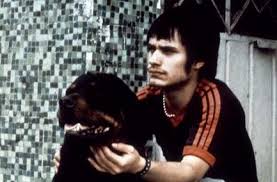
The year: 2000. A twenty-year-old Mexican actor by the name of Gael Garcia Bernal explodes onto the scene with a harrowing performance in dark thriller Amores Perros, playing a beaten-down teenager (above) who turns to dogfighting in order to prove to his uninterested crush that he can take care of her before getting involved in a horrifying, life-altering car crash.
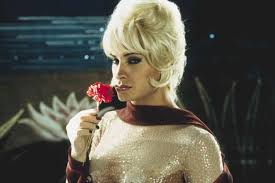
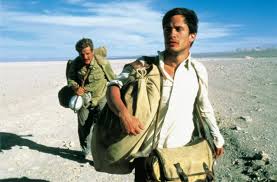
2004. Bernal cements his burgeoning career with two important but wildly different turns. One as a con-artist transvestite dealing with the aftermath of sexual abuse in the church in Almodovar’s controversial Bad Education, the other as a young Ernesto “Che” Guevara travelling across Latin America where the seeds of his future communism are sowed.
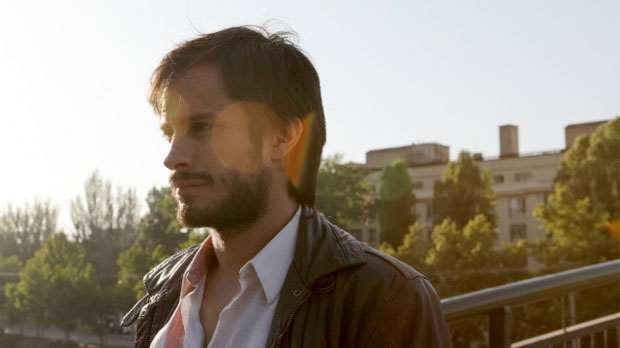
Jump to 2012. After a series of critically-acclaimed turns in films like Babel and The King, Bernal appears in award-winning Chilean drama No, which charts his character’s grappling with political manoeuvring in Pinochet-era Chile.
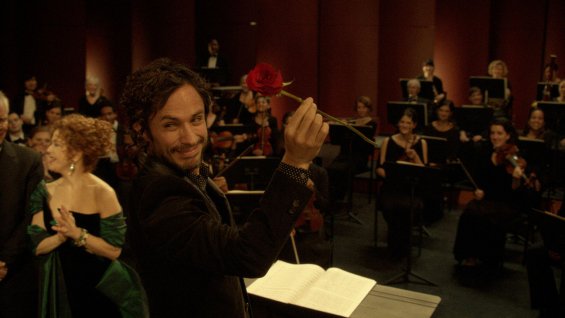
Skip to 2014, and Bernal is starring in…a light American dramedy in which he plays an off-the-wall classical conductor with a passion for the silly? Yup, it’s time to talk about Mozart in the Jungle, an often baffling but occasionally entertaining venture into the world of classical music in New York.
If I haven’t made it clear enough above, one of the things that attracted me to this series was how fucking bizarre it was for Bernal to be playing such a light role. He’s an astoundingly good actor who usually sticks to the kind of roles that win him awards whether he wants them or not: brave, stark, dramatic, and intelligent roles that prove over and over again how incredible a serious actor he is. Off the top of my head, I can’t think of any of his films (at least those that have gained traction across the pond) in which he’s played a consistently fun role. I spent the first half of the series waiting for him to snap and start making his orchestra fight each other for cash, but was instead met by a charming, extremely funny guy who just wanted to conduct some classical music and annotate some manuscripts, yo. Rodriguo de Souza is a childish, witty, clever, passionate character who’s brought in to breathe new life into the New York Symphony Orchestra, and the kind of person who you’d consider changing religion for (did you see those pictures I put up there? I mean, are you made of stone?).
Right, here’s the thing about this flagship Amazon original series: it’s Smash, but with classical music. Smash promised a cheeky, sordid look behind the scenes of Broadway theatre and failed to deliver: Mozart in the Jungle succeeds on all the levels Smash couldn’t. It even gives Bernadette Peters, who’s got roles in both series, a much better part to play, for Chrissake. It demolishes and embarrasses Smash by showing them just how easy and brilliant this kind of show could be. It’s packed with engaging characters, but what makes them even better is their ability to interact with each other like adults instead of the preening, shrieking, stomping ninny-children we’ve come to expect from dramedy shows. Lola Kirke’s (who I also spotted in Gone Girl, which is excellent and in which she is excellent) self-deprecating, sarcastic, up-and-coming oboist doesn’t need to have screaming matches over mantelpieces with her love interest in order to sort out their problems; they just go for a shag and a chat. Saffron Burrows as the louche, charming cellist of your dreams gets high and screws someone she regrets; they discuss it and agree not to mention it to anyone for fear of making the orchestra an awkward place to work. Instead of being constantly pitted against each other, the women are smart, ambitious, and know when to work with or against each other. Everyone deals with things in a grown-up way, which makes the drama, when it does arrive, all the more engaging and juicy, because you know it must be serious. The curtain-twitching community of the orchestra is filled out with snapshots of characters that let us fill in the blanks, but the effectiveness of giving the background cast faces cannot be overstated.
Beyond that, the series is just a metric shit-ton of compressed all-over-the-place-ness held together by a sense of game fun. One minute Malcolm Macdowell (who’s place in this series is possibly more inexplicable than Bernal’s) is drinking coconut water and wearing a Hawaiin shirt; the next Bernal’s manic violinist ex-lover is screaming at an audience to “SHUT UP!” as they try to applaud her. Jason Schwartzman in a leather gilet turns up. Roman Coppola directs. Hannah Dunne smokes dope and tattoos people. Everyone seems overqualified for this series, and it’s wild.
But it all boils down to one thing: the music. As the kind of person who was determined to learn how to play instruments but never had a natural aptitude for them (twenty combined years of bass, cello, and piano have proved that the most I can do is smugly shout “YOU’RE NOT PLAYING THAT RIGHT” at the screen occasionally), I love hearing classical music. Take a superb scene in which the orchestra plays the 1812 Overture (amusing aside: a member of my family was pulled over by the police in their car, and had an argument with them in which the police wouldn’t believe that they had this track on CD in the player. They did. Not sure how the cops took that) in a broken-into lot in New York City; packed with bravado and the utter passion that stems from brilliant classical music, the show draws it’s energy from the variety and novelty of it’s setlist. Entrenching the series so deeply in such a specific type of music was an audacious choice, but one that works entirely to give every episode a running theme and thread. It makes no odds if you like classical music or not (and if you don’t, listen to this and come back to me), because Mozart in the Jungle isn’t here to patronise; it’s not even here to educate. It’s here to fucking entertain. And by God, it does.
Let me get this out here, right in the first sentence: I’m a feminist. I believe in the elimination of gender inequality through focusing on the negative effects that gender stereotypes project onto all genders. There are various reasons that my feminism only reared it’s #feministsareugly head within the last year or so, but that’s not what I want to talk about today. I want to talk about feminism on the internet.
With the rise of sites like Twitter and Tumblr, and with the focus and debate raging over feminism that’s taken place over the last eighteen months, feminism has been forced to defend itself. BBut the problem with feminism on social media platforms is that it gets scattered; opinions are vehemently divided over almost every issue, and critics of feminism brandish this lack of unity as proof that the feminist movement may as well not exist. If we can’t even agree with each other, how are we meant to propagate any effective change in the wider world? If we can’t criticise people who openly declare their misandry (and not in the dark-toned jokes so often plucked up by the #feminismisawful hashtag, but those who actually, openly believe that men are inferior and deserve to be oppressed), how can we claim to be fighting for gender equality?
Being a feminist active on social media right now is to spend half your time dancing around a minefield of potential hypocrisy. So many issues who’s context and impact informs so much of the opinions we hold on them rise up and demand attention, while critics demand that feminists present some united front on the issue. Failing that, the front that’s attributed to us is the most controversial or the most synonymous with the misandry that many antifeminists attach to the movement. The waters become muddy with people declaring their agreement or disagreement with the most prominent opinion on the matter, and casual observers or critics are often left with a variety of vastly dissenting opinions that fail to leave any cohesive impression.
I think the size of the current feminist movement and the voracity with which people engage with feminist issues in a positive way is fantastic, heartening stuff. And eliminating those dissenting opinions entirely is surely a bad idea, as it removes the onus of debate from the movement. So here’s a New Year’s resolution for all internet feminists who feel the way I do about the movement. Next time you see an opinion that’s being attributed to feminists-whether it came from feminists or not- that you don’t believe jives with the gender equality feminism should be striving for, say so. Blog about it, tweet it, post it on Tumblr or Facebook. Say that you’re a feminist, and you don’t agree with this opinion. Give your reasons. Don’t silence voices, but try to add yours to them. Call out misandry, hypocrisy, and sexism when you see it, whether it’s within the movement or not. Forcing the feminism movement into one, single-voiced bunch is too simplistic, but providing opinions that challenge popular, seized-upon “proof” of problems in the movement can do nothing but strengthen the feminist cause.
So, I’ve been watching Sleepy Hollow recently. I was determined not to like it, as that would mean the consort had been right about a show and I would therefore never trick him into watching something like Suburgatory again (which is, by the way, utter, unparalleled genius).
But Gosh darn, if I didn’t really love Sleepy Hollow. My first attraction to the series was this;

I’d rather not say how long I spent looking for a Tom Mison picture, thanks.
That’s Tom Mison, who plays co-lead Ichabod Crane, a man transported from revolutionary American to modern-day Sleepy Hollow by witchery in order to stop evil. Ridiculous? Utterly. But Tom Mison, who pitches the comic scenes about his change in time-such as soliloquising down the phone about love to a phone operative- perfectly, is perfection. He’s at some times bumbling, at some times swashbuckling, at some times a little bit terse. He also happens to be second only to Norman Reedus in the “Men On TV I Would” list.
Then there’s this;

Well-developed, witty and consequential female characters really do it for me.
This is Nicole Beharie, who plays the police lieutenant who meets Crane soon after he arrives in Sleepy Hollow. Compassionate, intelligent, selfless, brave, and driven, Abbey Mills is one of the finest female characters on TV today and her partnership with Crane- devoid of Mulder-and-Scully style sexual tension, at least so far- is all the better for it. She also happens to be second only to Lauren Cohan in the “Women on TV I Would Do” list. Walking Dead really has the monopoly on impossibly good-looking characters facing an apocalypse.
Along with a cohort of fun regular characters- Lyndie Greenwood as Abbey’s troubled, more ruthless sister Jenny is my favourite, but Orlando Jones as a sceptic-turned-believer police chief is close behind- the duo run around trying to fight off the apocalypse predicted in the Book of Revelations. Occasionally John Noble, esteemed thesp, turns up to make dinner of the scenery and smile in an ambiguous way. And it’s as brilliantly silly as it sounds- the stories are brisk and uncomplicated, with a freak-of-the-week set up featuring some gloriously underused monster (Wendigos, Golems, Green Man etc) with some sensational real effects. It’s bright, delicious, clever fun, with a lightness of touch that stops the show ever getting bogged down in it’s own mythology.
And this got me thinking: why was it I loved this show so much? Then I realised: it’s my replacement Doctor Who. After a season in which I found DW stories too convoluted, found character tension to be forced, found the series dissapearing up it’s own arse, Sleepy Hollow is the embodiment of all the things I love about Doctor Who: the out-of-time man matched with a banterous audience surrogate, fighting monsters every week and leading everything up to a neat series finale. And so, for anyone else who’s soul was troubled by this series of Doctor Who, I cannot recommend Sleepy Hollow enough. Just don’t mess with the Horseman. Any of them.
The Old Department
The floors are cracked and white;
No windows. Corridors are long. Dry.
I can tell, they were handsome once- strong jaws, hairlines hidden under sparks,
Grey scribbled out with dye.
The toe of my pretty leather girl’s shoe catches, and I trip-
My thoughts thrown, I try to remember where I’ve been. An old dream
Beats behind every door and leeching screen.
The Early Hours
Our backs move like fins in shadows,
Half-light growing, birds singing as if they don’t know we’re hunters,
You bite with dry teeth.
I arch against the damp air,
Garrulity unraveling to a small cry
And words to syllables and sounds.
We move to a beat like poetry,
Eyes closed, lost in your cadence, my staccato note.
View original post 3 more words
Well, it’s time: time for the magnificent Guignol to take a look at the highs and lows in this year’s television and film. Be warned of spoilers ahead, because I get excited about stuff and want to tell everyone about everything I’d seen.
Best Movie Performance of the Year: Jake Gyllenhal in Nightcrawler. Somehow managing to scrub his beautiful, deep, expressive eyes completely free of any emotion and it actually worked. Can’t implore anyone enough to go and see this very quiet masterpiece.
Best TV Performance of the Year: There’s a lot of competition in this category as you might imagine given the amount of fucking TV I spend all day every day watching. Special commendations have to go to Gustaf Skarsgard in Vikings (and the whole rest of the leading cast in Vikings, come to think of it), Michelle Gomez (despite the pitiful amount of screentime she got as the Master), and everyone who even considered being in Hannibal, but I’m going to go ahead and throw this one to Finn Wittrock as Dandy in American Horror Story. In a patchy season, the virtual unknown has proved himself with style, claiming some of the best moments of the series as his own as well as bringing an American Psycho-esque depth and neuroses to what is essentially a totally clichéd role.
Best On-Screen Duo of the Year: Nicole Beharie and Tom Mison in Sleepy Hollow. Next.
Accent of the Year: Kathy Bates in American Horror Story with that alleged Baltimore accent. Considering how great her performance is this season, that accent is a testament to good acting overcoming all.
Biggest Film Disappointment of the Year: Godzilla. Probably just missold, if anything, but it wasn’t anything I expected it to be, in a bad way.
Biggest TV Disappointment of the Year: Doctor Who. So much so that me and the consort very nearly never spoke again after the first episode as it so shook the foundations of our relationship. If Doctor Who isn’t good, what can I believe in?
TV Moment of the Year: I’d repressed it till now, but Michael Pitt sawing off his own face under the influence of psychotropic drugs and feeding it to dogs is eternally etched onto my memory. The woozy cinematography and presence of Mads Mikklesen’s terrifying Hannibal Lecter (the only truly great one there’s ever been, in my eyes) served to make this scene the petrifying, distorted crescendo to an already brain-bending series. Ugh. Think I was just a little bit sick into my mouth.
Movie Moment of the Year: There have been a few great ones, but the closing moments of Mockingjay part 1- with Josh Hutchinson’s Peeta battling in a terrified stupor against his bindings while a doubtful, vulnerable Katniss (Jennifer Lawrence) looks on- was ominous, brutal, and utterly brilliant.
Cheering-Out-Loud Moment of the Year: Anything involving Carol (Melissa McBride) in the first episode of The Walking Dead series five. Especially her tear-jerking but not sentimental reunion with Daryl. That woman can kick ass AND rock a pixie haircut: therefore, she’s my idol.
TV Show of the Year: Anyone who’s spoken to me since those manic few days where I marathoned both series will know that I’m going to say Vikings. The plotting is refreshingly simple in an era of Moffatian twists and turns, the performances are affecting, understated and well-earned, the characterisation is consistent and constantly evolving, the story is driven by logical character choices, the battle scenes as good as you’d hope, and it’s shot with audacious beauty and style for a low-budget, History channel drama. And Clive Standen punches someone off a chair! OFF A CHAIR!
Runner-Up: Logically, Hannibal, because it’s beautiful, utterly original, and will lodge itself under your skin in ways you won’t always like. And I say this as someone who’s watched and enjoyed seven Saw films: it’s really fucking brutal.
Movie of the Year: Nightcrawler. It won’t get any Oscars, but that’s probably just a statement as to how original, dark, and adult this psycho-thriller is.
Runner-Up: The Double, Richard Ayoade’s superd follow-up to Submarine. Jesse Eisenberg proved himself as a truly diverse actor taking on the two lead roles in a psychedelic, sci-fi noir thriller that was unafraid of having a sense of humour. Think Gilliam, but British.
Music Moment of the Year: Jessica Lange out-Bowieing Bowie with an entirely anachronistic performance of Life on Mars in AHS. Why not?
So it’s come to this: an passionate soliloquy to my favourite show of all time. I watched Frasier over the summer of last year in a heat haze of hard work, sporadic depression, alcohol, cigarettes, and one very posh flat. I don’t hesitate in saying that this show changed my life. Underneath all that fabulously pretentious and sly humour lies a brilliantly clever, humane heart that delivers beautiful, sometimes painful truths wrapped up in twenty minutes of comic television. It’s utterly timeless, as close to flawless as makes no difference, and an absolute must-see for anyone, anywhere. Below, I’ve hunted out my favourite episodes from every season (and believe me, it was a battle of wills choosing the best), with links so you can enjoy them too. Please read, watch, and enjoy as much as I do. Forever and ever. Amen.
Season 1- My Coffee With Niles
A brilliant bottle episode that hinges around Frasier and his neurotic brother Niles talking about Frasier’s life since he moved from Boston (read: Cheers) to Seattle, My Coffee with Niles is as much a farcical, supporting-character peppered comedy of errors as it is a meditation on happiness. Co-opting on the amazing chemistry between Niles and Frasier, it’s centred, smart, and was the perfect way to end the stellar first season. A little melancholic without getting bogged down in schmaltz, this is a centrepiece for what the show is really about.
Season 2- The Innkeepers
I think Frasier gets written off as a show for uppity people, because it spends some much time lingering on the prententiousness of it’s lead characters. But it also spends a delicious amount of time undercutting and undermining everything they do. In this positively Shakesperean farce, Frasier and Niles buy a restaurant and everything goes predictably tits up in a barrage of quotable lines (“I’m not asking you to do anything that you wouldn’t do in your own home; now, Niles, kill five eels!”) and brilliant physical comedy. One of the most outrightly humourous episodes of the series’ run, this is an episode I show to anyone I want to like the show and it hasn’t failed me yet.
Season 3-Moon Dance
A long-running thread in the show is Nile’s obsession with his father’s physical therapist Daphne and in this episode, the first Kelsey Grammar (who plays Frasier) ever directed, things come to a quiet, understated head (not that I’d know anything about quiet, understated head, but still). It’s lusciously shot, terribly romantic, and gives David Hyde Pierce as Niles and Janes Leeves as Daphne a chance to really get their teeth into that taunting chemistry.
Season 4-The Unnatural
Well, I couldn’t write a list of this nature and not include a great episode for Bulldog, the mysoginstic, creepy, innapropriate, arrogant, and utterly brilliant sports newscaster from Frasier’s radio station. Played by Dan Butler (who-and let me finish- is a Shakespearean actor by profession), this isn’t just a great episode for him, but an interesting meditation on fatherhood as Frasier faces letting his son down for the first time. With lots of great bits for John Mahoney’s curmudgeonly Martin (HOW DID HE NOT GET AN EMMY? FUCKING HOW?), it’s a sweet, carefully pitched episode (excuse the pun) that’s not short on the blisteringly quick humour you’ll be used to at this point.
Season 5- The Gift Horse
This is one of my solid favourite episodes, purely because it does that fantastic ermotional bait-and-switch that Frasier has just got down better than any other sitcom ever has. What starts out as a quick-fire, throwaway episode about the rivalry between Frasier and Niles for their father’s affection ends in a poignant gut-punch that’s sold by one of John Mahoney’s most affecting performances. You’ll laugh, you’ll cry, it’ll change your life.
Season 6- Three Valentines
The Valentine’s Day episodes on Frasier are traditionally a high point, but this remains one of their most ambitious and effective. Split into three parts- each one following the Valentine’s day of the main characters- it kicks off with a hilarious, almost-silent physicla comedy sequence that’s worth watching in and of itself thanks to David Hyde Pierce’s amazing blundering. What follows- Frasier’s panicky misinterpretation of what could or could not be a date and Martin and Daphne having what’s meant to be a nice dinner- is just as funny, proving that the show understood it’s performers and knew how to get the very best out of them, comedically speaking.
Season 7- RDWRER
A Christmas/New Year’s episode this time around, with Frasier, Niles and Martin ending up stuck in a Winnebago on a cross-country tour as the bells chime. The exploration of the father/sons relationship is one of the consistently strongest point on Frasier, and RDWRER is one of their finest episodes in that vein. Blisteringly sharp, with a warm but not soft emotional core, this is how you do family comedy on television. Take note, literally everyone ever.
Season 8- And The Dish Ran Away With the Spoon, Parts 1 and 2
Am I cheating by putting a two-parter in this list? Get used to it. In the aftermath of a Very Important Event which I won’t ruin for those who haven’t seen the series and have somehow avoided spoilers for more than twenty years, the Crane family and friends attempt to collect themselves and deal with the painful, sad, but ultimately hopeful aftermath. Can we just all give Jane Leeves a collective hug for her performance here? Frasier and Martin take a backseat in the best possible way as Niles and Daphne take centre stage, to great effect.
Season 9- Don Juan in Hell, parts 1 and 2
See, I told you you’d have to get used to it. This, the climax to a season-long arc that had Frasier questioning himself, is basically a self-indulgent excuse to climb inside the head of one of the most engaging lead characters on TV. Frasier locks himself up in a cabin, and has a chat with all the significant women from his past (including the amazing Lilith) in what has to be one of the most meta episodes ever created before meta was even a thing. Season 10-rooms with a View When one of the Crane clan has to face a life-changing operation, the rest of the family flocks down to support them, and find themselves relieving their significant hospital-related memories. Does that sound ridiculous? Good, then at least this is going to outdo your expectations. By turns heartbreaking and heartwarming, it’s an episode that refuses to wallow in it’s tragedy and fights through to a sweet and well-earned climax. John Mahoney kills it when he’s not even facing the camera in what has to be one of the saddest moments of the series run. Season 11- Goodnight, Seattle parts 1 and 2 What else could be here except the finale? It’s one of the finer TV finales to ever grace the small screen; I touched on it in my How I Met Your Mother rant, but that doesn’t do it justice. It offers no real answers, but promises that whatever these characters will do once the cameras switch off for the last time they will be happy. And that’s all you want from them at this point.Hey, so, after the crapstorm that was last week’s episode, and a week where I speculated in dramatically wrong ways about what would happen in the Doctor Who season eight finale, I’ve come across something sorely missing in the last ten weeks: an episode that I loved almost unconditionally.
I think it’s telling that, for the first time this series, me and the Consort finished watching Dark Water and immediatley negotiated more episodes to watch. It was an outing that reminded us of Doctor Who at it’s best, and made us want to go back and wallow in the triumphs of yesteryear (we matched it with the Lake Silencio two-parter, and the Bad Wolf finale for season one, both of which are always better than you remember). This episode was tantalising, and wasn’t enough on it’s own. That’s a good sign.
I really thought Dark Water was a belter of an episode, the best and most true to form of the series so far (Listen was magnificent, but it didn’t have the fun or breakneck pace of this one). Early in the episode, Danny is killed, and Clara and the Doctor go to find him (incidentally, Jenna Coleman’s performance throughout this entire segment was jaw-dropping, award-winning stuff, particularly the scene where she explained the real tragedy of his death lay in the mundanity of it all), leaving Danny Pink in Heaven/Hell/The Nethesphere with Chris Addison as his poison-tongued tour guide. This segment had some of the best writing all season going for it, with Chris Addison’s description of our understanding of the afterlife being a particular highlight. And the offscreen screaming as Chris Addison winced that they had “left their body to science”? Masterful.
A big shout out to Rachel Talalay, one of the distressingly few female writers or directors to grave Moffat’s run of Who, as she did a cracking job on the direction. Her close-up, tight shots on Danny and Clara as they have their last conversation were heartbreaking, but not as gutting as the cut between soldier Danny realising he’d killed a child, and afterlife Danny realising he was going to meet him. C’mere, Samuel Anderson, let me buy you all the drinks for saving the series.
And then, of course, there was Missy. I’m going to put a big fat SPOILER ALERT here, which I rarely do as I assume most people coming here have already seen the episode, but the reveal of Missy’s identity was so good I don’t want it ruined for anyone here. Go away. Come back. Watched it? Are you sure? Certain? One hundred percent? Okay.
HOLY SHIT IT WAS THE MASTER! I do not exaggerate in the least when I say that I threw a bottle of juice against the opposite wall in excitement when she announced her identity. Like most two-parters though, the success of this episode will rest on how well they pull of the actual finale. Either way, Michelle Gomez is a saccharine delight and a worthy successor to the formidable John Simm. And surely we’ll be seeing more of her after this season ends, because you don’t bring the Master back as a woman then only give us one episode of her. Everything comes down to next week, and I’m hoping they do well because this episode was teeming with brilliant lines, scenes, and ideas-more than I can even touch on here- and I want it to remain as good as I think it is now.
But. Well, there’s always a but, isn’t there? This isn’t really a criticism of the episode, but you’ll have noticed that I haven’t been talking a whole lot about the Doctor. And there’s a reason for that. It suddenly struck me, in the middle of the night, which is when I write these reviews in my head and mentally paste them into the blog in the morning, that the problem is not with Peter Capaldi. Peter Capaldi is doing an excellent job playing the role he’s been given, but the problem is that role isn’t the Doctor. It’s leaning towards the sociopathic otherness of Moffat’s Sherlock, stripped down of much of his humanity and warmth. Watching Chris Ecclestone’s Doctor again, it’s so clear that a “dark” Doctor doesn’t have to be the aloof, trickster, testing personality that Capaldi’s playing to perfection right now- he is still the same man at heart(s), and doesn’t want to torture, tease, and even kill those who he comes into contact with. Anyone else of the same page here? Either way, I think that Moffat needs to hand over the reins to someone else and focus his attention on Sherlock, as it seems to be where his mind is at right now anyway. I’ll have you yet, Moffat. But if you can pull of next week, I’ll call off the hordes.
I wrote about American Horror Story: Freakshow and the treatment of Freaks therein.

 The Cutprice Guignol