The Cutprice Guignol

The Ninth Year: The Haunting of Swill House

Ex Machina and Sexy Naked Ladies

So, I saw Ex Machina today. And it was an okay film: I’m slightly surprised by the number of people hailing at as one of the best science fiction films in recent memory, with insta-classics like Looper, District 9, and Moon on the proverbial radar, but sure, it was fine.

Following the story of twenty-someting coder Caleb (Domnhall Gleeson) after he’s invited to the home of reclusive tech genius Nathan (an electric Oscar Isaac), the plot revolves around Caleb’s interactions with Nathan’s latest creation: a high-functioning robot called Ava (played by an otherworldly, nuanced, slightly calculating Alicia Vikander). Nathan encourages Caleb to conduct a kind of Turing test to establish the validity of the AI he’s created, and Caleb finds himself drawn to the intelligent and beautiful Ava. Predictable shenanigans ensue.

I don’t want to talk about the actual plot of the film, because there wasn’t much there that hasn’t been explored before. I want to talk about the gender roles present in Ex Machina, because that’s probably the most interesting part of the whole film: Isaac’s Nathan literally bulges with muscles and masculinity and sexual virility, while Gleeson is his nervous, baby-faced counterpart. And in the middle of them is Ava; half beautiful woman and half visible machine, she’s both alluring and off-putting, both an actor and the acted upon.

The film did piss me off quite a bit with the sheer amount of uncalled for female nudity shown on-screen (the award for the science-fiction movie with most landing strips goes to…) especially when compared to the amount of male nudity we got (none). There’s no doubt that writer-director Alex Garland was critiquing the male ego (Isaac sees himself as an infallible God figure who creates and literally discards women as he needs them, while Domnhall Gleeson swings in as a white-knight saviour for Ava. Both, ultimately, fail) in Ex Machina, but it begs the question: where’s the line between gratuitous and necessary nudity in a film with these kinds of gender-based themes?

By showing a bunch of female nudity, Garland puts himself in a difficult position. He’s both inviting us to question the way that these women-robots are portrayed, used and viewed by the men in the film, and inviting us to ogle them along with his leading characters. The camera lingers voyeuristically on ex-ballet dance Vikander’s naked body when she covers herself in skin for the first time, while the fully-nude bodies of other female robots- deactivated, sterile, dead- line the cupboards behind her. Kyoto, the subservient robot that Nathan keeps around the house for sex and housework, drapes herself naked on Caleb’s bed. And the problem with it isn’t that nudity should be censored entirely; it’s that, by showing this nudity, Garland isn’t actually adding much to the film. If he’d implied the nudity, it would have been just as powerful and effective. In a film without a great deal of violence but with very adult themes and ideas, nudity seems to be the go-to to earn this a “grown-up” status. If the movie had been balanced with more male nudity, it might have at least made more sense- as Russel T Davies recently pointed out, we’re kind of squeamish about films and TV shows that show penises in all their glory-but by making the nudity solely focused on female characters, it undermines some of the interesting things it has to say about gender and sexuality.

I think what it comes down to is that the nudity didn’t actually add anything to the plot. Sure, Alicia Vikander is a beautiful young woman, and her naked body is a lovely sight, but showing it didn’t bring any new dimension to her character that wasn’t already covered. And that went for all the female characters who went naked in the film: their nakedness was there, at best, to supplement character points that had been established well enough earlier on and at worst, for apparent titillation.

I’m not going to outright accuse Ex Machina of sexism, because I actually don’t think it was a sexist film; on the contrary, it had a lot of quite nuanced ideas about sexuality and how we perceive it buried amongst the standard sci-fi fare. I think the problematic side of it came down to an inability to deploy nudity in an impactful way, in a way that developed and added something to it’s characters. And nudity for nudity’s sake- in a film that was, in a lot of ways, an adult, thematically relevant, and intelligent picture- doesn’t make anyone look like more of a grown-up.

If you like my work, please consider supporting me on Patreon!

Fifty Shades of Grey Recaps: Chapter Eight

With the impending release of the Fifty Shades film (Valentine’s Day 2015, folks!) I’m taking on the next chapter of the novel of our generation and-whisper it- the very first sex scene in the book. We left off just as Ana told Christian that she was a virgin, and something tells me it’s about to get sexy in an awkwardly written, slightly creepy way up in here! Pull up your dildos and fruit-sceneted intimate lubricant: let’s get the erotic side of this novel on the go.

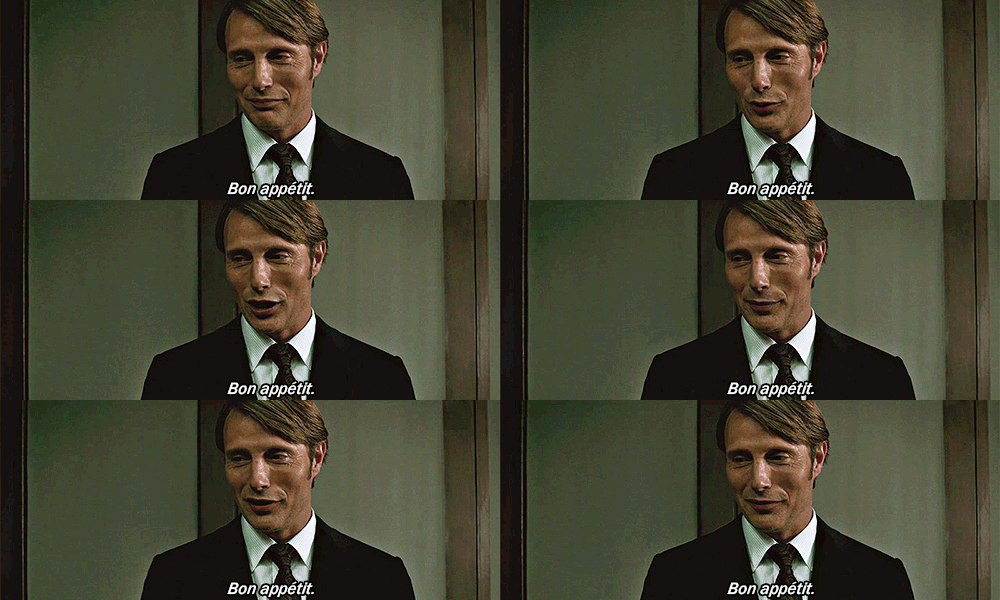
Aaaand the chapter launches into usual magnificent style with Christian making Ana feel like shit for not having had sex before. Ana wonders “Why am I feeling guilty?”. Good fucking question. Christian explains that he’s not angry at Ana but with himself, and he’s just doing an amazing imitiation of a thundering cock who’s cross at someone for not having disclosed their sexual history when they first shook hands. There’s a question missing a question mark, and Ana gasps says he’d like to bite her lip, again. Look, I’m just saying that I wouldn’t let anyone who said they wanted to bite on my lip “hard” within twenty feet of my vagina. What is it with the Hannibal shit, anyway?

Hannibal series three has been pushed back to the summer; let's all console ourselves thinking foul things about this gif.

Hannibal series three has been pushed back to the summer; let’s all console ourselves thinking foul things about this gif.

I’ll admit that I’m slightly looking forward to this sex scene. For all the things that Fifty Shades does wrong- and there’s everything from a lack of understanding of consent to silly editing gaffs- this is the thing it’s supposed to do right. If Fifty Shades can successfully fluff me, I can at least understand the point of this trilogy for all it’s atrocious faults.

The first thing I notice is a reference to “down there”  and things “clenching” again as a euphemism for Ana’s arousal, and I’m immediately annoyed. This isn’t eighteenth-century bodice-ripping romance; Ana’s a twenty-one year old soon-to-be graduate who’s apparently baffled by what arousal amounts to, even though she dissolves into a sputtering pit of juices every time Christian glances at her? Euuuuuaaaaaaaaarrrrrgghh.

And, really, there’s not a huge amount worth mentioning in this sex scene. It’s kind of over-described and a little formal, which took me out of the otherwise okay action. I’m not reading it and thinking “waaaah, that’s super hot”. I’m reading it and thinking “I don’t need to know the colour of Ana’s bra”. She describes what is apparently her first ever orgasm (as she explains during the scene that she doesn’t masturbate, which might account for her inability to actually locate and name what arousal is) as “splintering”, which brings to mind the image of an over-full wooden barrel exploding for some reason. He finishes and within half a page they’re already screwing again, because being a billionaire with sexy eyes means that you’re permanently strolling about with a boner like a surprised cat’s tail.

Pictured: Christian Grey’s cock

At one point, he plays with her clitoris then sticks his finger in her mouth, and she notes internally that it tastes like blood. Either Ana’s started her period (not that I’d think Ana knows what one of those are, and just jams kitchen roll up there till it stops), or they’ve gone full blood-on-the-bedsheets virginal hymen-breaking with this. Not saying there’s anything wrong with that, but if I were Christian and someone were bleeding during sex, I’d at least give them the heads-up so they could go clean up if they waned before I (literally) plunged in for round two. He repeatedly tells her that she’s his, and that she can come on command, then he “pours into” her (funnel sex play, presumably) and they’re done. The big sex scene? Only okay (incidentally, check out Lush Stories or Literotica for short, free, occasionally excellent erotic fiction if Fifty Shades doesn’t float your boat. Or just download this, for free, because it’s the antithesis of this book in all ways and is super hot.).

Ana wakes up in the night, and hears Chrstian playing the piano because-

-THIS IS A TWILIGHT FANFICTION. He says he didn’t mean to disturb her, which is bullshit as you can’t play the piano silently, she gasps at his fingers on the keys etc, etc. They go back to bed, and Christian comments that the bloodied sheets will give his housekeeper something to think about, which begs the sentence I never thought I’d say again: be a human being and don’t make someone else wash your new girlfriend’s hymen blood off the sheets. I mean, come on.

Mockingjay Makes a Mockery of Young Adult Tag

I reviewed Mockingjay; it was seriously good.

The League, and The Problem with Sitcom Sexism

Being a feminist and existing almost entirely on a pop-culture plane is exhausting. Casual sexism is everywhere. Games of Thrones disempowers female characters through rape before they can become all-powerful. American Horror Story has been known to piss all over it’s male characters to make room for strong women. Black Canary in Arrow gets to fight crime in the extremely practical ensemble of a bodice-ripping corset, leather trousers, and a cropped leather jacket. Bleh . Once you start noticing these little, irritating slips, it’s hard to ignore them. So when I clicked on to The League a concept-driven semi-improvised comedy based around a fantasy football league,  I promised myself that I would try to ignore any of the potential quiet sexism I’d gotten used to.

And, two and a half series in, there it was. Female judges who were just waiting to sexually dominate male characters; sexy teen au pairs hired purely on looks because the child’s father wants his kid to get used to being around gorgeous women. Katie Asleton, who plays the one female main cast member, is regularly shown to be “one of the guys”, enjoying dope and booze and sex (because hey, no women I know enjoy dope and booze and sex), an exception to the other wives and girlfriends in the series (one of the main character’s wives appears, significantly, once in the first season, where her episode arc revolves around cooking lunch for everyone while they try to watch football). Women are constantly hurling themselves at the five leading men, giving the romantic side of the series a sense of being scripted as somebody’s ultimate fantasy. It’s low-level, it’s not the end of the world, but it’s kind of irritating.

But I have sexism fatigue. I just wanted to watch a show where my feminism senses weren’t going to be tingling; I’m not looking for an excuse to be enraged or feel victimised, but seeing the same tired women stereotypes paraded out was grating as a fan of pop culture (because lazy) too. And that got me thinking: is sexism more damaging to shows than stupid stereotypes? And if it is, how important is sexism in judging the intentions of it’s creators?

I think that sexism is particularly egregious when it’s unimaginative. Sitcoms have comfortably settled into a recognisable rhythm, with certain beats to hit and characters to work through. The League regurgitates a handful of stereotypes- dumb blonde, stupid promiscuous guy,  sexy Latina woman, oblivious wife- that only serve to underline how easy it’s is to fall back on gender and racial safeguards because they’re easy. These stereotypes are shorthand for spelling out things that the show hasn’t got the time or inclination to do itself, because when we see a few traits from a certain stereotype applied to a character we can fill in the rest of the blanks ourselves. I’m picking on The League here, but loads of sitcoms do it, and in a way it makes sense. With twenty-three minutes to tell a story, you don’t want to spend too long developing characters who aren’t going to impact much of the rest of the series, so you’ll rely on the audience’s knowledge of stock sitcom characters to cut out the middle man. But at the same time, it’s lazy: sketch in these characters, sure, but actually make them a bit different and a bit new. Subvert expectations. The closer you look at the low-level sexism that inhabits these kind of sitcoms, the more you realize that it’s less an issue of feminism or gender disparity than it is an issue of lazy (or time-constrained, depending on how you see it) writing. The fact that they use these stereotypes for more than just female characters doesn’t excuse them, but it at least makes it understandable- and explains why the problem with sitcom sexism might well not be ill-intentioned, but rather an ingrained, quick way to get a point across.

And here’s the kicker: does it matter if the show is sexist? In an interview with Salon, co-creator Jackie Schaffer said this on the subject of sexism in the show;

“I kinda don’t really think about what anybody says. I don’t really think the show is sexist. I think we try to make it feel authentic and – it’s what we’re writing about and it’s our point of view, so maybe the world or life is a little bit sexist…”

And I don’t think that’s an entirely unfair defence. The show itself is okay, not great, not awful, with a few laugh-out-loud moments and fun characters to watch for. This is a sitcom, so it’s naturally a bit bigger and more caricatured than real life. Most of the lead characters are pretty awful people in one way or another- the sort of people who’d rent out their unknowing friend’s apartment for a porn shoot (with Seth Rogen in it, bizarrely), or force another of their friends to pay for a giant anniversary party for his wife-but that doesn’t mean that I’m going to attach all those qualities to the people who write, direct, and act in The League. There are a handful of shows whose treatment of female characters does make me suspect sexism on the part of the creators; this isn’t one of them. And hey, people behind The League could probably do with being a little more self-aware about their treatment of women. I’m not saying we should let it entirely away with the occasional sexism (and grim stalkerish behaviour which I’ll go into in more detail when I review the whole show) but there are far worse things on television that we give a pass to because they’re considered of higher intellectual or artistic quality (Read: Game of Thrones). Many of the scenes involve men talking to other men in a facetious, often sexist way that’s clearly meant to bring the audience in on how awful these guys really are. The League isn’t high art; it’s a show about a bunch of dudes and a chick in a fantasy football league. And sure, it can be pretty sexist. But we need to look at it from a practical, time-constrained point of view, so we can understand it’s reliance on stereotypes, it if not excuse it. Because understanding a problem is the only way we can effectively get rid of it, and I am so, so ready to see the back of boring sitcom sexism.

A Wanker’s Literary Reaction: Mozart in the Jungle

gal1

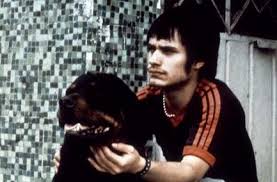
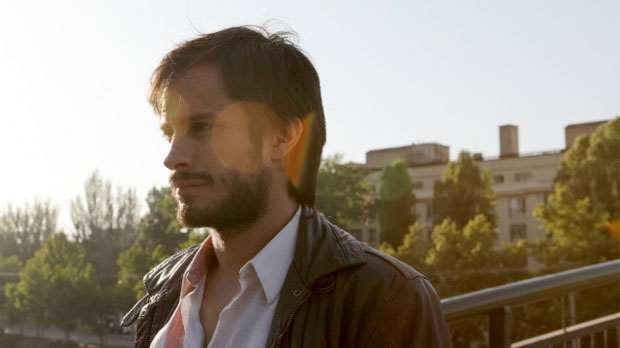
The year: 2000. A twenty-year-old Mexican actor by the name of Gael Garcia Bernal explodes onto the scene with a harrowing performance in dark thriller Amores Perros, playing a beaten-down teenager (above) who turns to dogfighting in order to prove to his uninterested crush that he can take care of her before getting involved in a horrifying, life-altering car crash.

gal2gal3

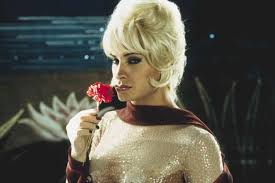
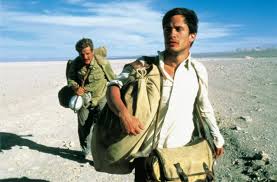
2004. Bernal cements his burgeoning career with two important but wildly different turns. One as a con-artist transvestite dealing with the aftermath of sexual abuse in the church in Almodovar’s controversial Bad Education, the other as a young Ernesto “Che” Guevara travelling across Latin America where the seeds of his future communism are sowed.

no

Jump to 2012. After a series of critically-acclaimed turns in films like Babel and The King, Bernal appears in award-winning Chilean drama No, which charts his character’s grappling with political manoeuvring in Pinochet-era Chile.

mozart_in_the_jungle_s01e01_still

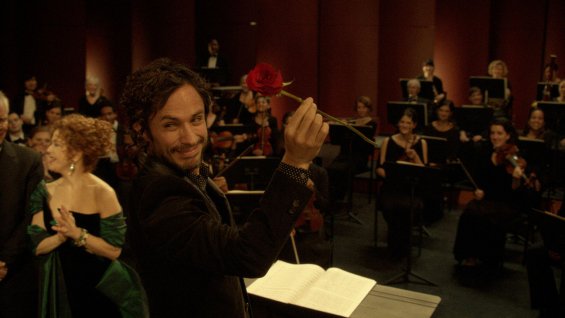
Skip to 2014, and Bernal is starring in…a light American dramedy in which he plays an off-the-wall classical conductor with a passion for the silly? Yup, it’s time to talk about Mozart in the Jungle, an often baffling but occasionally entertaining venture into the world of classical music in New York.

If I haven’t made it clear enough above, one of the things that attracted me to this series was how fucking bizarre it was for Bernal to be playing such a light role. He’s an astoundingly good actor who usually sticks to the kind of roles that win him awards whether he wants them or not: brave, stark, dramatic, and intelligent roles that prove over and over again how incredible a serious actor he is. Off the top of my head, I can’t think of any of his films (at least those that have gained traction across the pond) in which he’s played a consistently fun role. I spent the first half of the series waiting for him to snap and start making his orchestra fight each other for cash, but was instead met by a charming, extremely funny guy who just wanted to conduct some classical music and annotate some manuscripts, yo. Rodriguo de Souza is a childish, witty, clever, passionate character who’s brought in to breathe new life into the New York Symphony Orchestra, and the kind of person who you’d consider changing religion for (did you see those pictures I put up there? I mean, are you made of stone?).

Right, here’s the thing about this flagship Amazon original series: it’s Smash, but with classical music. Smash promised a cheeky, sordid look behind the scenes of Broadway theatre and failed to deliver: Mozart in the Jungle succeeds on all the levels Smash couldn’t. It even gives Bernadette Peters, who’s got roles in both series, a much better part to play, for Chrissake. It demolishes and embarrasses Smash by showing them just how easy and brilliant this kind of show could be. It’s packed with engaging characters, but what makes them even better is their ability to interact with each other like adults instead of the preening, shrieking, stomping ninny-children we’ve come to expect from dramedy shows. Lola Kirke’s (who I also spotted in Gone Girl, which is excellent and in which she is excellent) self-deprecating, sarcastic, up-and-coming oboist doesn’t need to have screaming matches over mantelpieces with her love interest in order to sort out their problems; they just go for a shag and a chat. Saffron Burrows as the louche, charming cellist of your dreams gets high and screws someone she regrets; they discuss it and agree not to mention it to anyone for fear of making the orchestra an awkward place to work. Instead of being constantly pitted against each other, the women are smart, ambitious, and know when to work with or against each other. Everyone deals with things in a grown-up way, which makes the drama, when it does arrive, all the more engaging and juicy, because you know it must be serious. The curtain-twitching community of the orchestra is filled out with snapshots of characters that let us fill in the blanks, but the effectiveness of giving the background cast faces cannot be overstated.

Beyond that, the series is just a metric shit-ton of compressed all-over-the-place-ness held together by a sense of game fun. One minute Malcolm Macdowell (who’s place in this series is possibly more inexplicable than Bernal’s) is drinking coconut water and wearing a Hawaiin shirt; the next Bernal’s manic violinist ex-lover is screaming at an audience to “SHUT UP!” as they try to applaud her. Jason Schwartzman in a leather gilet turns up. Roman Coppola directs. Hannah Dunne smokes dope and tattoos people. Everyone seems overqualified for this series, and it’s wild.

But it all boils down to one thing: the music. As the kind of person who was determined to learn how to play instruments but never had a natural aptitude for them (twenty combined years of bass, cello, and piano have proved that the most I can do is smugly shout “YOU’RE NOT PLAYING THAT RIGHT” at the screen occasionally), I love hearing classical music. Take a superb scene in which the orchestra plays the 1812 Overture (amusing aside: a member of my family was pulled over by the police in their car, and had an argument with them in which the police wouldn’t believe that they had this track on CD in the player. They did. Not sure how the cops took that) in a broken-into lot in New York City; packed with bravado and the utter passion that stems from brilliant classical music, the show draws it’s energy from the variety and novelty of it’s setlist. Entrenching the series so deeply in such a specific type of music was an audacious choice, but one that works entirely to give every episode a running theme and thread. It makes no odds if you like classical music or not (and if you don’t, listen to this and come back to me), because Mozart in the Jungle isn’t here to patronise; it’s not even here to educate. It’s here to fucking entertain. And by God, it does.

Here’s The Thing About Internet Feminism

Let me get this out here, right in the first sentence: I’m a feminist. I believe in the elimination of gender inequality through focusing on the negative effects that gender stereotypes project onto all genders. There are various reasons that my feminism only reared it’s #feministsareugly head within the last year or so, but that’s not what I want to talk about today. I want to talk about feminism on the internet.

With the rise of sites like Twitter and Tumblr, and with the focus and debate raging over feminism that’s taken place over the last eighteen months, feminism has been forced to defend itself. BBut the problem with feminism on social media platforms is that it gets scattered; opinions are vehemently divided over almost every issue, and critics of feminism brandish this lack of unity as proof that the feminist movement may as well not exist. If we can’t even agree with each other, how are we meant to propagate any effective change in the wider world? If we can’t criticise people who openly declare their misandry (and not in the dark-toned jokes so often plucked up by the #feminismisawful hashtag, but those who actually, openly believe that men are inferior and deserve to be oppressed), how can we claim to be fighting for gender equality?

Being a feminist active on social media right now is to spend half your time dancing around a minefield of potential hypocrisy. So many issues who’s context and impact informs so much of the opinions we hold on them rise up and demand attention, while critics demand that feminists present some united front on the issue. Failing that, the front that’s attributed to us is the most controversial or the most synonymous with the misandry that many antifeminists attach to the movement. The waters become muddy with people declaring their agreement or disagreement with the most prominent opinion on the matter, and casual observers or critics are often left with a variety of vastly dissenting opinions that fail to leave any cohesive impression.

I think the size of the current feminist movement and the voracity with which people engage with feminist issues in a positive way is fantastic, heartening stuff. And eliminating those dissenting opinions entirely is surely a bad idea, as it removes the onus of debate from the movement. So here’s a New Year’s resolution for all internet feminists who feel the way I do about the movement. Next time you see an opinion that’s being attributed to feminists-whether it came from feminists or not- that you don’t believe jives with the gender equality feminism should be striving for, say so. Blog about it, tweet it, post it on Tumblr or Facebook. Say that you’re a feminist, and you don’t agree with this opinion. Give your reasons. Don’t silence voices, but try to add yours to them. Call out misandry, hypocrisy, and sexism when you see it, whether it’s within the movement or not. Forcing the feminism movement into one, single-voiced bunch is too simplistic, but providing opinions that challenge popular, seized-upon “proof” of problems in the movement can do nothing but strengthen the feminist cause.

How Do You Solve A Problem Like Katie Hopkins?

You know what Katie Hopkins is? She’s a time toilet. The ex-Apprentice contestant says something offensive, and you disappear down a Facebook/Twitter/Youtube rabbithole for as long as it takes to absorb her irritatingly misinformed opinion. Then she’s gone, fading away into  the mists of offensiveness until she next takes in upon herself to make the nation roll it’s eyes so hard we shift four inches to the left.

Yesterday, it was reported that a Scottish nurse who’d recently returned from travelling to Sierra Leone with a group of healthcare workers from Save the Children had a suspected case of Ebola. The suspicion was confirmed, and she was moved to London for further treatment. Katie Hopkins had these thoughts:

Patently, she’s acting out the colloquial definition of a wanker. And by the end of the day, Twitter was aflame with the Katie Hopkins tweets, some in defense, the rest of us in blinding irritation. Some have accused her of committing a hate crime due to the perceived racism in the Tweet. The furore has been covered in a number of news outlets, including the Independent and the Metro.

Katie Hopkins and her ilk are the mobius strip of awful; they cater to our desire to be outraged just enough to keep themselves in the legal clear. The more people react to her, the more newspapers report on her, the more people want her on their morning shows, the more people find out how she is. So next time she says something offensive, more people react. And so it goes on.

Hopkins knows how to stoke outrage with finesse. She’s not like Dapper Laughs, who accidentally blunders out stuff which he probably doesn’t realize is as grim as it is.; she’s just close enough to enough people’s real-life opinions that she often gets away with the “telling it like it is” tag, despite the fact that most rational-minded people realize what a tremendously nonsensical twat she is. So how do you solve a problem like Katie Hopkins?

A lot of people have called for her to be banned from a variety of social media outlets, and that’s not the answer. Blocking her opinions entirely confirms  you see that she’s said something stupid, don’t watch it, don’t search for it, don’t click on articles about it. Utterly, utterly ignore it. that she’s significant enough to warrant a reaction, and that just adds to the rolling stone of leathery, platinum moss. It’s confirmed to many people that she’s “too much” when that’s not true; she’s just repugnant and profoundly annoying. I am not offended by Katie Hopkins, I just have no interest in hearing what she’s got to say on anything ever again. But that doesn’t mean she hasn’t got the right to say it at all. Professional offense-mongerers live off publicity, as Hopkins well knows. The only way to get her out of the news, off TV, and keep her opinions out of earshot is to cut off that oxygen. Next time you see that she’s said something  stupid, shut it down, ignore it, and encourage other people to do the same if they don’t want to hear anything from her again. Hopkins is on a cliff-edge with her career and her fame; we can provide that nudge and shut her down entirely if we don’t want to listen to her. Do it. Do it for me.

Hemlock Grove: A Wanker’s Literary Reaction

Yup, I’m combining blog series. Deal with it. Look, in theory I LOVE Eli Roth. To be honest, I find him as a person tremendously interesting- he’s spent decades immersed passionately in the horror genre, getting dirt under his nails and blood on his shoes in the name of making better horror movies. Which would be brilliant if the horror movies he made were actually any good. I feel horrible saying this because he’s clearly deeply knowledgeable and passionate about a genre that I consider the greatest one out there, but his films straddle an awkward boundary of wanting to pay homage to the classics while still making an original story with Roth’s stamp all over it. It seems to be a case of having a director so totally surrounded by a certain type of film that he, subconsciously or consciously, peppers his films with far too many genre clichés to truly separate his own work from that of his predecessors. Add to that the images of sexualised dead bodies in Hostel- which I find utterly, unforgivably grim no matter the gender or situation-and you’ve got a man who I love almost entirely outside of his films. But not, perhaps, outside of his TV shows. I’m taking a look at his Netflix series Hemlock Grove for the first time, and this blog post will serve to document my honest reaction accordingly. I’m also drinking every time I see nipples, a murder, or nipples AND a murder in the same scene.

Seriously though, nipples AND blood in the opening scene.

Seriously though, nipples AND blood in the opening scene.

Look, I’ll be honest: this isn’t a GOOD show. Not by a stretch, But that doesn’t mean that it’s not buggeringly good fun. Imagine if Twilight had actually had a sense of humour and a bit of self-awareness; this is what you’d be looking at. With Peter Rumaneck, troubled Romany He’s-DEFINITELY-Not-A-Werewolf who moves to the town of Hemlock Grove with his mother, swaggering about with the kind of easy, sexy charm that the aforementioned young adult series could have done with in spades. Though he’s placed up against an interminably awful love interest-who, within moments on appearing on screen, announces “I’M A NOVELIST”, a move which simultaneously makes me want to punch myself in the face and reminds me that I have that planning for my book to do- he manages to sparkle on-screen in an entirely non-Edward like way. Imagine if Twilight was told from Edward’s point of view- some weird girl turns up and starts obsessing over him, and he’s just trying to get on with his life- and you’ve got the gist and thrust of this character. The script also has great fun with his settling into the discomforting elements of the town, such as when he’s apparently the only one to notice a shuffling, groaning woman with light pouring out of her face wandering down the school corridor as lights flicker ominously above.

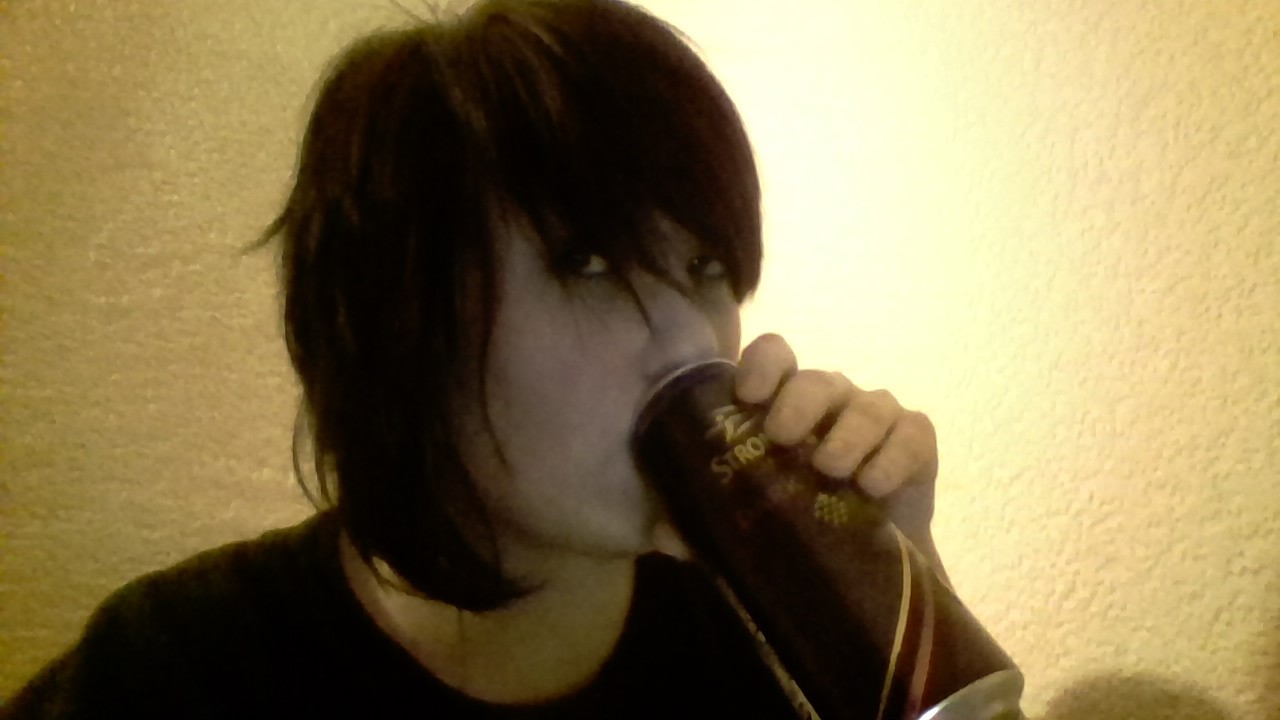
What I like most about the series, though, is the Godfreys. An old-money family with some dark secrets and a seriously nice house, we meet the fabulous Famke Jamsen early on as the matriarch of the tribe, a brilliantly awful cow who brings just the right level of pissed-off repression to the role. Then you’ve got Roman, the seventeen-year-old tearaway, a man so beautiful that I don’t think I’m bisexual any more. Seriously, the first time he came on-screen-

LOUISE - WIN_20141217_001216

– my jaw actually fell off. A bit of research reveals that he’s Bill Skarsgard, marking the third series that’s secretly dominated by an incandescent performance from that family (Alexander Skarsgard in True Blood, Gustaf Skarsgard in Vikings, Bill Skasgard in This Show Which I Will Only Remember Because He’s Super Fucking Hot). It helps, too, that they’ve given him plenty of fun to have with the role, hissing “Do the fields need tiiiiilled?” when he’s woken up too early for his liking. He’s one of those people for whom serious material would be too easy, so they’ve handed him a cornucopia of weirdness and fun to the already tongue-in-cheek show.

The direction- courtesy of Eli Roth, at least in the first episode- is occasionally inspired (such as the found footage-y sequence of a young girl fleeing from an unknown monster) but sensibly takes a back seat to scene-setting and exploring the fabulous possibilities the series’ hometown has to offer. The centrepiece direction sequence for the first episode is undoubtedly a flashback to Roman’s childhood, which is filmed like a B-movie-right down to Famke Jansen’s hand languidly dangling a glass of wine over the edge of a seat-and proves that Eli Roth’s admirable horror knowledge can work beautifully if it’s deployed in the right way.

Based on this first episode, I will be watching the rest of the series. It’s not the best thing on TV in a technical sense, but it’s certainly got it’s charm. The writing is solid and brought to life by some enthusiastic performances from the cast, and everyone seems to be going at the campier elements hell for leather. If American Horror Story ever needed a campier, more teen-friendly spin-off then this is it. That said, I am now pretty drunk so don’t take my word for anything.

Doctor Who Fan? Console Yourself With Sleepy Hollow

So, I’ve been watching Sleepy Hollow recently. I was determined not to like it, as that would mean the consort had been right about a show and I would therefore never trick him into watching something like Suburgatory again (which is, by the way, utter, unparalleled genius).

But Gosh darn, if I didn’t really love Sleepy Hollow. My first attraction to the series was this;

I’d rather not say how long I spent looking for a Tom Mison picture, thanks.

That’s Tom Mison, who plays co-lead Ichabod Crane, a man transported from revolutionary American to modern-day Sleepy Hollow by witchery in order to stop evil. Ridiculous? Utterly. But Tom Mison, who pitches the comic scenes about his change in time-such as soliloquising down the phone about love to a phone operative- perfectly, is perfection. He’s at some times bumbling, at some times swashbuckling, at some times a little bit terse. He also happens to be second only to Norman Reedus in the “Men On TV I Would” list.

Then there’s this;

Well-developed, witty and consequential female characters really do it for me.

This is Nicole Beharie, who plays the police lieutenant who meets Crane soon after he arrives in Sleepy Hollow. Compassionate, intelligent, selfless, brave, and driven, Abbey Mills is one of the finest female characters on TV today and her partnership with Crane- devoid of Mulder-and-Scully style sexual tension, at least so far- is all the better for it. She also happens to be second only to Lauren Cohan in the “Women on TV I Would Do” list. Walking Dead really has the monopoly on impossibly good-looking characters facing an apocalypse.

Along with a cohort of fun regular characters- Lyndie Greenwood as Abbey’s troubled, more ruthless sister Jenny is my favourite, but Orlando Jones as a sceptic-turned-believer police chief is close behind- the duo run around trying to fight off the apocalypse predicted in the Book of Revelations. Occasionally John Noble, esteemed thesp, turns up to make dinner of the scenery and smile in an ambiguous way. And it’s as brilliantly silly as it sounds- the stories are brisk and uncomplicated, with a freak-of-the-week set up featuring some gloriously underused monster (Wendigos, Golems, Green Man etc) with some sensational real effects. It’s bright, delicious, clever fun, with a lightness of touch that stops the show ever getting bogged down in it’s own mythology.

And this got me thinking: why was it I loved this show so much? Then I realised: it’s my replacement Doctor Who. After a season in which I found DW stories too convoluted, found character tension to be forced, found the series dissapearing up it’s own arse, Sleepy Hollow is the embodiment of all the things I love about Doctor Who: the out-of-time man matched with a banterous audience surrogate, fighting monsters every week and leading everything up to a neat series finale. And so, for anyone else who’s soul was troubled by this series of Doctor Who, I cannot recommend Sleepy Hollow enough. Just don’t mess with the Horseman. Any of them.

“The Old Department” and “The Early Hours” by Louise Macgregor

new bourgeois's avatarnew bourgeois

The Old Department

The floors are cracked and white;
No windows. Corridors are long. Dry.
I can tell, they were handsome once- strong jaws, hairlines hidden under sparks,
Grey scribbled out with dye.
The toe of my pretty leather girl’s shoe catches, and I trip-
My thoughts thrown, I try to remember where I’ve been. An old dream
Beats behind every door and leeching screen.

The Early Hours

Our backs move like fins in shadows,

Half-light growing, birds singing as if they don’t know we’re hunters,

You bite with dry teeth.

I arch against the damp air,

Garrulity unraveling to a small cry

And words to syllables and sounds.

We move to a beat like poetry,

Eyes closed, lost in your cadence, my staccato note.

Louise Macgregor is a freelance pop culture and lifestyle writer with a sideline in poetry and short fiction.  She’s passionate about horror movies, late nights, and her music blog 

View original post 3 more words